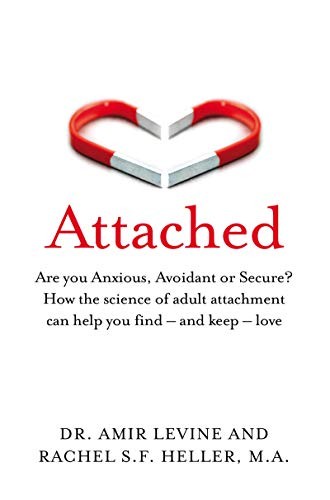
Amir Levine and Rachel Heller apply attachment theory to adult romance: anxious, avoidant and secure styles, and how they pair. For anyone who keeps repeating the same relationship pattern and wants to know why.
Author · 1 summary
psychiatrist and neuroscientist
Amir Levine is a psychiatrist and neuroscientist. He trained in adult and child psychiatry at Columbia University, then moved into molecular neuroscience in the laboratory of the Nobel laureate Eric Kandel. He is an associate professor of clinical psychiatry at Columbia University Medical Center and a principal investigator on research funded by the National Institutes of Health.
His interest in attachment began in clinical work with mothers and young children. With Rachel Heller, a psychologist, he applied adult attachment research to romantic relationships in Attached (2010). The book argues that adults bond with partners the way infants bond with parents. It sorts people into anxious, avoidant and secure styles and advises readers to seek secure partners and to state their needs openly. It has sold more than three million copies.
Some psychologists note that research treats attachment as two scales, not three fixed types, so the book's categories simplify the science. Levine runs a private practice that trains therapists in attachment-based treatment, and he later published Secure.
Amir Levine and Rachel Heller apply attachment theory to adult romance: anxious, avoidant and secure styles, and how they pair. For anyone who keeps repeating the same relationship pattern and wants to know why.
New books, occasionally