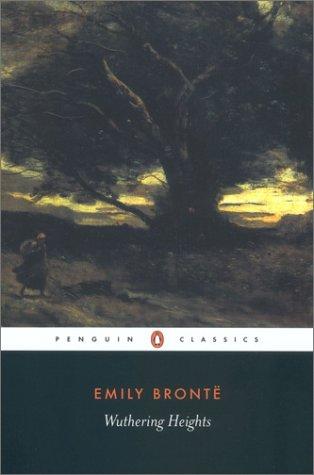
Emily Brontë's 1847 novel about Heathcliff, Catherine Earnshaw and two families on the Yorkshire moors, told across two generations. For readers who want the plot, the characters and the ideas behind a famous story of love and revenge.
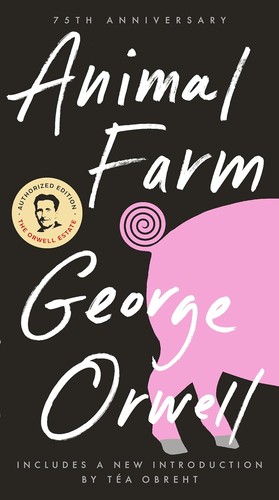
1945 · 140 pages · Summary updated 24 October 2026
Orwell's fable about farm animals who overthrow their farmer and are then ruled by the pigs, a satire of the Russian Revolution and Stalin. For students and readers who want the plot, the allegory and the ending in plain words.
The animals of Manor Farm drive out their drunken farmer, Mr. Jones, and rename the place Animal Farm. They adopt Seven Commandments that begin with "whatever goes upon two legs is an enemy" and end with "all animals are equal." The pigs, who are the cleverest animals, take charge. Napoleon uses dogs he has raised in secret to drive out his rival Snowball, then rewrites history, works the other animals harder than Jones did, and trades with humans. Boxer, the loyal carthorse, works until he collapses. Orwell wrote the book in 1944 as a satire of Stalin's Soviet Union, and it works as a general account of how revolutions are betrayed.
Jones never comes back. The humans attack twice and lose both times. The animals lose their freedom to the pigs, who were comrades. Orwell's point is that the danger to a revolution is the leadership that forms the day after it succeeds. The pigs take the milk and apples in chapter 3, before any human threat exists. Each later step is bigger, and each is explained in the name of the Rebellion. The reader is meant to notice that no single step would have been worth fighting over, and that is how the whole thing is lost.
Squealer's work is rewriting memory. Snowball's heroism at the Cowshed becomes treason. The windmill becomes Napoleon's idea. The ban on trade was never passed. The commandments change on the wall while the animals sleep, and when Clover asks Muriel to read them, the new words have always been there. The animals cannot check, because they cannot read well and cannot remember exactly. Orwell shows that a population that cannot verify the record is at the mercy of whoever holds the paint brush. He developed the same idea in 1984.
The sheep cannot learn the Seven Commandments, so Snowball gives them "Four legs good, two legs bad." They bleat it at any awkward moment, drowning debate. When the pigs begin to walk upright, the sheep are retrained in a week to chant "Four legs good, two legs better." Boxer's "Napoleon is always right" does the same job for one animal. Orwell shows that a slogan is a tool for stopping discussion, and that whoever controls the slogan can reverse it without the chanters noticing.
Squealer ends every explanation with the same question: surely you do not want Jones back? The animals cannot answer it. They accept the loss of the milk, the end of meetings, the trade with humans and the executions because the alternative seems worse. Later Snowball replaces Jones as the invisible enemy who explains every failure. Orwell shows how a regime keeps a permanent external threat alive, real or invented, so that any criticism of the leaders looks like help for the enemy.
Boxer is the strongest, kindest and hardest-working animal on the farm. He is also the most useful to Napoleon, because he never questions. When Squealer calls Snowball a traitor, Boxer doubts, then defers. When the dogs attack him during the purge, he pins one down and then lets it go on Napoleon's order. He works himself to collapse and is sold to the knacker for whisky money. Orwell admired workers like Boxer and wanted readers to see that their virtue is not enough. Strength that will not think serves whoever gives orders.
Benjamin the donkey can read as well as any pig. He sees everything and says nothing, on the grounds that life has always been bad and always will be. He only speaks up when the van comes for Boxer, and by then it is too late. Orwell gives him the last line about the commandments, reading the single sentence on the wall to Clover. Benjamin stands for the cynic who thinks that understanding a disaster is a substitute for resisting it. The book treats his silence as part of the failure.
In the last chapter the pigs walk on two legs, carry whips, wear clothes and drink with the human farmers. The seven commandments are reduced to one: all animals are equal, but some are more equal than others. Napoleon renames the farm Manor Farm. The animals outside the window cannot tell pig from man. Orwell's claim is that the Soviet rulers had become a new ruling class no different from the one they replaced. The final card-game quarrel predicts that the alliance between the pigs and the humans, like the wartime alliance between Stalin and the West, will not hold.
“All animals are equal, but some animals are more equal than others.”
“Four legs good, two legs bad.”
“The creatures outside looked from pig to man, and from man to pig, and from pig to man again; but already it was impossible to say which was which.”
Animal Farm was finished in 1944 and published in August 1945, after four publishers rejected it because the Soviet Union was still Britain's wartime ally. Orwell gave it the subtitle "A Fairy Story." He said in a preface for the Ukrainian edition that he wanted to destroy the Soviet myth in a story almost anyone could understand and that could be easily translated. The book is short, ten chapters, and the animals have no inner lives beyond what the plot needs. Every event stands for something in Russian history between 1917 and 1943.
The farm is Manor Farm, owned by Mr. Jones, who drinks and neglects the animals. The main characters are Old Major, a prize boar; Napoleon and Snowball, two young boars; Squealer, a small, persuasive pig; Boxer and Clover, two carthorses; Benjamin, an old donkey who says little; Mollie, a vain white mare; Moses, a tame raven who talks about a paradise called Sugarcandy Mountain; and the sheep, hens and dogs.
Orwell was a democratic socialist. He did not write the book against revolution. He wrote it against the people who hijack revolutions, and against the followers who let them.
Old Major calls a meeting in the barn. He is twelve years old and expects to die soon. He tells the animals that their lives are miserable and short, and that the cause is Man, the only creature that consumes without producing. Remove Man, he says, and the product of their labor would be their own. He warns them never to adopt human vices: never live in a house, sleep in a bed, wear clothes, drink alcohol, touch money or engage in trade. All animals are comrades. He teaches them a song, Beasts of England, which becomes the anthem of the Rebellion. Old Major stands for Marx and Lenin, and his speech is a condensed Communist Manifesto.
Major dies three nights later. The pigs, the cleverest animals, work his teaching into a system they call Animalism. Snowball, Napoleon and Squealer lead secret meetings. The Rebellion comes sooner than anyone expected. Jones gets drunk, forgets to feed the animals, and when they break into the store shed, he and his men attack with whips. The animals fight back and drive the humans off the farm. It takes a few minutes.
The pigs reveal that they have taught themselves to read. They paint over the name on the gate and write "Animal Farm." On the barn wall they paint the Seven Commandments:
The cows are milked. The animals ask what will happen to the milk. Napoleon tells them to go to the harvest. When they return, the milk is gone.
The harvest is the best the farm has ever had. Every animal works according to its capacity. Boxer is the strongest and most devoted. He adopts two mottos: "I will work harder" and, later, "Napoleon is always right." The pigs do not work; they direct. Snowball organizes committees and reading classes. The sheep learn only the slogan "Four legs good, two legs bad," which they bleat for hours. Napoleon takes nine newborn puppies away to educate them in private.
It comes out that the milk and the windfall apples go to the pigs alone. Squealer explains that pigs are brain workers who need them, and that if the pigs failed, Jones would come back. "Surely, comrades, you do not want Jones back?" ends every argument from now on.
Jones tries to retake the farm with men from the neighboring farms, Foxwood and Pinchfield. Snowball, who has studied Julius Caesar's campaigns, plans the defense. The animals win the Battle of the Cowshed. Snowball is wounded and decorated. Boxer, who thinks he has killed a stable boy, is distressed, because he does not want to take life even a human one. Mollie, who misses sugar and ribbons, defects to a human farm and is never mentioned again.
Snowball and Napoleon disagree on everything. Snowball wants to build a windmill that will bring electricity and reduce work to three days a week. Napoleon says the urgent need is food production. At the meeting to decide, Snowball gives a persuasive speech. Napoleon makes a high-pitched whimper, and nine enormous dogs, the puppies he took, burst in and chase Snowball off the farm. Napoleon announces that Sunday meetings are over. A committee of pigs will decide everything. Squealer explains that leadership is a heavy burden and that Snowball was a criminal. Three weeks later Napoleon announces that the windmill will be built after all. Squealer says it was Napoleon's idea from the start.
Snowball stands for Trotsky, Napoleon for Stalin, and the windmill for the Soviet five-year plans and the argument over how to industrialize.
The animals work like slaves on the windmill, sixty hours a week and then Sunday afternoons too, which Napoleon calls voluntary, though any animal who refuses loses half its rations. Boxer carries the stones. Napoleon announces that the farm will trade with humans through a solicitor, Mr. Whymper, to buy materials. The animals remember that trade was forbidden. Squealer assures them that no such resolution was ever passed. The pigs move into the farmhouse and sleep in beds. Clover asks Muriel the goat to read the fourth commandment. It now says "No animal shall sleep in a bed with sheets."
A storm destroys the half-built windmill. Napoleon blames Snowball and sentences him to death in his absence. From then on every setback is Snowball's work: broken eggs, trampled seed, a missing key. Squealer announces that Snowball was Jones's agent from the beginning and had tried to lose the Battle of the Cowshed. Boxer objects that Snowball fought bravely. Squealer tells him that Napoleon has stated it categorically, and Boxer gives in.
Winter brings hunger. Napoleon fills the grain bins with sand under a thin top layer to deceive Whymper. He orders the hens to surrender their eggs for sale. The hens rebel by laying from the rafters so the eggs smash. Napoleon cuts their rations, and nine hens die.
Then come the confessions. Napoleon gathers the animals and the dogs drag out four pigs who had protested the end of the Sunday meetings. They confess to plotting with Snowball and are torn apart by the dogs. The hens who led the egg rebellion confess and are killed. A sheep, a goose and others follow. The pile of bodies lies at Napoleon's feet. The animals are shaken. Clover thinks this was not what they aimed at when they set out to overthrow Jones. They sing Beasts of England, and Squealer announces that the song is abolished, because the Rebellion is complete. The scene stands for the Moscow show trials of the 1930s.
The animals check the sixth commandment. It now reads "No animal shall kill any other animal without cause." Napoleon is now called Leader and is credited for every success. He negotiates to sell a pile of timber to one of the two human neighbors, Frederick of Pinchfield and Pilkington of Foxwood, playing each against the other. He sells to Frederick, who pays in banknotes that turn out to be forged. Frederick's men then attack with guns and dynamite and blow up the rebuilt windmill. The animals drive them off in the Battle of the Windmill but are badly hurt. Napoleon declares a victory and awards himself a medal. The pigs find a case of whisky. The fifth commandment becomes "No animal shall drink alcohol to excess." The dealings with Frederick stand for the Nazi-Soviet pact and the German invasion of 1941.
Boxer, now nearly twelve, splits a hoof but keeps working on the windmill. Rations fall for everyone but the pigs and dogs. Squealer reads out figures showing that production is up. Napoleon has a litter of thirty-one piglets, who are taught in a separate schoolroom. Moses the raven returns and preaches Sugarcandy Mountain again, and the pigs let him stay. Napoleon is declared President in an election with one candidate.
One day Boxer collapses while hauling stone for the windmill. Squealer says Napoleon is sending him to a veterinary hospital in town. A van comes for him. Benjamin, who never reads aloud, reads the words on its side: "Horse Slaughterer and Glue Boiler." The animals shout to Boxer, who tries to kick his way out but is too weak. Three days later Squealer announces that Boxer died in hospital saying "Napoleon is always right," and that the van had simply not been repainted by its new owner, a vet. The pigs hold a memorial banquet and receive a crate of whisky from the grocer.
This section reveals the ending.
Years pass. Most of the animals who remember the Rebellion are dead. The farm is richer and larger, but the animals are no better off, except the pigs and dogs. The windmill is finished and used to mill grain for sale, not for electricity. Squealer's figures say things have improved, and no one can remember clearly enough to argue.
One afternoon Squealer takes the sheep to a corner of the farm for a week of private instruction. Then the animals see Napoleon walk out of the farmhouse on his hind legs, carrying a whip. The other pigs follow on two legs. The sheep break into a new chant: "Four legs good, two legs better!" Clover takes Benjamin to the barn wall. All seven commandments are gone. There is one sentence: "All animals are equal, but some animals are more equal than others." The pigs begin to wear clothes and read newspapers.
A delegation of human farmers comes to inspect the farm. That night the animals look through the farmhouse window. Pigs and humans play cards and drink together. Pilkington toasts Napoleon and says the lower animals of Animal Farm do more work and receive less food than any animals in the county. Napoleon announces that the farm will go back to its old name, Manor Farm. Then a quarrel breaks out: Napoleon and Pilkington have each played the ace of spades. The animals outside look from pig to man and from man to pig, and it is impossible to say which is which.
Orwell wrote in 1946 that the Tehran Conference of 1943, where Stalin met Churchill and Roosevelt, was the model for the final scene, and that the quarrel at the end shows the alliance would not last.
Animal Farm was an immediate success in Britain and America, and the American edition was pushed by the Book of the Month Club. The CIA later funded the 1954 animated film and changed its ending to remove the humans. Left-wing critics in 1945 accused Orwell of helping the enemies of socialism. Orwell answered that the book attacked Stalin, not socialism, and that revolutions only succeed when the masses stay alert and throw out their leaders the moment the leaders stop serving them. Some readers find the allegory too neat and the animals too obviously labeled. The book has been banned in the Soviet Union, in the United Arab Emirates for its talking pigs, and in several schools. It is on most lists of the best English novels of the century and is often paired with 1984.
Read it if you are studying the novel and want the plot and the Russian parallels in order, or if you want a short, clear account of how power corrupts a movement. It reads in an afternoon and rewards a second reading once you know the history.
12 cards
Question 1 of 5
What is the first sign that the pigs are taking privileges for themselves?
Years after the Rebellion, the pigs walk on two legs, carry whips and wear clothes. The commandments are replaced by one sentence: all animals are equal, but some are more equal than others. Napoleon hosts the neighboring human farmers for dinner and renames the farm Manor Farm. The animals watching through the window can no longer tell the pigs from the men.
Emily Brontë's 1847 novel about Heathcliff, Catherine Earnshaw and two families on the Yorkshire moors, told across two generations. For readers who want the plot, the characters and the ideas behind a famous story of love and revenge.
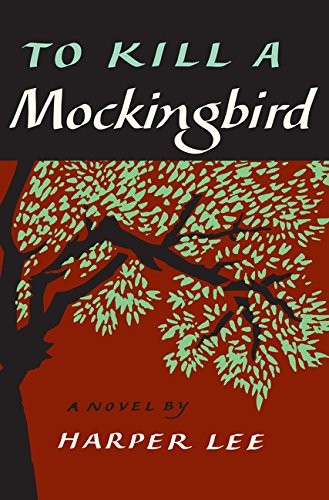
Harper Lee's novel about Scout Finch, her brother Jem, and their father Atticus, who defends a Black man falsely accused of rape in 1930s Alabama. For students and readers who want the plot, the themes and the ending in plain words.
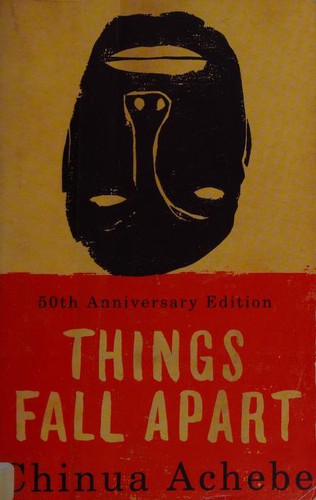
Chinua Achebe's novel about Okonkwo, an Igbo leader whose village is undone by his own rigidity and the arrival of British missionaries. For readers who want the colonial encounter told from the African side.
Machiavelli's 1513 manual on how a ruler gains and keeps power, written for the Medici after his fall from office in Florence. For readers who want the argument behind the word Machiavellian.
New books, occasionally