
Wonder by R. J. Palacio is a novel about August Pullman, a ten-year-old boy with a facial difference who goes to school for the first time in fifth grade. For readers who want the plot, the narrators and the book's lesson on kindness.
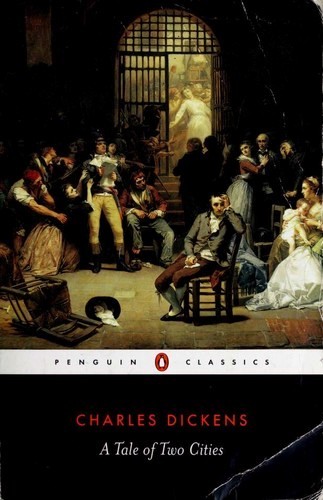
1859 · 488 pages · Summary updated 24 October 2026
Charles Dickens's novel of London and Paris before and during the French Revolution, about a freed prisoner, his daughter, the two men who love her and a revenge that waits for years. For readers who want the plot book by book and its ideas.
Doctor Manette is released after eighteen years in the Bastille and brought to London by his daughter, Lucie. Two men who look alike love her: Charles Darnay, a French aristocrat who has given up his cruel family's name, and Sydney Carton, a brilliant, drunken English lawyer who thinks his life is wasted. Lucie marries Darnay. In Paris, the wine seller Defarge and his wife, who knits the names of the doomed, prepare the Revolution. When it comes, Darnay returns to France to help an old servant and is caught by the past. Dickens writes about oppression, revenge, sacrifice and resurrection.
Resurrection runs through the whole novel. Doctor Manette is brought back from eighteen years in the Bastille, the living dead in his cell. Darnay is twice saved from death in court. Jerry Cruncher, the resurrection man, digs up bodies for money, and a spy's coffin turns out to hold stones. Carton finds a kind of new life only by giving his own. Dickens uses the idea at every level, from comedy to tragedy, to ask what it means for a person or a nation to be reborn.
Dickens shows the French aristocracy in the Marquis St. Evrémonde, who runs over a child and tosses a gold coin as payment. Poor people scoop spilled wine from the street to drink. When the Revolution comes, the poor take bloody revenge. Dickens does not excuse the killing, but he insists it has a cause. His warning, aimed at his own England, is that a society that crushes the poor will produce the violence it fears. Injustice plants the seed and revenge is the harvest.
Madame Defarge knits the names of the doomed into her register. Her cause is real: the Evrémondes destroyed her family. But her hatred grows until she wants to kill an innocent woman and child. The revolutionary courts condemn people for their names, and the guillotine becomes a goddess. Dickens argues that revenge, once loosed, does not stop at the guilty. The oppressed copy the cruelty of their old masters, and new victims pay for old crimes.
Darnay and Carton look so alike that a court cannot tell them apart. Darnay is the man Carton could have been: hardworking, respected and loved by Lucie. Carton is clever but wasted by drink and despair. The resemblance saves Darnay in the first trial and makes the ending possible. Dickens uses the two men to ask whether a wasted life can still find meaning, and whether one person's worth can redeem another's.
Manette's prison letter, hidden in the wall of cell One Hundred and Five, lies there for more than twenty years before it returns to decide a trial. Darnay gives up his family name, but the Revolution judges him by it anyway. Manette's trauma returns as shoemaking whenever he is shocked. Dickens shows how personal and political pasts come back. A person cannot simply renounce an inheritance; the debts of one generation are often collected from the next.
Lucie's love brings her father back to sanity, and her home in Soho becomes the center that holds the other characters together. Dickens calls her the golden thread. Miss Pross's fierce loyalty, Lorry's steady care and Carton's silent devotion all grow from the same circle. Against the mob and the guillotine, the novel sets small private loyalties. Dickens suggests that these, not politics, are what keep people human in a time of terror.
Carton changes places with Darnay in the condemned cell and dies on the guillotine in his place. He goes calmly and comforts a frightened seamstress on the way. He has kept the promise he made to Lucie years earlier, to give his life for someone she loves. In the final pages Dickens imagines his last thoughts: that this is the best thing he has ever done. The sacrifice turns the wasted man into the hero, and the theme of resurrection reaches its peak.
“It was the best of times, it was the worst of times, it was the age of wisdom, it was the age of foolishness”
“I care for no man on earth, and no man on earth cares for me.”
A Tale of Two Cities by Charles Dickens came out in weekly parts in 1859 in his new magazine All the Year Round, and as a book the same year. It is his second historical novel, after Barnaby Rudge. It is set between 1775 and 1793, in London and Paris, before and during the French Revolution. Dickens drew much of his history from Thomas Carlyle's The French Revolution.
The novel opens with one of the most famous sentences in English, a long list of opposites: the best and worst of times, wisdom and foolishness, belief and doubt. Dickens says the period was like his own. He warns that a society that grinds the poor will reap violence, and he shows that the violence, once loosed, becomes its own tyranny.
The book has three parts. Book the First: Recalled to Life brings a prisoner back from the Bastille. Book the Second: The Golden Thread follows the family in London and the gathering storm in France. Book the Third: The Track of a Storm takes the main characters into revolutionary Paris. The central themes are resurrection, the cost of injustice, revenge and self-sacrifice.
In 1775, Jarvis Lorry, a clerk at Tellson's Bank, rides the Dover mail coach. The bank's messenger, Jerry Cruncher, gallops after him with a message, and Lorry answers: "Recalled to life." At Dover he meets Lucie Manette, a young Frenchwoman raised in England, who believes she is an orphan. Lorry tells her that her father, Doctor Alexandre Manette, is alive. He has been held in the Bastille for eighteen years without trial and has just been released.
In Paris they go to the poor district of Saint Antoine. A cask of wine breaks in the street, and starving people scoop it from the stones. A joker writes the word BLOOD on a wall with the red wine. The wine shop belongs to Ernest Defarge, once Manette's servant, and his wife, Thérèse Defarge, who sits knitting and sees everything. Defarge and three other men, all called Jacques, are revolutionaries.
In a garret above the shop, Manette sits making shoes. Prison has broken his mind. He does not know his name and answers only "One Hundred and Five, North Tower," his cell number. Lucie holds him and weeps, and something in her golden hair reminds him of his wife. Lorry and Lucie take him to England.
Five years later, in 1780, a young Frenchman, Charles Darnay, is on trial for treason at the Old Bailey in London. He is accused of carrying English secrets to France. Lucie and her father were fellow passengers on the boat when Darnay crossed the Channel, and they must testify against him. The defense lawyer, Mr. Stryver, does well, but the key moment comes from his idle assistant, Sydney Carton. A witness swears he saw Darnay in a certain place. Carton points out that he himself looks so much like the prisoner that the witness could have seen either of them. The case collapses and Darnay goes free.
Carton is clever but drinks and does Stryver's work for him in secret. He tells Darnay that he cares for no one and no one cares for him. He envies Darnay, who looks like him but has made something of his life.
Manette slowly recovers in a quiet house in Soho, where his daughter's love is the golden thread that holds his life together. He sometimes slips back into the habits of prison, pacing at night. Lucie's fierce, loyal servant, Miss Pross, watches over the house. Darnay, Carton and Stryver all visit.
In France, the Marquis St. Evrémonde drives his carriage at full speed through Paris and runs over a child. He throws out a gold coin as payment, and another to the wine seller Defarge, who comforts the father, Gaspard. As the carriage moves off, a coin flies back into it. No one sees who threw it. Where Defarge stood, a dark, stout woman stands knitting. At his château, the Marquis meets his nephew, who turns out to be Darnay. Darnay hates the family's cruelty, gives up its name and lands, and plans to earn his own living in England. That night the Marquis is stabbed in his bed. A note on the knife reads: "Drive him fast to his tomb. This, from Jacques." Gaspard is later caught and hanged.
Darnay teaches French in London and asks Manette for permission to marry Lucie. He offers to tell Manette his real name. Manette asks him to wait until the wedding morning.
Carton confesses his love to Lucie. He says he knows he is not worthy and will never be, but that she has inspired him. He tells her that he would give his life to keep a life she loves beside her. He asks her to remember this, and she promises to keep his secret.
On the wedding morning, Darnay tells Manette his name: Evrémonde. After the couple leaves on their honeymoon, Manette relapses and makes shoes for nine days. Lorry and Miss Pross nurse him through it, and afterward they destroy his shoemaker's bench and tools.
The years pass. Lucie and Charles have a daughter, also named Lucie. Carton becomes a quiet friend of the family. Jerry Cruncher, Tellson's messenger, turns out to be a resurrection man, a body snatcher who digs up fresh corpses at night to sell to doctors. He finds that the coffin of a spy, Roger Cly, holds only stones.
In Saint Antoine, a spy named John Barsad comes to the wine shop. Madame Defarge knits his name into her register, a record of everyone the revolution will punish. The Defarges and the Jacques wait.
In July 1789, the people of Saint Antoine storm the Bastille, with Defarge leading. He goes straight to cell One Hundred and Five, North Tower, and searches it carefully. Madame Defarge cuts off the head of the governor with her own knife. Days later, the crowd hangs an old official, Foulon, who once said the hungry could eat grass. In the countryside, peasants burn the château of Evrémonde.
In 1792, a letter reaches Darnay at Tellson's. It comes from Gabelle, the family's old servant, who was arrested for collecting rents for Darnay and faces death. Darnay feels responsible. He tells no one and leaves for Paris.
France is now a place of passes, guards and suspicion. At the city gate, Darnay is arrested as an emigrant aristocrat. Defarge refuses to help him. He is sent to the prison of La Force.
Lucie, her daughter, Miss Pross and Manette follow him to Paris. Manette's eighteen years in the Bastille make him a hero to the revolutionaries, and he uses his influence to protect his son-in-law. He works as a doctor to the prisons. For more than a year Darnay waits in prison while the guillotine, which Dickens calls La Guillotine, takes hundreds of lives. Lucie stands every day at a corner where Darnay might see her from his window. Madame Defarge watches her.
At last Darnay is tried before the Revolutionary Tribunal. Manette speaks for him, Gabelle testifies, and the crowd cheers his release. For a moment the family thinks it is safe.
This section reveals the ending.
That same evening Darnay is arrested again, denounced by the Defarges and by one other person. At the new trial, the other person turns out to be Doctor Manette himself. Defarge produces a letter Manette wrote in his cell in 1767 and hid in the wall. In it, Manette tells how two noble brothers, the Evrémonde twins, took him to treat a dying peasant woman and her brother. One brother had raped the woman, and had stabbed her brother when he fought back. Manette wrote to a government minister to report the crime. The brothers had him seized and locked in the Bastille. The letter curses the Evrémondes and their descendants to the last of their race. Darnay is the son of one of the twins and the nephew of the other. The court sentences him to die within twenty-four hours. Madame Defarge, it emerges, is the younger sister of the woman and her brother.
Sydney Carton has come to Paris. He has found that Barsad, the spy, is now a turnkey at the prison, and that he is Miss Pross's long-lost brother, Solomon. With that secret, Carton forces Barsad to help him. Carton also overhears Madame Defarge planning to denounce Lucie, her child and her father. He gives Lorry his own travel pass and tells him to have the family ready to leave the next afternoon.
On the day of the execution, Carton enters Darnay's cell with Barsad's help. He makes Darnay change clothes with him, then drugs him. Barsad carries the unconscious Darnay out as "Carton." Lorry drives the family, including the broken Manette, out of Paris.
Madame Defarge goes to the family's lodging with a pistol and a knife. Only Miss Pross is there, packing to follow. The two women fight. The pistol goes off and kills Madame Defarge. The shot leaves Miss Pross deaf for life.
Carton rides to the guillotine in a tumbril. Beside him is a young seamstress, who realizes he is not Evrémonde and asks to hold his hand. He comforts her until her turn. The novel ends with the thoughts Carton might have had: a vision of Paris rising from the abyss, of Lucie's family happy, and of a son named after him. His last thought is that what he does is a far better thing than he has ever done, and that he goes to a far better rest than he has ever known.
The novel is often listed among the best-selling novels of all time, but critics have often ranked it below Dickens's other major work. They find its characters thinner and its humor scarce. Others admire its tight plot and its picture of the crowd. Historians note that Dickens takes Carlyle's view of the Revolution and shows the mob as a single, terrifying force, with little sense of its political ideas. Some critics see Lucie as an idealized woman with little life of her own.
Read it if you want a story of revenge and sacrifice set in the French Revolution, or if you are studying the novel and need the three books in order. It suits anyone interested in how injustice breeds violence.
12 cards
Question 1 of 5
What does Doctor Manette do in his garret after his release?
Darnay is condemned to death after Manette's old prison letter is read at his trial. Sydney Carton drugs him, changes places with him in the cell and goes to the guillotine in his place. Darnay, Lucie and their family escape Paris. Madame Defarge is killed in a fight with Miss Pross. Carton dies calmly, thinking it is the best thing he has ever done.
Wonder by R. J. Palacio is a novel about August Pullman, a ten-year-old boy with a facial difference who goes to school for the first time in fifth grade. For readers who want the plot, the narrators and the book's lesson on kindness.

Ugly Love is Colleen Hoover's romance about Tate Collins, a nursing student who agrees to a no-strings affair with a guarded airline pilot, Miles Archer, whose past is a closed door. For readers who want a steamy, emotional love story with a heartbreaking backstory.
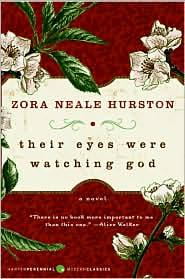
Zora Neale Hurston's novel about Janie Crawford, a Black woman in early 1900s Florida who moves through three marriages in search of real love and her own voice. For readers who want the plot, the themes and the meaning of the title.

The Wife Upstairs is Rachel Hawkins's 2021 thriller that retells Jane Eyre in a wealthy Alabama suburb, where a broke dog walker falls for a widower whose wife vanished on a lake. For readers who like twisty domestic suspense.
New books, occasionally