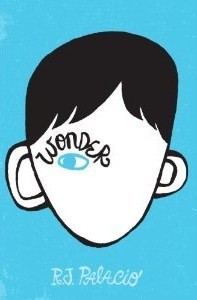
Wonder by R. J. Palacio is a novel about August Pullman, a ten-year-old boy with a facial difference who goes to school for the first time in fifth grade. For readers who want the plot, the narrators and the book's lesson on kindness.
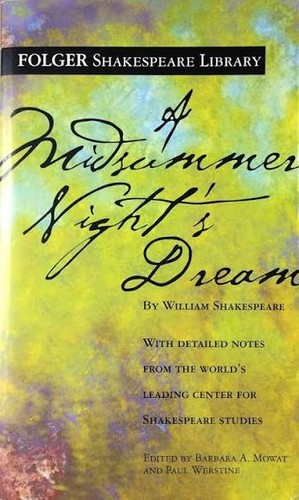
1600 · 256 pages · Summary updated 24 October 2026
A Midsummer Night's Dream is Shakespeare's comedy of four young lovers, a fairy king and queen, and a troupe of workmen who get lost in an enchanted wood outside Athens. For readers who want the four plots, the themes and the ending in plain words.
In Athens, Hermia is ordered to marry Demetrius, so she runs off into the wood with Lysander. Demetrius follows, and Helena, who loves him, follows him. In the same wood, the fairy king Oberon is quarreling with his queen Titania, and a group of workmen led by Bottom rehearse a play for the duke's wedding. Oberon's servant Puck uses a love potion and puts it on the wrong eyes. Both men fall for Helena, and Titania falls for Bottom, whom Puck has given a donkey's head. Shakespeare turns love's irrationality into farce and asks how much of love is a dream.
Helena says that love looks not with the eyes but with the mind, which is why Cupid is painted blind. The play proves her right. Demetrius switches from Helena to Hermia before the play starts, and the potion only speeds up what love already does. Lysander moves from Hermia to Helena in a moment and swears reason made him do it. Shakespeare's comedy is that the lovers explain their feelings with logic while a flower decides for them.
Lysander's line in Act 1 sets the plot's pattern. A father objects, a law threatens death, friends turn rivals, and magic scrambles every feeling. Each obstacle pushes the lovers further into the wood. Shakespeare uses comedy's basic structure: love meets barriers, the barriers multiply until chaos, and then order returns with weddings. The example is the quarrel in Act 3, where four friends become enemies in one scene and the fog and potion have to sort them out.
Athens has law, a duke and fathers who decide marriages. The wood has no such rules. There, a weaver can be loved by a queen, a girl can chase a boy, and best friends can fight like cats. Shakespeare uses the green world to test the rules of the city. The lovers go into the wood under one law and come out with a different result. The example is Theseus, who overrules Egeus once he sees the couples paired off.
Oberon and Titania's fight over the changeling boy is not private. Titania describes floods, rotting crops, fog and frost on summer roses, all caused by their quarrel. Shakespeare ties the health of the natural world to harmony between its rulers. When the fairy king and queen reconcile in Act 4, the human couples are sorted out on the same morning. The play links domestic peace, political order and the seasons.
Bottom and his friends worry that the audience will think the lion is real, so they add a prologue explaining it is only Snug. They play Wall and Moonshine with people. Their play is terrible, and that is the joke. Shakespeare uses it to show what real theater relies on: the audience's imagination. Theseus says the best plays are only shadows, and the worst are no worse if imagination improves them. The example is the whole Pyramus and Thisbe performance.
Nick Bottom wants to play every role, gives directions to everyone and is never afraid. When Puck gives him a donkey's head, he does not notice. When the fairy queen falls in love with him, he accepts it calmly and asks the fairies to scratch his head. Shakespeare makes him both ridiculous and oddly wise. He tells Titania that reason and love keep little company these days. The example is his speech on waking, where he cannot describe his dream and decides to make a ballad of it.
At the end, Puck reverses the potion on Lysander, so he loves Hermia again, and Oberon frees Titania. Demetrius is never cured. He marries Helena while still under the flower's spell, and he says his love for Hermia melted like snow. Shakespeare gives the comedy its happy pairing and leaves a quiet question under it: is love that magic produced any less real than love that comes on its own? The play never answers, and Puck's epilogue calls it all a dream.
“The course of true love never did run smooth.”
“Lord, what fools these mortals be!”
“And though she be but little, she is fierce.”
A Midsummer Night's Dream is William Shakespeare's comedy about four young lovers, a band of amateur actors and a quarreling fairy king and queen, all tangled together for one night in a wood outside Athens. Shakespeare wrote it around 1595 or 1596, close in time to Romeo and Juliet. It was first printed in 1600. Unlike most of his plays, it has no single main source. He drew on Ovid's story of Pyramus and Thisbe, Chaucer's Knight's Tale for Theseus and Hippolyta, and English folklore for the fairies.
The play weaves four groups together:
The main themes are the irrationality of love, dreams and imagination, order and disorder, and the power and silliness of theater. Much of the play is in verse, and each group has its own sound: the court in stately blank verse, the lovers in rhyme, the fairies in songlike short lines and the workmen in prose.
Theseus and Hippolyta count the days to their wedding. Egeus bursts in with his daughter Hermia and the two young men. He wants her to marry Demetrius, but she loves Lysander, and he accuses Lysander of bewitching her with songs and gifts. Under Athenian law, a daughter who refuses her father's choice must die or become a nun for life. Theseus gives Hermia until his wedding day to decide.
Lysander points out that Demetrius once courted Helena, who still loves him. Left alone, Lysander tells Hermia that the course of true love never did run smooth. He proposes that they run away to his aunt's house, seven leagues from Athens, beyond the reach of the law. They will meet the next night in the wood.
They tell Helena. Helena, miserable that Demetrius now loves Hermia, decides to tell him of the plan in the hope of winning his thanks.
Elsewhere, Peter Quince gathers his company: Bottom the weaver, Flute the bellows mender, Snout the tinker, Snug the joiner and Starveling the tailor. They will perform The most lamentable comedy and most cruel death of Pyramus and Thisbe at the duke's wedding. Bottom will play Pyramus, the lover, but he also wants to play Thisbe and the lion. Flute must play Thisbe despite his beard coming in. They agree to rehearse in the wood by moonlight.
In the wood, Puck meets one of Titania's fairies and boasts about his tricks on mortals. Oberon and Titania arrive and quarrel. Titania is raising a little changeling boy, the son of a dead friend, and Oberon wants him as a page. Their fight has thrown the seasons into chaos: floods, failed crops and frost on summer roses. Titania refuses to give the boy up.
Oberon decides to punish her. He sends Puck to fetch a flower called love-in-idleness, once struck by Cupid's arrow. Its juice, dropped on sleeping eyes, makes a person fall madly in love with the next living creature they see.
Demetrius comes through the wood hunting for Hermia, with Helena chasing him. He insults her and threatens to leave her to the wild beasts. She follows anyway. Oberon, invisible, pities her. When Puck returns, Oberon tells him to put the juice on the eyes of the Athenian man, whom he will know by his Athenian clothes. Oberon himself drops the juice on Titania's eyes as she sleeps.
Lysander and Hermia, lost and tired, lie down to sleep apart. Puck finds Lysander, sees Athenian clothes, and anoints the wrong man. Helena, abandoned by Demetrius, stumbles on Lysander and wakes him. He falls in love with her at once. She thinks he is mocking her and runs off. He follows. Hermia wakes from a nightmare and finds herself alone.
The workmen rehearse nearby. Bottom worries that the ladies will be frightened when Pyramus kills himself, so he wants a prologue explaining that it is only a play. They decide that one actor will play Wall and another Moonshine.
Puck watches and plays a trick. When Bottom steps out of the scene, Puck gives him the head of a donkey. The others flee in terror. Bottom thinks they are making an ass of him and sings to show he is not afraid. His singing wakes Titania, who falls in love with him at first sight. She orders her fairies, Peaseblossom, Cobweb, Moth and Mustardseed, to wait on him.
Oberon is delighted. Then he learns that Puck has anointed the wrong Athenian. Hermia accuses Demetrius of killing Lysander. To fix the error, Oberon anoints Demetrius himself, and Puck brings Helena near. Demetrius wakes and falls in love with her.
Now both young men love Helena, and neither loves Hermia. Helena is sure that all three are mocking her. Hermia thinks Helena has stolen Lysander by flaunting her height and calls her a painted maypole. Helena warns that Hermia may be small, but she is fierce. The friendship breaks. Lysander and Demetrius go off to fight a duel.
Puck says that he cannot help it: what fools these mortals be. Oberon orders him to cover the wood in fog, lead the two men apart with false voices until they drop with exhaustion, and then put an antidote on Lysander's eyes. Puck does it. All four lovers fall asleep near one another.
This section reveals the ending.
Oberon has won the changeling boy from Titania while she doted on Bottom. Now he pities her and releases her from the spell. She wakes and is horrified to see what she loved. Puck removes Bottom's donkey head. Oberon and Titania dance and are reconciled.
At dawn Theseus, Hippolyta and Egeus come to the wood to hunt and find the four lovers asleep. Lysander loves Hermia again. Demetrius, whose eyes are never cured, says his love for Hermia has melted away and he loves Helena. Egeus demands the law. Theseus overrules him and declares that both couples will marry alongside him that day. The lovers walk back to Athens, unsure whether they are awake. Bottom wakes alone and says he has had a most rare vision, past the wit of man to explain. He returns to his friends just in time.
In Act 5, Theseus tells Hippolyta that the lunatic, the lover and the poet are all made of imagination. He chooses the workmen's play for the wedding entertainment. The performance of Pyramus and Thisbe is a disaster in every comic way. Snout plays Wall and holds up his fingers as the chink the lovers whisper through. Snug's lion roars gently so as not to frighten the ladies. Starveling's Moonshine carries a lantern, a thornbush and a dog. Pyramus finds Thisbe's bloody cloak, believes the lion ate her, and stabs himself at great length. Thisbe finds him dead and stabs herself. The courtiers mock the actors throughout. It is a tragedy of young lovers and family obstacles played as farce, and it echoes the fate that the four Athenian lovers just escaped.
At midnight the couples go to bed. The fairies enter the palace, sing and bless the three marriages so that their children will be born healthy. Puck stays behind and speaks to the audience. If the play has offended, he says, think that you have only slept and dreamed it, and give him your applause.
No one dies, and everyone marries. The only lasting trace of the night's magic is that Demetrius is still under the spell.
For a long time the play was read as a light, charming fantasy. The Polish critic Jan Kott, in the 1960s, argued that it is dark and erotic, full of animal desire and humiliation, and Peter Brook's 1970 production on a bare white stage changed how it is played. Feminist critics note that Hippolyta is a conquered bride, that Hermia faces death for choosing her husband, and that Oberon drugs and humiliates his wife to get what he wants. Others answer that the play contains these threats inside a comedy that defuses them. Many productions double Theseus with Oberon and Hippolyta with Titania, which suggests the wood is a dream version of the court.
Read it if you are studying the play, preparing a production or want a clear map of its four plots. It suits anyone who enjoys comedy about love's foolishness and the strange power of theater.
12 cards
Question 1 of 5
Why does Egeus bring Hermia before Theseus?
Oberon frees Titania from the spell and Puck reverses the potion on Lysander, who loves Hermia again. Demetrius stays enchanted and loves Helena. Theseus overrules Egeus, and three couples marry. The workmen perform Pyramus and Thisbe, the fairies bless the marriages, and Puck asks the audience to think it was only a dream.
Wonder by R. J. Palacio is a novel about August Pullman, a ten-year-old boy with a facial difference who goes to school for the first time in fifth grade. For readers who want the plot, the narrators and the book's lesson on kindness.

Ugly Love is Colleen Hoover's romance about Tate Collins, a nursing student who agrees to a no-strings affair with a guarded airline pilot, Miles Archer, whose past is a closed door. For readers who want a steamy, emotional love story with a heartbreaking backstory.
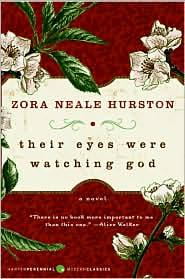
Zora Neale Hurston's novel about Janie Crawford, a Black woman in early 1900s Florida who moves through three marriages in search of real love and her own voice. For readers who want the plot, the themes and the meaning of the title.
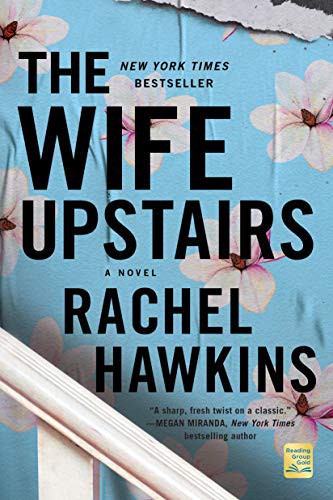
The Wife Upstairs is Rachel Hawkins's 2021 thriller that retells Jane Eyre in a wealthy Alabama suburb, where a broke dog walker falls for a widower whose wife vanished on a lake. For readers who like twisty domestic suspense.
New books, occasionally