1 h 28 min
A 2021 documentary that follows physician Gabor Maté as he argues that unhealed trauma lies beneath much addiction, mental illness and chronic disease. For readers of Maté and anyone curious about trauma-informed care.
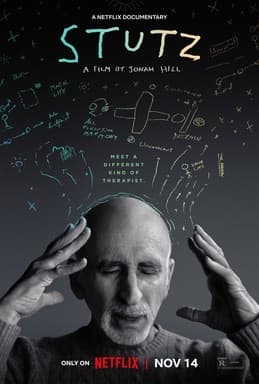
Documentary
Directed by Jonah Hill
2022 · 1 h 36 min · Summary updated 3 November 2026
Jonah Hill's documentary about his psychiatrist, Phil Stutz, and the simple drawn tools Stutz uses to help patients handle pain, fear and change. For anyone curious about practical therapy.
In Stutz, Jonah Hill talks with his psychiatrist, Phil Stutz, about the tools Stutz draws on cards. The core claim is that pain, uncertainty and constant work are part of every life, so the aim is to keep moving, not to escape them. Stutz names the inner force that blocks change Part X: it builds a perfect picture of life, traps you in thoughts about fairness, and hides the parts of you that you dislike. His tools (Life Force, the String of Pearls, Active Love, the Grateful Flow and others) are short exercises that turn that stuck energy into action. Halfway through, Hill reveals how he staged the documentary, and it becomes a study of the two men.
Stutz calls these three facts the aspects of reality. He argues that no amount of money, fame or success removes them, so a plan to reach a life without pain or effort rests on a false premise. The documentary treats acceptance of these facts as the first step, not as a defeat. Once you stop waiting for them to end, you can put your energy into the next action. Every tool Stutz teaches assumes that the pain and the doubt will still be there tomorrow.
Stutz names the inner force that opposes growth Part X. It creates fear and self-doubt, and tells you to wait for a better moment. Stutz says Part X never disappears, even in people who seem to have everything. The job is to recognize its voice when it speaks and to act anyway. In the documentary, many of Hill's own doubts about himself and his work are framed as Part X talking.
Stutz draws Life Force as a pyramid with three levels. The base is your relationship with your body: sleep, exercise and diet. The middle is your relationship with other people. The top is your relationship with yourself, which he says you build through practices such as journaling. When a patient feels lost or depressed, Stutz sends them back to the base first. His reasoning is that the lower levels supply energy to the upper ones, so a walk and a good night's sleep come before deep self-analysis.
Stutz pictures a life of action as a string of pearls. Each pearl is one action, and each has equal value, whether it is brushing your teeth or ending a relationship. Each pearl also has a dark spot, because no action is perfect. The task is simply to add the next pearl. The image is aimed at Part X, which wants you to wait until you can make the perfect move. Stutz argues that steady, imperfect action builds momentum that big plans alone never produce.
The Snapshot is a frozen mental image of a perfect life, with no problems in it. It ignores pain, uncertainty and work, so real life always looks worse by comparison. The Maze is a loop of thoughts about fairness: you wait for an apology or for justice before you move on. Stutz presents both as traps that Part X builds to stop you from acting in the present. His answer to the Maze is Active Love, a short visualization in which you send loving energy toward the person you resent.
The Shadow is the part of yourself you feel ashamed of. For Hill, it is the overweight teenager he used to be. Stutz asks him to picture that boy, look at him, and talk to him, instead of trying to bury him. The argument is that a rejected part of yourself does not go away; it keeps pulling energy from you in hidden ways. Accepting it returns that energy. This section leads to some of the most personal moments in the documentary, including Hill's account of public comments about his body.
Stutz describes his tools as exercises, not insights. Each one, from the Grateful Flow to Loss Processing, takes a few seconds and is meant to be used many times a day, at the moment a feeling hits. The documentary shows him returning to the same drawings again and again with Hill over years. The message is that understanding a problem changes little by itself; the daily practice is what changes how a person feels and acts.
Availability in the US. Services change their catalogs, so check the price on the service before you pay.
Stutz is a 2022 documentary directed by actor Jonah Hill. Its subject is Phil Stutz, the Los Angeles psychiatrist who has treated Hill for years. Netflix released it in November 2022.
The documentary is shot mostly in black and white. Most of it is the two men in chairs, facing each other, talking. Hill asks the questions a patient would ask. Stutz answers with drawings. He sketches each idea on a small card, and simple line animation brings the sketches to life on screen.
Hill says he made it to share Stutz's life story and to bring the tools that helped him to a wider audience. Stutz does not work like a quiet listener. He talks a lot, he swears, he jokes, and he gives the patient something to do. The documentary calls these exercises the tools.
Two personal stories run underneath the lessons. Stutz has Parkinson's disease, and in one session Hill reminds him to take his medication. He talks about his younger brother, who died when Stutz was nine, and about how his parents' grief shaped his wish to help people. Hill, for his part, keeps steering away from his own grief. His older brother, Jordan, died in December 2017.
Stutz starts from what he calls the three aspects of reality: pain, uncertainty and constant work. He argues that nobody escapes them. Money, fame and success do not remove them. A plan to reach a point where life no longer hurts or demands effort is, in his view, a plan built on a false premise.
This framing matters for everything that follows. The tools do not promise a life without pain. They aim to help a person keep moving while the pain, the doubt and the effort continue. Stutz presents acceptance of these three facts as the entry ticket to change, not as a sign of defeat.
Stutz names the force that blocks change Part X. In the documentary, it is the inner voice that creates fear and self-doubt and tells a person that they cannot change or that they should wait. Stutz says Part X never fully goes away. The task is to notice it and act anyway.
Part X works through several traps, and Stutz has a drawing for each one:
The Shadow section leads to some of the most personal moments in the documentary. Hill talks about his weight as a teenager and about years of public comments on his body after he became famous.
When a patient feels lost or depressed, Stutz goes back to Life Force. He draws it as a pyramid with three levels. The base is your relationship with your body: sleep, exercise and food. The middle is your relationship with other people. The top is your relationship with yourself, which Stutz says you build through practices such as journaling. He argues that work on the lower levels feeds the upper ones, so the body is the first place to start.
The String of Pearls is Stutz's picture of steady action. Each pearl is one action. Every pearl has equal value, whether you brush your teeth, send an email or end a relationship. Each pearl also has a dark spot, which stands for the fact that no action is perfect. The point is to keep adding pearls. The documentary presents this as an answer to Part X, which wants you to wait for the perfect move before you do anything.
The second half of the documentary adds tools for specific problems. Each is a short visualization that takes a few seconds.
Stutz stresses that the tools work through repetition. Insight alone, in his telling, changes little. The daily practice is what changes a person.
About halfway through, Hill breaks the format. He tells the viewer that the documentary was not shot in one tidy series of sessions. It was made over a long period on a set built to look like Stutz's office, with a green screen, and Hill wore a wig to keep his look consistent between shoots. He says he does not want to pretend.
From that point the documentary turns. The lessons give way to the relationship between the two men. Stutz pushes Hill to talk about his brother and about his mother, Sharon, who appears on screen to talk about Hill's childhood. Stutz also talks about his hard relationship with his own mother and his struggle with emotional intimacy. The final scenes return to the bond between the two men.
Most reviews were positive, but several critics pointed to limits. David Ehrlich of IndieWire wrote that the documentary is more for Hill than for the viewer, and that Hill's staging distracts from Stutz's lessons. RogerEbert.com's Nick Allen found the opening stuffy and the editing distracting. Psychotherapist James Davies, speaking to Vice, called it engaging but said a documentary and a few borrowed exercises cannot replace good long-term therapy in person.
Watch it if you want a short, practical set of mental tools and you like to learn from drawings and conversation. It also suits anyone who is curious about what a hands-on therapist does in a session. Treat it as an introduction, not as a substitute for treatment.
Book 1 of 3 · 2013
by Ichiro Kishimi and Fumitake Koga
It extends Stutz's focus on present action with Adler's argument that your past does not decide what you do next.
Book 2 of 3 · 2014
by Ryan Holiday
Holiday's Stoic case for acting on what you control fits Stutz's view that pain and uncertainty never leave.
Book 3 of 3 · 2006
by Carol S. Dweck
Dweck explains the research on why people who see themselves as able to change keep adding effort instead of waiting for perfection.
Store links may earn a commission.
11 cards
Question 1 of 5
According to Stutz, which three things does no one escape?
A 2021 documentary that follows physician Gabor Maté as he argues that unhealed trauma lies beneath much addiction, mental illness and chronic disease. For readers of Maté and anyone curious about trauma-informed care.
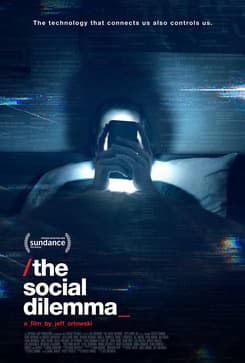
Former Google, Facebook and Twitter insiders explain how social media is built to hold attention, mixed with a scripted family drama. For anyone who wants to understand the attention economy.

A 10-episode ESPN and Netflix docuseries on Michael Jordan and the Chicago Bulls, built around never-aired footage of their final title season. For anyone interested in drive, leadership and team dynamics.
Matt D'Avella's documentary follows Joshua Fields Millburn and Ryan Nicodemus, known as The Minimalists, and others who chose to own less in order to live more deliberately. For anyone who feels buried by stuff, debt or busyness.
New books, occasionally