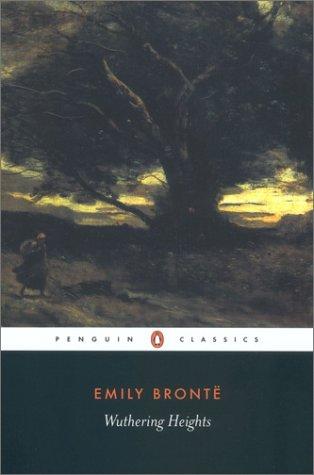
Emily Brontë's 1847 novel about Heathcliff, Catherine Earnshaw and two families on the Yorkshire moors, told across two generations. For readers who want the plot, the characters and the ideas behind a famous story of love and revenge.
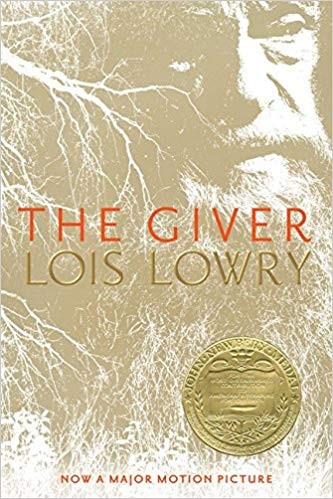
by Lois Lowry
1993 · 240 pages · Summary updated 24 October 2026
Lois Lowry's 1993 novel about Jonas, a boy chosen to hold all the memories his perfect community has given up. For readers who want the plot, what Sameness and release mean, and how to read the ending.
Jonas lives in a community with no pain, no conflict, no color, no weather and no choice. Every family, job and spouse is assigned. At the Ceremony of Twelve he is named the next Receiver of Memory, the one person who holds humanity's past so that everyone else can live without it. An old man called the Giver passes him memories of snow, sunshine, color and love, and then of war, hunger and grief. Jonas learns what the community has traded away and what the word release really means. When the baby his family is caring for is scheduled for release, Jonas decides to act.
The community removed snow, hills, color, animals, music and strong feeling. In return it has no hunger, no war and no fear. Lowry's point is that the trade was real: each thing removed solved a problem. The cost is hidden because nobody remembers what was lost. Jonas is the only person who knows that the sky was once blue. The book asks readers to notice what their own comforts cost, and who, if anyone, is still allowed to remember it.
The Elders keep one Receiver so that they can ask him about things that have never happened in their lifetimes. When they once wanted to increase the birth rate, the Giver remembered famine and advised against it. Lowry argues that a society which forgets its past cannot make good decisions, because it has no record of what happened last time. The memories are painful, and the community avoids them for that reason. The Giver's rooms full of books are the only history left.
The Giver transmits sunshine, then sunburn. He gives a sled ride, then a broken leg on the same sled. Jonas learns love from a family at Christmas and grief from the elephant that mourns its calf. The community removed pain and lost love, color and music in the same operation. Lowry shows the two as inseparable: the capacity to feel one is the capacity to feel the other. Jonas stops taking his pills because he decides the Stirrings are worth their discomfort.
The community prizes precision of language, yet its most important word is a lie. Release sounds like a departure to Elsewhere. It means lethal injection. Jonas's father performs it on newborns while speaking kindly to them and believes he is doing a routine task. Lowry shows that language can be used to prevent thought: if the word for killing is pleasant, nobody has to decide whether killing is right. Jonas's new rule allowing him to lie is the first crack in that system.
Jonas argues with the Giver about choice. The Giver notes that people could choose wrong: a wrong spouse, a wrong job, a wrong meal. Jonas agrees that is a risk and still wants the choice. The community assigns everything, from the color of tunics to the person you marry, so that nobody can be wrong. Lowry's position is that a life without the possibility of error is also a life without ownership. The sameness of everything is the price of being protected from a mistake.
The Giver tells Jonas that the worst part of holding the memories is not the pain but the loneliness. Rosemary could not carry them alone and asked to die. Jonas wants his friends to see color and feel what he feels. The plan to release the memories back to the community is painful for everyone, but it ends the isolation of one person carrying the weight. Lowry presents shared memory as the basis of community, and private memory as a burden that crushes the one who holds it.
Rosemary's death shows what happens when a Receiver is lost: the memories flow back to the people. Jonas and the Giver turn that accident into a plan. If Jonas leaves, the community will have to feel the past, and the Giver will stay to help them. Jonas goes early, to save Gabriel, without the memories of courage he was promised. Lowry makes the escape an act of giving, not only of flight. The title refers to the old man, but by the end Jonas is a giver too.
Jonas finds the sled from his first memory at the top of a snowy hill and rides down toward lights and music. Either he reaches Elsewhere, or he is dying of cold and the scene is the last memory he has. The final line says he may only have heard an echo. Lowry wrote it to be ambiguous and later said she intended hope; her sequel Messenger shows Jonas alive. The point is the same either way: Jonas chose a risky, real life over a safe, empty one.
“The worst part of holding the memories is not the pain. It's the loneliness of it. Memories need to be shared.”
The Giver is a short novel by Lois Lowry, published in 1993. It won the Newbery Medal in 1994 and has been read in American classrooms ever since. It has also been one of the most frequently challenged books in those classrooms. Lowry wrote three loosely connected sequels, Gathering Blue, Messenger and Son, and the book was filmed in 2014.
The story is set in a community that has solved every problem by removing its cause. There is no hunger, because food is delivered. There is no unemployment, because jobs are assigned. There is no bad weather, because the climate is controlled. There are no hills, because they slow transport. There is no color, because color invites preference. There is no conflict, because feelings are discussed every evening and treated with pills. The word for all this is Sameness.
Jonas is eleven at the start. He lives in a family unit: a Father who works as a Nurturer in the center for newborn children, a Mother who works in the Department of Justice, and a seven-year-old sister, Lily. The parents did not choose each other; they applied for a spouse and were matched. They applied for children and were given two, one male and one female, born to a Birthmother they will never meet. Each evening the family shares its feelings. Each morning it shares its dreams. Rules govern everything, from the precision of language to the ban on riding a bicycle before the age of nine.
Lowry builds the community through small details. Jonas is corrected for saying he is starving, because he is only hungry, and lying about hunger is imprecise. A pilot who flies over the community by mistake is to be released, and the announcement is made with embarrassment, as if release were a minor shame. A speaker in every house can be turned off, except that it cannot.
The year has one great day. In December every child moves up an age group, and the Ceremony of Twelve gives each twelve-year-old a job for life. Jonas worries about what he will be given. His friend Asher, who is cheerful and clumsy with words, is likely to get something easy. His friend Fiona, who is gentle, will probably work with the old. Jonas has no obvious talent.
Before the ceremony, Jonas's father brings home a newborn named Gabriel. Gabriel is not growing well and does not sleep through the night. Normally such a child is released, but Father has asked for extra time. Gabriel sleeps in Jonas's room. Jonas notices that the baby has pale eyes, like his own, which are rare in the community.
At the ceremony, the Chief Elder reads out the assignments one by one. Asher becomes Assistant Director of Recreation. Fiona goes to the House of the Old. When Jonas's turn comes, the Chief Elder skips him. The crowd goes silent. Jonas feels sick with shame. At the end, the Chief Elder explains: Jonas has not been assigned, he has been selected. He will be the new Receiver of Memory, the most honored position in the community. The current Receiver is old. The last person selected, ten years earlier, failed, and the community does not speak of her.
Jonas receives a list of rules. He may ask anyone any question and will always get an answer. He may not discuss his training. He may not request medication for pain related to it. He may not apply for release. And he may lie. This last rule shocks him. He has been taught since birth that lying is forbidden, and now he wonders whether every adult has been given the same permission.
The old Receiver lives alone in rooms at the back of the House of the Old, behind a door that locks. His rooms have books, thousands of them, where every other home has three. He tells Jonas to call him the Giver. His job is to transmit to Jonas all the memories of the past, not Jonas's own past, but the whole world's, going back for generations before Sameness.
The first memory is a sled ride down a snowy hill. Jonas, who has never seen snow or a hill, feels the cold and the speed. The next is sunshine on his skin. Then sunburn, the first pain. The Giver explains that the community gave up these memories to be safe from them. Snow made farming hard, so the climate was controlled. Hills slowed trucks, so the land was leveled. The memories still exist, but one person carries them for everyone else, so that the Elders can consult him when something unprecedented happens.
Jonas starts to see color. He had noticed an apple change in midair once, and then Fiona's hair. The Giver explains that what he saw was red. The community removed color along with everything else that made one thing different from another. Jonas receives a rainbow and is angry that his friends cannot see one. He wants Asher to see the sky as blue and Fiona to know her hair is red.
He receives more. An elephant hunt in which a mother elephant mourns a calf killed for its tusks. A family at Christmas with grandparents, which teaches him the word love. He asks his parents that evening if they love him, and they laugh at his imprecise language. He stops taking the pills that suppress the Stirrings, the early feelings of desire that the community medicates away.
Then the painful memories come. A broken leg. Hunger in a famine. Finally, war: a battlefield, a dying boy asking for water. Jonas understands why the Giver is bent with pain and why he says the worst part is not the pain but the loneliness of carrying it alone.
Jonas asks what happened to the Receiver who failed. Her name was Rosemary. She was the Giver's daughter. After receiving a few painful memories she applied for release. When she died, the memories she held returned to the community, and people could not cope with them. That is why the new Receiver is forbidden to apply for release.
Jonas asks the Giver to let him watch the release of a newborn. One of a pair of identical twins has to be released, because identical people would confuse the community, and Jonas's father is the one who does it. The Giver turns on a video feed. Jonas watches his father weigh the two babies, select the smaller, and talk to it in a gentle voice while he injects something into its forehead. The baby twitches and goes still. His father puts the body into a carton and drops it down a chute. He says goodbye to it in the same cheerful tone he uses at home.
Jonas understands that release is killing. The old are killed when they reach a certain age. The pilot was killed for a wrong turn. Rosemary was killed at her own request. His father kills babies as part of his job and does not know what he is doing, because the community has removed the memory of death along with everything else. Jonas cannot go home. He stays with the Giver that night.
The Giver has been thinking about this for years. The community needs the memories back. If Jonas leaves it, every memory he holds will spread to the people, as Rosemary's did. It will hurt them. But the Giver will stay to help them through it, as he could not for Rosemary.
They plan carefully. In two weeks, on the day of the next ceremony, Jonas will slip away while the Giver draws attention. The Giver will prepare him with memories of courage and strength and will give him memories to sustain him on the road. The Giver's last gift will be to help the community carry what returns. Jonas asks the Giver to come with him. The Giver refuses. He is tired, and he wants to be with his daughter.
Then the plan breaks. At dinner, Father mentions that Gabriel will be released the next morning, because he still does not sleep. That night Jonas takes his father's bicycle and the baby and leaves.
This section reveals the ending.
Jonas rides at night and hides by day. He has no memories of courage to help him, because he left before the Giver could transmit them. Search planes fly over. He uses memories of snow and cold to lower his own temperature and Gabriel's so that the heat sensors on the planes cannot find them.
As they travel, the land changes. There are trees, then hills, then a river with a deer and a bird on its banks. Jonas sees these things in color. The planes stop coming. But the food runs out, and Jonas finds that he is sustaining himself and the baby on memories of meals. The weather turns cold, with rain and then snow. He has given away so many memories that he has little left.
At the top of a hill in the snow, he finds a sled. It is the sled from the first memory. He puts Gabriel in front of him and rides down. Below, he sees lights in windows and hears what he believes is music. He feels that he and Gabriel are going somewhere warm, where people are waiting. The final sentence says that he may only have heard an echo.
The ending is open on purpose. One reading is that Jonas and Gabriel arrive in a village outside Sameness, the place the community calls Elsewhere. The other is that they are freezing to death and the sled, lights and music are the last memory Jonas has left. Lowry has said that she intended the hopeful reading, and her sequel Messenger shows Jonas alive as a grown man. The book itself does not settle it. The reader is given the memory and asked to decide what to believe.
The book is frequently challenged in American schools because of its scenes of infanticide, euthanasia and suicide, and because of the Stirrings. Defenders say that the scenes are the point: the book shows what it costs to make a society painless. A second line of criticism is literary. Some reviewers find the community's rules under-explained, since Lowry never says how color or weather were removed, and they find the memory transfer closer to magic than to science. Others argue that the ending is too vague for its readers and that the sequels were written to answer complaints. Lowry's own account is that she wrote it after watching her father lose his memory, and that the ambiguity is the question she wanted readers to live with.
Read it if you want a short, clear story about what a society gives up when it removes pain and choice, and if you are willing to sit with an ending that does not close. It suits readers from about eleven upward and works well for a class or a parent and child reading together.
12 cards
Question 1 of 5
What happens to Jonas at the Ceremony of Twelve?
Jonas escapes with the baby Gabriel after learning he is to be released. They travel for days, hiding from search planes, until the food runs out and snow falls. On a hill Jonas finds a sled like the one in his first memory and rides down toward lights and music. The ending is ambiguous: he may have reached Elsewhere, or he may be dying. Lowry has said she intended hope, and her sequel Messenger shows him alive.
Emily Brontë's 1847 novel about Heathcliff, Catherine Earnshaw and two families on the Yorkshire moors, told across two generations. For readers who want the plot, the characters and the ideas behind a famous story of love and revenge.
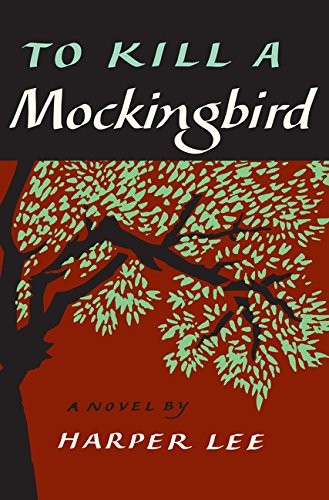
Harper Lee's novel about Scout Finch, her brother Jem, and their father Atticus, who defends a Black man falsely accused of rape in 1930s Alabama. For students and readers who want the plot, the themes and the ending in plain words.
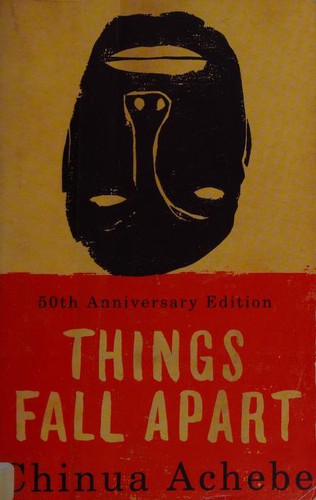
Chinua Achebe's novel about Okonkwo, an Igbo leader whose village is undone by his own rigidity and the arrival of British missionaries. For readers who want the colonial encounter told from the African side.

Machiavelli's 1513 manual on how a ruler gains and keeps power, written for the Medici after his fall from office in Florence. For readers who want the argument behind the word Machiavellian.
New books, occasionally