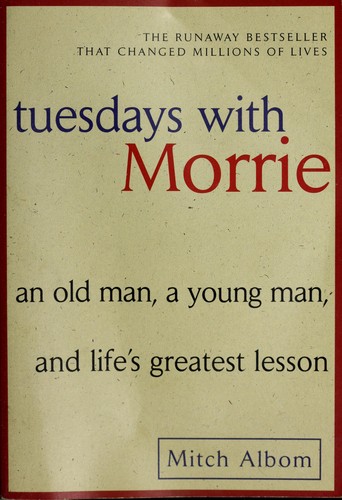
Mitch Albom's record of fourteen Tuesday visits with his dying college professor, Morrie Schwartz, and the lessons on love, work, family and death that came out of them. For readers who want a short book on how to live.
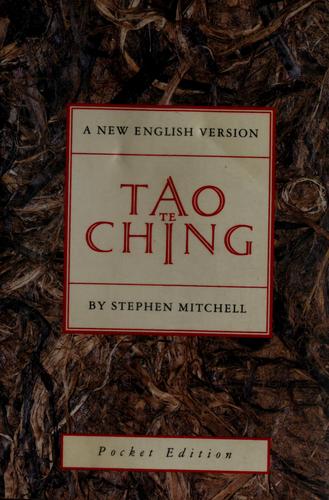
by Laozi
-400 · 128 pages · Summary updated 24 October 2026
The founding text of Taoism: 81 short poems on the Way, effortless action and leading by stepping back. For readers who want an ancient, practical guide to living with less force and less strain.
The Tao Te Ching is a collection of 81 short chapters attributed to Laozi, an archivist of the Zhou court who may never have existed. It describes the Tao, the Way that underlies everything and cannot be put into words, and Te, the natural power of a person who lives in line with it. Its central practice is wu wei, action without forcing. Water wears down rock by yielding. Empty space makes a pot useful. The best ruler is barely noticed, and the people say they did it themselves. Know when you have enough. Stay soft, stay low, and let things follow their own course.
The book opens by saying that the Tao that can be spoken of is not the eternal Tao. The Way is the source and pattern of everything, formless and unchanging, and any definition of it is already something smaller. Chapter 25 admits that "Tao" is only a label used for lack of a real name. So the text teaches by image: an empty bowl that never runs dry, a valley, a mother. The practical lesson is humility about theories. The map is never the territory, and the sage follows the pattern instead of arguing about it.
Wu wei is often translated as non-action, but it means acting without strain, interference or pushing against the grain. Chapter 48 says the student of the Tao drops something every day until nothing is forced and nothing is left undone. Chapter 63 asks the reader to act without acting and to handle the hard while it is still easy. A gardener who waters and waits practices wu wei. One who pulls on the shoots to make them grow does not. The skill is to see what the situation already wants to do and to help it.
Water is the book's model for the sage. Chapter 8 says the highest good is like water: it benefits everything, competes with nothing and settles in the low places that people avoid. Chapter 78 says nothing is softer than water, yet nothing is better at wearing down stone. Chapter 76 explains the principle: living things are soft and supple, dead things are stiff and hard, so rigidity is the companion of death. In a dispute, the person who yields on the surface and keeps going often outlasts the one who stands rigid and breaks.
Chapter 11 argues that we profit from what is present but use what is absent. Thirty spokes meet at a hub, and the empty center makes the wheel turn. Clay forms a pot, and the hollow inside holds the water. Walls are cut for doors and windows, and the empty space makes the room livable. The same applies to a schedule, a mind or an organization: the open space is where the use happens. A calendar with no gaps and a head full of opinions have no room for anything to happen.
Chapter 9 says that a bowl filled to the brim spills and a blade sharpened too far goes dull, so withdraw when the work is done. Chapter 44 asks whether fame, wealth or self matters more, and concludes that knowing contentment avoids disgrace and knowing when to stop avoids danger. Chapter 46 calls not knowing what is enough the greatest misfortune. Chapter 33 says that to know you have enough is to be rich. The point is not asceticism. It is that every extreme reverses, so the person who keeps pushing past enough brings on the fall.
Chapter 17 ranks rulers: the best is one the people hardly know exists, then one they love, then one they fear, and worst one they despise. When the best ruler finishes, the people say they did it themselves. Chapter 60 compares governing a large state to frying a small fish, which too much stirring ruins. Chapter 57 argues that more laws produce more thieves. The sage leads by not interfering, so people correct and organize themselves. A manager who sets conditions and steps back, rather than directing every move, is following this chapter.
Chapter 38 ranks the highest Te, which does not try to be virtuous, above the lowest, which clings to virtue. It then traces a decline: lose the Tao and you get virtue, lose virtue and you get benevolence, then righteousness, then ritual, which is the shell of good faith and the start of disorder. Chapter 18 makes the same point from the other side: loyal ministers appear only when the state is in chaos. This is the book's quarrel with Confucian rules. A family that needs to announce its love has already lost some of it.
Chapter 67 names the sage's three treasures. Compassion makes a person brave, because they fight for others rather than for show. Frugality makes a person generous, because they have reserves to give. Not daring to be first in the world makes a person fit to lead, because they do not need the front position. The chapter warns that courage without compassion, generosity without thrift and leadership without humility all end in ruin. Chapter 81 ends the book on the same note: the sage does not hoard, and the more he gives, the more he has.
“The Tao that can be trodden is not the enduring and unchanging Tao. The name that can be named is not the enduring and unchanging name.”
“A journey of a thousand miles begins with a single step.”
“Those who know do not speak. Those who speak do not know.”
The Tao Te Ching is the central text of Taoism and one of the most translated books in the world. Tradition credits it to Laozi, a name that means "Old Master." The historian Sima Qian, writing around 100 BCE, tells the standard story. Laozi worked as keeper of the archives at the court of the Zhou dynasty. Confucius visited him and came away shaken by his wisdom. Late in life, Laozi grew tired of the decline of the state and rode west on a water buffalo. At the frontier pass, the gatekeeper Yin Xi asked him to write down his teaching before he vanished. Laozi wrote about 5,000 Chinese characters and left. No one saw him again.
Most scholars treat this as legend. The text as we have it probably took shape around the 4th century BCE, during the Warring States period, when China was divided among rival kingdoms and rival schools of thought. It may be the work of several hands over time. Two archaeological finds show how old it is. In 1973, excavators at Mawangdui found two silk copies from the 2nd century BCE. In 1993, bamboo slips from a tomb at Guodian turned up a partial version from about 300 BCE. The Mawangdui copies put the second half of the book first, which is why some translations call it the "Te Tao Ching."
The book has 81 chapters, each a short poem or set of sayings. The traditional division is in two parts. Chapters 1 to 37 form the Tao Ching, the book of the Way. Chapters 38 to 81 form the Te Ching, the book of virtue or power. The division is loose, and the same themes run through both. The text has no plot, no argument in sequence and no named characters beyond "the sage." Each chapter stands on its own. Readers usually dip in rather than read straight through.
The Chinese is compressed and often ambiguous. A line can carry two or three readings at once. This is why English versions differ so much. James Legge (1891), Arthur Waley (1934), D. C. Lau (Penguin, 1963) and Victor Mair (based on the Mawangdui text, 1990) are scholarly translations. Gia-Fu Feng and Jane English (1972), Stephen Mitchell (1988) and Ursula K. Le Guin (1997) are freer versions by writers who aimed at readable English over word-for-word accuracy. Mitchell and Le Guin did not read classical Chinese. The summary below uses the ideas that run through all of them.
The book opens with its hardest claim. The Tao that can be spoken of is not the eternal Tao. The name that can be named is not the eternal name. The Tao, usually translated "the Way," is the source and pattern of everything. It existed before heaven and earth. It is formless, silent and unchanging, and it gives birth to all things without owning them. Chapter 25 says the Tao is something formless yet complete, and admits that "Tao" is only a label given for lack of a real name.
Because it cannot be defined, the book describes it by image and by what it is not. Chapter 4 calls it empty but inexhaustible, like a bowl that never fills. Chapter 6 calls it the valley spirit and the mysterious female, the gate from which heaven and earth come. Chapter 42 gives a cosmology in one line: the Tao gives birth to one, one gives birth to two, two to three, and three to the ten thousand things. Chapter 34 says the great Tao flows everywhere, to the left and to the right, and all things depend on it, yet it claims no credit.
Chapter 2 introduces the logic of opposites that runs through the book. When people call some things beautiful, other things become ugly. When they call some things good, other things become bad. Being and non-being create each other. Long and short define each other. High and low depend on each other. The sage sees these pairs as one movement, not as a fight between sides.
Chapter 25 ends with a chain that fixes the order of things. Humans follow the earth. Earth follows heaven. Heaven follows the Tao. The Tao follows ziran, a word that means "self-so" or "naturally." Nothing stands above the Tao. The Tao simply is what it is.
The book's main practical teaching is wu wei, usually translated "non-action" or "effortless action." It does not mean doing nothing. It means not forcing, not interfering, not pushing against the grain of things. The sage acts, but the action fits the situation so well that it looks like no action at all. Chapter 63 puts it in a paradox: act without acting, work without working, taste without tasting. Chapter 48 says that in the pursuit of learning, something is added every day. In the pursuit of the Tao, something is dropped every day, until one reaches non-action, and then nothing is left undone.
The book's favorite image for this is water. Chapter 8 says the highest good is like water. Water benefits all things and does not compete. It settles in the low places that people avoid, and so it is close to the Tao. Chapter 78 says nothing in the world is softer or weaker than water, yet nothing is better at wearing down the hard and strong. Chapter 66 explains why rivers and seas rule the valleys: they stay below them.
Softness beats hardness because the hard breaks. Chapter 76 observes that a living person is soft and supple, and a corpse is stiff and hard. A living plant is tender, and a dead one is dry and brittle. So the stiff and strong are companions of death, and the soft and yielding are companions of life. An army that is too rigid loses. A tree that is too stiff is cut down. Chapter 22 adds a set of reversals: yield and be whole, bend and be straight, empty yourself and be full, wear out and be renewed.
Chapter 36 gives wu wei a tactical edge. To shrink something, first let it expand. To weaken something, first let it grow strong. To take something, first give. The book calls this subtle insight: the soft overcomes the hard, and fish should not leave the deep water. Readers from the Legalist school and later military writers took this as advice on statecraft, and some modern readers object to it. In the book itself, the point is that things reverse when they reach an extreme, so force is wasted and timing is everything.
Chapter 11 is the book's most quoted argument for the value of what is absent. Thirty spokes meet at a hub, but it is the empty space at the center that makes the wheel useful. Clay is shaped into a pot, but the empty space inside holds the water. Doors and windows are cut into walls, but the empty space makes the room livable. We profit from what is there, and we use what is not there.
A second image is pu, the uncarved block. Chapter 28 asks the reader to return to the state of the uncarved block, the plain wood before anyone has cut it into tools and ornaments. Chapter 19 lists what to drop: abandon sageliness and cleverness and the people will benefit a hundredfold, abandon duty and justice and they will return to family love, abandon cunning and profit and there will be no thieves. In their place, show plainness, hold to simplicity, reduce selfishness, have few desires.
The book returns many times to knowing when to stop. Chapter 9 says that if you fill a bowl to the brim it spills, and if you sharpen a blade too much it dulls. A hall full of gold and jade cannot be guarded. Pride in wealth and rank brings its own downfall. Withdraw when the work is done: this is the way of heaven. Chapter 44 asks which matters more, fame or self, self or wealth, gain or loss, and concludes that knowing contentment avoids disgrace, and knowing when to stop avoids danger. Chapter 46 says there is no greater misfortune than not knowing what is enough, and no greater fault than wanting to get more.
Chapter 33 turns the same ideas inward. To know others is wisdom. To know yourself is enlightenment. To conquer others takes force. To conquer yourself takes strength. To know that you have enough is to be rich. Chapter 71 adds the book's theory of knowledge: to know that you do not know is best. Chapter 56 is blunter: those who know do not speak, and those who speak do not know.
Much of the book is advice to a ruler. Chapter 17 ranks governments. The best ruler is one the people barely know exists. Next is one they love and praise. Next is one they fear. Worst is one they despise. When the best ruler finishes the work, the people say, "We did it ourselves."
The method is wu wei applied to a state. Chapter 60 says that governing a large country is like frying a small fish: too much stirring ruins it. Chapter 57 argues that the more laws and prohibitions there are, the poorer the people become, and the more rules are proclaimed, the more thieves appear. The sage says: I take no action and the people transform themselves. I love quiet and the people become upright. I do not interfere and the people prosper. I have no desires and the people return to simplicity.
Chapter 3 is the most contested passage in the book. It advises not to honor the clever, so that people do not compete, and not to display rare goods, so that people do not steal. The sage governs by emptying minds and filling bellies, weakening ambitions and strengthening bones. Some read this as a recipe for keeping subjects docile and ignorant. Others read "emptying minds" as freeing people from craving. The book does not settle the question.
The book is firmly against war. Chapter 30 says that whoever advises a ruler by the Tao does not use weapons to force the world, because such things tend to rebound. Where armies camp, thorns grow. A good general achieves the goal and stops, without boasting, pride or arrogance. Chapter 31 calls weapons instruments of ill omen, to be used only when there is no choice, and says that victory in war should be treated as a funeral. Chapter 69 says a general should not make the first move and should yield rather than advance an inch, and that when two matched armies meet, the one that grieves wins.
Chapter 80 draws the book's picture of an ideal state: a small country with few people, where tools exist but go unused, where people take death seriously and do not travel far, where boats and weapons sit idle, and where the people enjoy their food, their clothes, their homes and their customs. Neighbors can hear each other's dogs and roosters, yet grow old and die without ever visiting. It is a vision of a society that has stopped striving.
Te is the second word in the title. It is usually translated "virtue," but it means something closer to the natural power or integrity that a thing has when it follows its own nature. Chapter 51 says the Tao gives birth to things and Te nourishes them. The Tao produces without possessing, acts without expecting and leads without controlling. This is called the mysterious Te.
Chapter 38 opens the second half of the book with a sharp ranking. The highest Te does not try to be virtuous, and so it has Te. The lowest Te never lets go of virtue, and so it has none. The chapter then traces a decline. When the Tao is lost, there is Te. When Te is lost, there is benevolence. When benevolence is lost, there is righteousness. When righteousness is lost, there is ritual. Ritual is the thin shell of loyalty and good faith, and the start of disorder. Chapter 18 makes the same point in reverse: when the great Tao is abandoned, benevolence and righteousness appear; when families fall into discord, filial piety appears; when the state is in chaos, loyal ministers appear. Named virtues are signs that the real thing has already gone. This is the book's standing quarrel with the Confucian stress on ritual and duty.
Chapter 67 gives the sage's three treasures: compassion, frugality and not daring to be first in the world. Compassion makes one brave. Frugality makes one generous. Not pushing to the front makes one fit to lead. The chapter warns that bravery without compassion, generosity without frugality and leadership without humility lead to death.
Chapter 81 closes the book. True words are not beautiful, and beautiful words are not true. The good do not argue, and those who argue are not good. The sage does not hoard. The more he does for others, the more he has. The more he gives to others, the greater his abundance. The way of heaven is to benefit and not harm. The way of the sage is to act and not compete.
The text is so compressed that translators disagree about basic lines, and popular versions by Mitchell and Le Guin have been criticized by sinologists for smoothing over the Chinese. The politics of chapters 3 and 65, which speak of keeping the people simple and without knowledge, read to some as a manual for passive subjects, and the Legalist thinker Han Fei wrote an early commentary that used the book in just that way. Historians also doubt that Laozi was a single person, so the biography that frames most editions is tradition rather than record.
Read it if you want a short, ancient counterweight to hustle and control, or if you lead people and want to do less of it. Read a few chapters at a time, and compare two translations when a line puzzles you. It rewards slow rereading more than a single pass.
12 cards
Question 1 of 5
What does wu wei mean in the Tao Te Ching?
Mitch Albom's record of fourteen Tuesday visits with his dying college professor, Morrie Schwartz, and the lessons on love, work, family and death that came out of them. For readers who want a short book on how to live.
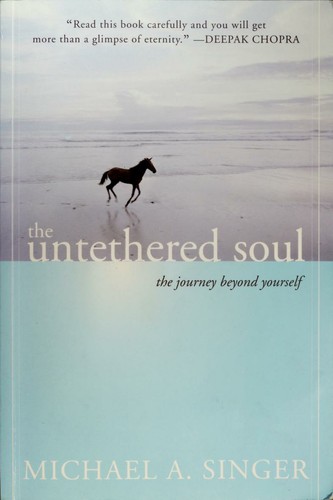
Michael A. Singer's guide to stepping back from the voice in your head, keeping your heart open and letting go of the fears that run your life. For readers drawn to meditation and nondual spirituality.
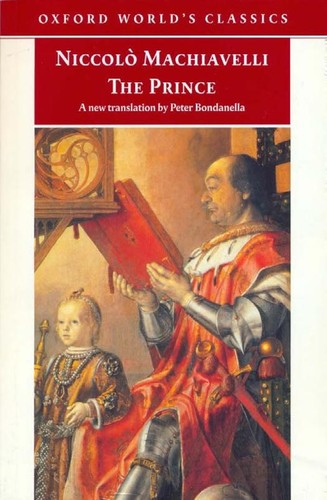
Machiavelli's 1513 manual on how a ruler gains and keeps power, written for the Medici after his fall from office in Florence. For readers who want the argument behind the word Machiavellian.
Ryan Holiday turns a line from Marcus Aurelius into a three-part method for handling setbacks: perception, action and will. For anyone stuck behind a problem who wants a Stoic way through it.
New books, occasionally