Gary Keller and Jay Papasan argue that extraordinary results come from narrowing your focus to one thing at a time. For anyone whose to-do list keeps growing while the important work stalls.
by Simon Sinek
2009 · 256 pages · Summary updated 24 October 2026
Simon Sinek's Golden Circle: leaders and companies that inspire start with why they exist, not what they sell. For founders, managers and anyone who needs people to follow an idea.
Most organizations know what they do and how they do it. Few can say why they exist beyond making money. Sinek's Golden Circle puts why at the center, and he argues that people and companies that inspire, such as Apple, Martin Luther King Jr. and the Wright brothers, communicate from the inside out. Why speaks to the part of the brain that drives decisions and loyalty; what speaks only to reason. Manipulations such as price cuts, promotions and fear produce transactions, not trust. Clarity of why, discipline of how and consistency of what build trust, attract early adopters and let a company outlast its founder. Success is the biggest threat, because growth tends to blur the why.
Sinek draws three rings. The outer ring is what you do. Every company knows it. The middle ring is how you do it: your process or values. The center is why you exist, the belief or cause beyond making money. Inspiring leaders and companies communicate from the inside out. Apple does not say "we make great computers, want one?" It says it believes in challenging the status quo, and happens to make computers. That order is why Apple could sell phones and music players while Dell's MP3 player failed.
Price cuts, promotions, fear, aspiration, peer pressure and novelty all move people to act. Sinek calls them manipulations. They buy a transaction, not trust, and each one costs more than the last. Car makers learned this with rebates: once buyers expected a rebate, nobody bought without one. Manipulations push companies into a cycle of short-term pushes and shrinking margins. Inspiration, the other way to influence behavior, starts with a belief people share and produces customers who stay without being bribed.
Sinek maps the circle onto the brain. The neocortex handles language and rational analysis, the home of the what. The limbic brain handles feelings, trust and loyalty and drives decisions. In his account it has no capacity for language, which is why people say a choice "feels right" without being able to explain it. A list of features addresses the neocortex and rarely moves anyone. A clearly stated why reaches the part that chooses. Critics note this simplifies the neuroscience, but the practical point stands: people decide on belief and justify with facts.
Each ring has a rule. Clarity of why: you can state it. Discipline of how: your values are verbs people can act on, not nouns on a wall. Consistency of what: every product, hire and message proves the why. When the three line up, Sinek calls it authenticity, and trust follows. Southwest Airlines existed to serve people who could not afford to fly, so cheap fares, one aircraft type and a playful crew all made sense together. Gordon Bethune turned Continental around by first fixing how employees were treated.
Everett Rogers's law of diffusion splits any population into innovators (2.5 percent), early adopters (13.5), early majority (34), late majority (34) and laggards (16). The majority will not try something until others have. Mass success needs a tipping point of about 15 to 18 percent, and those people buy on belief, not features. They lined up for the first iPhone. TiVo had a better product and strong funding but marketed features to the majority and stalled. Martin Luther King Jr. drew 250,000 people with "I Have a Dream," not "I Have a Plan."
Walt Disney had the vision and Roy Disney built the company. Bill Gates imagined a computer on every desk and Paul Allen ran the business. Steve Jobs needed Steve Wozniak. Sinek calls the visionaries why types and the builders how types. Why types are optimists who see what does not exist yet. How types are realists who make it real. He pictures the company as a megaphone with the why type at the narrow end and every product and employee at the wide end. A leader's job is to be clear; the organization's job is to carry the why faithfully to the market.
Early on, why and what move together because the founder is in every decision. As the company grows, the what becomes measurable, in sales, headcount and share price, while the why does not. Managers optimize what they can measure and the passion drains out. Sinek calls the moment the lines separate the split. Walmart kept growing after Sam Walton died in 1992 but became known for lawsuits and towns that fought to keep it out. Howard Schultz's return to Starbucks in 2008 was an attempt to restore its why. The leader's job is to make the why survive the leader.
Suppose people at a party tell you to buy Oreos, rice milk, celery and M&Ms. If you buy all of it, you waste money and nobody can tell what you believe. If your why is to be healthy, you buy celery and rice milk only, and anyone who sees your cart understands you. Sinek uses the test for business decisions: filter every partnership, product and message through the why. Decisions get faster and cheaper, and customers and employees can see what the company stands for without being told.
“People don't buy what you do; they buy why you do it.”
Simon Sinek, a former advertising executive, opens with three puzzles. Why did Apple, a computer maker with no special technical edge, keep producing products people lined up for? Why did the Wright brothers, two bicycle makers with no funding, beat Samuel Pierpont Langley, who had government money, a Smithsonian post and the best minds of the day, to the first powered flight? And why did a quarter of a million people travel to Washington in August 1963 to hear Martin Luther King Jr. when nobody sent invitations? His answer is that all three started with why.
Before he explains, he describes what most companies do instead. They know what they sell and roughly how they sell it, and they move people with manipulations. Sinek lists them: price cuts, promotions, fear ("nobody ever got fired for buying IBM"), aspirations (every January gym offer), peer pressure ("four out of five dentists") and novelty (a phone with one new feature). Manipulations work. They produce a transaction every time. They do not produce loyalty, and each one costs more than the last. Car companies learned this with rebates: once buyers expected them, nobody bought without one. Sinek argues that there are only two ways to influence behavior, manipulation and inspiration, and that most companies have forgotten the second exists.
The book's framework is three concentric rings. The outer ring is what: the products a company sells or the job a person does. Every organization knows its what. The middle ring is how: the process, the values or the differentiating steps. Some know this. The center is why: the purpose, cause or belief that explains why the organization exists and why anyone should care. Very few organizations can state it. Making money is not a why. It is a result.
Most companies communicate from the outside in. "We make great computers. They are beautifully designed and easy to use. Want to buy one?" Sinek argues that Apple communicates from the inside out. "Everything we do, we believe in challenging the status quo and thinking differently. The way we do that is by making beautifully designed products. We happen to make great computers." The order changes the message from a pitch to a cause. It is also why Apple could sell music players and phones without confusing anyone, while Dell's MP3 player and Gateway's flat-screen televisions failed. Customers did not know what Dell stood for beyond computers.
Sinek maps the circle onto the brain. The neocortex handles language and rational thought and matches the what. The limbic brain handles feelings, trust and loyalty and, by his account, has no capacity for language. That is why people say a decision "feels right" and cannot explain it, and why a list of features rarely closes a sale. Communicating from why speaks to the part of the brain that decides.
For the circle to work, each ring has a rule. The why needs clarity: you must know it and be able to say it. The how needs discipline: the values must be verbs people can act on, such as "always do the right thing," not nouns like "integrity" that sit on a wall. The what needs consistency: everything a company says and does must prove the why. Authenticity, in Sinek's definition, is simply when the three rings line up.
His cases are Southwest Airlines under Herb Kelleher, which existed to serve the ordinary person who could not afford to fly, and built cheap fares, a single aircraft type and a playful culture around that belief, and Continental Airlines under Gordon Bethune, who turned the worst airline in America into a profitable one by first fixing how employees were treated. Trust, in Sinek's account, is a feeling that grows when people see that you act from the same beliefs they hold.
Why matters for growth because of how ideas spread. Sinek uses Everett Rogers's law of diffusion of innovations: about 2.5 percent of a population are innovators, 13.5 percent early adopters, 34 percent early majority, 34 percent late majority and 16 percent laggards. The early majority will not try something until someone else has tried it first. So mass-market success depends on reaching a tipping point of roughly 15 to 18 percent, the innovators and early adopters.
Those people buy on belief, not on features. They stood in line for the first iPhone and paid $40,000 for the first flat-screen televisions. Sinek contrasts Apple with TiVo, which had the better product, strong funding and a device that skipped commercials, and still failed to take off because it marketed its features to the majority instead of its belief to the few who would spread the word.
The diffusion law also explains Martin Luther King Jr. He was not the only great speaker of the civil rights movement, and he did not tell people what needed to change. He told them what he believed, in a speech called "I Have a Dream," not "I Have a Plan." People who shared the belief came for themselves and told others. Leaders, Sinek says, need a following of people who believe what they believe.
Sinek distinguishes people who hold the why from people who build the how. Walt Disney had the vision; his brother Roy built the company. Bill Gates imagined a computer on every desk; Paul Allen built the business. Herb Kelleher ran Southwest, but Rollin King had the idea. Steve Jobs needed Steve Wozniak. Why types are the optimists who see what does not yet exist. How types are the realists who make it real. Neither succeeds alone.
He pictures the organization as a megaphone: the why type at the narrow end, the how types around them, and the what, every product and employee, at the wide end facing the market. The leader's job is to be clear about the why; the organization's job is to carry it faithfully to the edge. A marketing message, a hiring decision or a product that does not match the why muffles the sound.
To test it he offers the celery test. Imagine people at a party tell you to buy Oreos, rice milk, celery and M&Ms. If you buy everything you waste money and nobody knows what you believe. If your why is to be healthy, you buy only rice milk and celery, and everyone can see it in your shopping cart. Decisions that pass the celery test are faster and cheaper, and they let customers and employees tell what you stand for.
Sinek's warning for growing companies is the split. At the start, why and what move together because the founder is in every decision. As the company grows, the what becomes measurable (sales, headcount, share price) and the why does not. Managers start to optimize what they can measure. The company keeps growing for a while, and then the passion drains out.
Walmart is the main example. Sam Walton built it to serve ordinary people and the towns it opened in. After he died in 1992 the company kept growing, but it became known for lawsuits, labor fights and towns that fought to keep it out. Nobody inside had made Walton's why explicit enough to pass on. Microsoft after Bill Gates stepped back, and Starbucks after Howard Schultz left, show the same drift; Schultz's return in 2008 was an attempt to restore the why. Sinek argues that the measure of a leader's success is whether the why survives the leader.
The last part is Sinek's own story. In 2005 he ran a marketing business that paid the bills and lost all meaning for him. Working out why he did what he did, which he stated as inspiring people to do what inspires them, pulled him out. He argues that a why is not invented. It comes from looking back at the stories of who you are and what you already believed before you had a business. A company's why comes from its founders.
He closes with Apple's "Think Different" campaign and with Harley-Davidson customers who tattoo the logo on their bodies. Nobody tattoos a feature list. The new competition, he says, is not against rivals. It is against yourself: get clearer about your why, more disciplined about your how and more consistent in your what, and the right customers and employees will find you.
Reviewers note that the brain science is simplified past what research supports: the limbic system is not a language-free decision maker that works alone. The book draws most of its evidence from Apple and a few other favorable cases chosen after the fact, and it repeats its central point many times. Some also point out that a why can be written after success to explain it, which makes the theory hard to test.
Read it if you lead a company, a team or a cause and need people to follow an idea rather than a paycheck. Marketers, founders and managers get a simple test for whether their messages and decisions match what they claim to stand for.
12 cards
Question 1 of 5
In which order does Sinek say inspiring organizations communicate?
Gary Keller and Jay Papasan argue that extraordinary results come from narrowing your focus to one thing at a time. For anyone whose to-do list keeps growing while the important work stalls.
Patrick Lencioni's leadership fable about a new CEO who rebuilds a failing executive team, followed by his five-level model of why teams fail. For managers and anyone who sits on a leadership team.
Sun Tzu's 13 short chapters on strategy from ancient China: win without fighting, know yourself and your enemy, and shape the ground before the battle. For readers in business, politics or any contest.
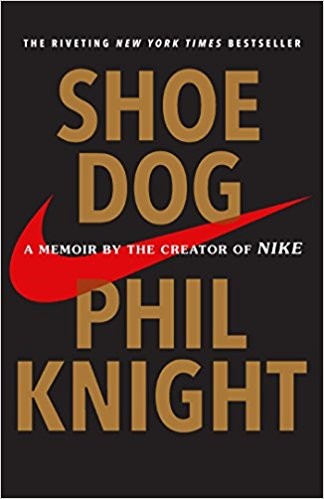
Phil Knight's memoir of building Nike, from selling Japanese running shoes out of his car in 1964 to the public offering in 1980. For readers who want the real story of a startup, including the years it nearly died.
More in Business and startups →More in Communication and persuasion →
New books, occasionally