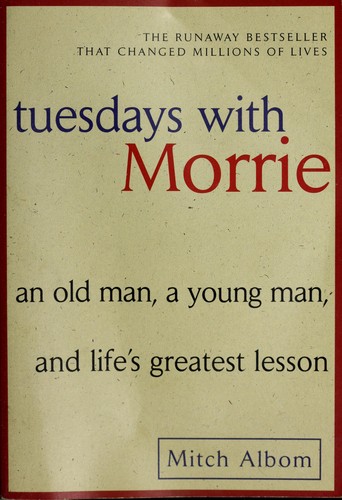
Mitch Albom's record of fourteen Tuesday visits with his dying college professor, Morrie Schwartz, and the lessons on love, work, family and death that came out of them. For readers who want a short book on how to live.
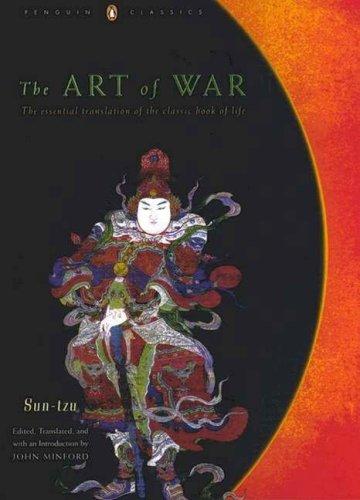
by Sun Tzu
-500 · 384 pages · Summary updated 24 October 2026
Sun Tzu's 13 short chapters on strategy from ancient China: win without fighting, know yourself and your enemy, and shape the ground before the battle. For readers in business, politics or any contest.
Sun Tzu treats war as a matter of state survival that must be planned with cold calculation and ended fast. The best victory is to win without fighting: attack the enemy's plans and alliances before its army, and leave cities for last. Weigh the five factors (the Way, heaven, earth, the commander, method) before you move. All warfare is based on deception: appear weak when strong, far when near. Make yourself invincible through defense, then wait for the enemy's mistake. Combine direct and indirect force, be formless like water, and strike where the enemy is weak. Know the enemy and know yourself. Spies, not omens, supply foreknowledge. Speed, terrain and morale decide more than numbers.
War decides whether a state survives, so Sun Tzu demands cold assessment before any move. Weigh the five factors: the Way (whether the people support the ruler), heaven (timing and weather), earth (terrain and distance), the commander's qualities and method (organization and supply). Compare both sides on seven questions, from discipline to training to consistency of reward. The general who makes many calculations in the temple before battle wins. The one who makes few loses. The outcome is decided before the armies meet.
Sun Tzu's first principle of conduct is to control what the enemy believes. When able, appear unable. When near, appear far. Offer bait to lure him, feign disorder to draw him in, and attack where he is unprepared. If he is strong, avoid him. If he is angry, provoke him. If he is united, divide him. Deception is not a trick added to strategy. It is the medium strategy works in, because an enemy who knows your shape can plan against it.
To fight and win a hundred battles is not the highest skill. Breaking the enemy's resistance without fighting is. Sun Tzu ranks targets in order: attack the enemy's strategy first, then his alliances, then his army, and besiege cities only as a last resort, because sieges waste months and men. Take states whole, not ruined. The same logic drives chapter 2: a long war empties the treasury and invites neighbors to strike, so speed matters more than perfection.
Know both, and a hundred battles bring no danger. Know yourself but not the enemy, and you win one battle for each you lose. Know neither, and you lose every time. The final chapter makes this concrete: foreknowledge does not come from spirits or omens but from spies. Sun Tzu names five kinds, local, inward, converted, doomed and surviving, and argues that skimping on intelligence while spending a fortune on the army is the height of folly.
You control your own defense. You do not control the enemy's weakness. So first put yourself beyond defeat, then watch for an opening. Invincibility lies in defense; the chance of victory lies in attack. The victorious army wins first and then seeks battle. The defeated army fights first and then looks for a way to win. Sun Tzu notes that such victories look easy and earn no praise, because the skilled commander wins by making no errors rather than by heroics.
Engage with the direct (cheng) and win with the indirect (ch'i). The two combine endlessly, like five notes making all music. Build momentum so the situation fights for you, like boulders rolling downhill. Then shape the enemy while staying shapeless: appear where he must defend, strike where he is weak, and let him prepare everywhere so he is weak everywhere. An army should be like water, which avoids heights and runs to low ground, and which has no fixed shape.
Sun Tzu classifies ground into six types and nine situations, each with a rule: hold narrow passes first, never fight uphill, leave a surrounded enemy an exit, do not press a desperate foe. The most striking advice is to put your own troops on death ground, where they must fight or die, because men with no escape fight hardest. Burn the boats and break the cooking pots once deep in enemy land. Men of the rival states Wu and Yue will row together in the same boat during a storm.
Sun Tzu lists five dangerous faults: recklessness leads to destruction, cowardice to capture, a hasty temper to provocation, a delicate sense of honor to shame, and excessive care for the men to harassment. He ends the fire chapter with the same point about rulers: never start a war out of anger or fight out of spite, because anger can turn back to joy but a destroyed state cannot be rebuilt and the dead cannot return. Emotion is the one variable a commander must remove.
“All warfare is based on deception.”
“Supreme excellence consists in breaking the enemy's resistance without fighting.”
“If you know the enemy and know yourself, you need not fear the result of a hundred battles.”
The Art of War is attributed to Sun Wu, a general said to have served King Helü of the state of Wu around 500 BCE, late in China's Spring and Autumn period. The historian Sima Qian tells the one story about him that survives: asked to prove his method, Sun Wu drilled 180 of the king's concubines as soldiers. When they laughed at his orders, he executed the two company leaders, the king's favorites, and the rest obeyed every command. Scholars dispute whether Sun Wu existed and whether the text was written by one hand or compiled over the following Warring States period. A set of bamboo strips found in a tomb at Yinqueshan in 1972 confirmed that the 13 chapters were in circulation by the second century BCE, close to their present form.
The book is short, about 6,000 Chinese characters. It argues from one premise: war decides whether a state lives or dies, so it cannot be left to passion, honor or chance. It must be calculated. This summary follows the 13 chapters in the English translations by Lionel Giles (1910), Samuel Griffith (1963), Thomas Cleary (1988) and John Minford (2002).
The opening chapter, Laying Plans, says that a ruler should weigh five factors before any campaign:
Compare both sides on seven questions: which ruler has the Way, which general has more ability, who holds heaven and earth, whose discipline is stricter, whose army is stronger, whose officers and men are better trained, and who is more consistent in reward and punishment. The side that scores higher wins before the fighting starts. Sun Tzu says that the general who makes many calculations in his temple before the battle wins, and the one who makes few loses.
The chapter ends with the line that frames the whole book: all warfare is based on deception. When able, appear unable. When active, appear inactive. When near, appear far. Lure the enemy with bait. Feign disorder and crush him. If he is strong, avoid him. If he is angry, irritate him. If he is relaxed, give him no rest. Attack where he is unprepared and appear where he does not expect you.
Waging War turns to cost. An army of 100,000 in the field consumes a thousand pieces of silver a day. A long campaign blunts weapons, exhausts morale and empties the treasury, and neighboring states will take advantage of the weakness. No country has ever benefited from a prolonged war. So move fast, forage on the enemy's land (one cart of enemy grain is worth twenty of your own), treat prisoners well and turn captured chariots to your side. The goal of war is victory, not long operations.
Attack by Stratagem contains the book's most quoted idea. To fight and win a hundred battles is not the highest skill. The highest skill is to break the enemy's resistance without fighting. Sun Tzu ranks the targets. Best is to attack the enemy's strategy. Next is to break his alliances. Next is to attack his army. Worst is to besiege walled cities, which takes months, wastes men on the walls and often fails. The skilled commander takes states whole, not ruined, because a ruined prize is worth little.
He gives numerical rules: with ten to one, surround; with five to one, attack; with two to one, divide the enemy; with equal numbers, fight if you can; if weaker, retreat; if much weaker, avoid him. He lists three ways a ruler can wreck his own army: ordering it to advance or retreat without knowing the field, governing it like a civil office, and appointing officers without knowing their skills. The chapter closes with the line on knowledge: know the enemy and know yourself, and in a hundred battles you will not be in danger. Know yourself but not the enemy, and you will lose one battle for every one you win. Know neither, and you will lose them all.
Tactical Dispositions (Cleary calls it Formation) separates what you control from what you do not. You can make yourself invincible. You cannot make the enemy vulnerable. So the skilled general first puts himself beyond defeat, through defense, and then waits for the enemy to give him an opening. Invincibility lies in defense; the possibility of victory lies in attack. The victorious army wins first and then seeks battle. The defeated army fights first and then seeks victory. Sun Tzu adds that the best victories are the ones no one praises, because they look easy: the commander won by making no mistakes, and that is invisible.
Energy (Griffith uses the term, Minford calls it Potential Energy) introduces the pair cheng and ch'i, the direct and the indirect. Engage the enemy with the direct force and win with the indirect. The two combine in endless variation, like the five notes that make all music or the five colors that make all painting. Sun Tzu describes momentum (shih) as water rushing down a gorge that carries boulders, or a crossbow drawn to full tension. The skilled general creates a situation where the troops' momentum does the work, like round stones rolling down a mountain, rather than demanding heroism from individuals. He also teaches control through signals, drums, flags and the division of the army into small units, so that managing a hundred thousand is the same as managing a few.
Weak Points and Strong (Cleary: Emptiness and Fullness) is about shaping the enemy while remaining shapeless yourself. Arrive at the battlefield first and wait rested for an enemy who arrives tired. Make him move by offering what he wants, and keep him from moving by threatening what he values. Appear where he must rush to defend, and march where he does not expect. If he prepares his front, his rear is weak. If he prepares everywhere, he is weak everywhere. Sun Tzu says that the ultimate form of an army is formlessness, because a formless army cannot be spied on or planned against. An army should be like water: water avoids heights and runs to low ground, and an army avoids strength and strikes weakness. Water has no fixed shape, and a general has no fixed method.
Maneuvering calls the march to battle the hardest part of war. The skill is to turn the long road into the short one and misfortune into gain. Take the roundabout path, but get there first. He warns that an army that races ahead without its baggage train loses its baggage, its supplies and its stragglers, and he gives rates: a forced march of a hundred li captures all three commanders, because only a tenth of the army arrives. The chapter contains the famous four-part image used later as a battle flag by the Japanese warlord Takeda Shingen: swift as the wind, silent as a forest, fierce as fire, immovable as a mountain. It also gives rules of engagement: do not attack an army with high morale, do not oppose an enemy on high ground, do not pursue feigned retreats, leave a surrounded enemy a way out, and do not press a desperate foe.
Variation in Tactics says that a general who knows the rules but cannot adapt them is useless. There are roads not to take, armies not to attack, cities not to besiege, ground not to contest and orders from the ruler not to obey. The chapter lists five dangerous faults in a general: recklessness, which leads to destruction; cowardice, which leads to capture; a hasty temper, which can be provoked; too delicate a sense of honor, which can be shamed; and too much concern for his men, which exposes him to worry and harassment.
The Army on the March is a field manual. Camp on high ground facing the sun, cross rivers and then move away from them, pass quickly through marshes, and keep to the open on level ground. It then teaches how to read the enemy from signs: dust rising high and straight means chariots, low and wide means infantry, scattered means foraging. Birds rising mean an ambush. Envoys who speak humbly while the army advances are preparing to attack. Soldiers leaning on their spears are hungry. Men drinking first when they draw water are thirsty. Sun Tzu adds that troops must be bonded with humanity before they are disciplined with strictness, and that orders consistently enforced in peacetime will be obeyed in war.
Terrain classifies six kinds of ground: accessible, entangling, temporizing, narrow passes, precipitous heights and positions far from the enemy. Each has a rule, such as holding narrow passes before the enemy arrives and never fighting uphill. It also names six ways an army fails through its general's fault: flight, insubordination, collapse, ruin, disorganization and rout. The general who advances without seeking fame and retreats without fearing disgrace, and who thinks only of protecting his people and his ruler, is the state's treasure. He adds that a general who treats his soldiers as his own children can lead them into the deepest valleys, but one who cannot enforce orders has spoiled children, not soldiers.
The Nine Situations is the longest chapter. It classifies ground by its effect on the army: dispersive (your own territory, where men scatter), frontier, contentious (worth seizing), open, intersecting (where alliances matter), serious (deep in enemy land), difficult, hemmed-in and death ground, where the army must fight or die. The chapter's advice is to put troops on death ground on purpose, because soldiers with no escape fight hardest. The commander should keep his plans secret even from his own men, drive them like a flock of sheep without telling them where, and burn the boats and smash the cooking pots once the army is deep in enemy territory. The ideal army moves like the shuai-jan, a snake from Mount Chang: strike its head and the tail attacks, strike the tail and the head attacks, strike the middle and both attack. He observes that men of Wu and Yue, enemies, would help each other if caught in the same boat in a storm.
Attack by Fire lists five targets (men, stores, baggage, arsenals, supply lines) and the conditions for using fire: dry weather, the right wind, and the right moment to follow up or hold back. The chapter ends with a warning about temper: a ruler should not start a war out of anger, and a general should not fight out of spite, because anger can turn back to joy but a destroyed state cannot be restored and the dead cannot be brought back to life.
The Use of Spies argues that foreknowledge cannot come from spirits, omens or calculation. It comes from people who know the enemy. A war that costs a thousand pieces of silver a day is not worth saving a hundred on intelligence. Sun Tzu names five kinds of spy: local spies among the enemy's people, inward spies among his officials, converted spies (his agents turned to your side), doomed spies who are fed false information and expected to be caught, and surviving spies who return with reports. The converted spy is the key to all the others. The chapter and the book close with the claim that the rise of the Yin and Zhou dynasties came from men who served as spies in the courts they overthrew.
Historians question whether Sun Wu existed and whether a single author wrote the text. The chapters show signs of compilation over time, and some scholars date the final form to the fourth century BCE. The text is aphoristic, and its wide use in business, sports and politics rests on readings that the original does not spell out. Critics of the management genre note that almost any outcome can be explained after the fact with a Sun Tzu line. Translations also differ widely because the classical Chinese is compact and ambiguous, so readers of different editions meet different books.
Read it if you want the original behind every strategy book that quotes it, or if you compete in any field where preparation, timing and knowing your opponent matter more than raw strength. The text takes an hour. A translation with commentary, such as Minford's or Griffith's, is worth the extra time.
12 cards
Question 1 of 5
What does Sun Tzu say is the best target to attack first?
Mitch Albom's record of fourteen Tuesday visits with his dying college professor, Morrie Schwartz, and the lessons on love, work, family and death that came out of them. For readers who want a short book on how to live.

Michael A. Singer's guide to stepping back from the voice in your head, keeping your heart open and letting go of the fears that run your life. For readers drawn to meditation and nondual spirituality.

Machiavelli's 1513 manual on how a ruler gains and keeps power, written for the Medici after his fall from office in Florence. For readers who want the argument behind the word Machiavellian.

Gary Keller and Jay Papasan argue that extraordinary results come from narrowing your focus to one thing at a time. For anyone whose to-do list keeps growing while the important work stalls.
More in Business and startups →More in Philosophy and stoicism →
New books, occasionally