A doctor with a scattered mind
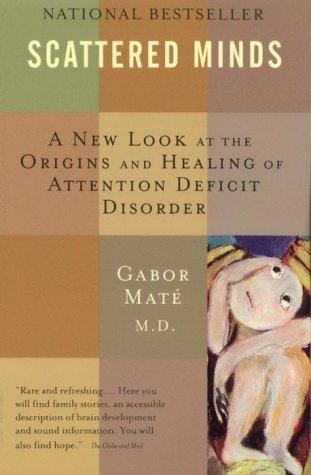
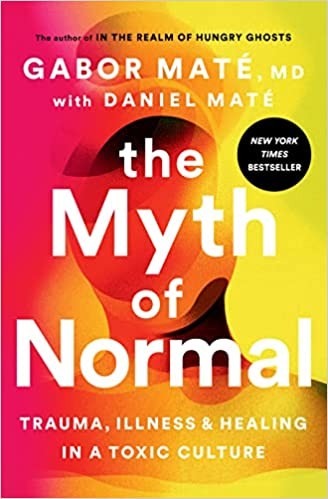
Scattered Minds by Gabor Maté came out in Canada in 1999. In the United States it is titled Scattered: How Attention Deficit Disorder Originates and What You Can Do About It. Both editions are the same book. It is Maté's first book, written before When the Body Says No, In the Realm of Hungry Ghosts and The Myth of Normal, and it contains the seed of all of them: the idea that the early emotional environment shapes the brain and that many conditions we call diseases are adaptations.
Maté, a Vancouver family physician, was diagnosed with attention deficit disorder (ADD) in his early fifties. He recognized himself in descriptions of the condition: the distraction, the impulsive decisions, the lost keys and missed appointments, the restless hunger for stimulation and the bursts of intense focus on things that interest him. He saw the same traits in his own children. The book mixes his own story with his patients' stories and with research on brain development.
The book uses the older term ADD, which at the time covered what is now usually called ADHD, with or without hyperactivity.
ADD is not simply inherited
The standard view, then and now, holds that ADD is a largely genetic brain disorder. It is treated mainly with stimulant medication. Maté does not deny the role of genes, but he argues that they do not explain the condition on their own. Genes give a predisposition, not a destiny. What turns a predisposition into ADD is the environment in which the brain develops.
His central claim is that ADD is a developmental impairment. The brain circuits that control attention and emotional self-regulation fail to develop fully in infancy and early childhood. Those circuits sit mainly in the prefrontal cortex, the part of the brain behind the forehead that inhibits impulses, holds goals in mind and calms strong feelings. Unlike most organs, the human brain does most of its growing after birth. Its wiring depends on experience. The experiences that matter most in the first years are emotional ones with caregivers.
Maté argues that this makes ADD reversible in part. If the brain's development stalled because of conditions, then better conditions, even later in life, can help it develop further.
Attunement and the developing brain
The key concept of the book is attunement. Attunement is the emotional resonance between a parent and an infant. It is more than love. A parent can love a child deeply and still be unable to attune, because attunement requires the parent to be calm and emotionally present enough to read and reflect the child's states. When a baby smiles and the parent's face lights up in return, or when a baby cries and the parent's calm presence soothes it, the baby's brain learns to regulate itself. Maté describes how these exchanges release chemicals in the infant's brain, such as dopamine and endorphins, that support the growth of the circuits for attention and self-control.
When attunement is missing, the circuits develop less fully. The usual cause is not neglect or abuse. It is stress in the parents. A mother who is anxious, depressed, grieving, overworked or unsupported cannot be fully present, however hard she tries. Maté describes his own infancy in Budapest in 1944, under Nazi occupation, with a mother in terror for her family. He argues that she could not attune to him, through no fault of her own, and that he absorbed her anxiety.
He insists that this is not about blame. Parents pass on what they received. Stress runs through generations and through the society that surrounds a family: economic insecurity, isolation from extended family and the loss of community support.
Sensitivity and tuning out
Maté's second key idea is sensitivity. He argues that children who develop ADD are born with highly sensitive nervous systems. They feel more, and they feel it more intensely. Sensitivity is the genetic part of the picture. A sensitive child in a calm, attuned home may be fine. The same child in a stressed home absorbs that stress more deeply than a less sensitive sibling. This, he says, explains why ADD runs in families without being purely genetic: families pass down both sensitive temperaments and stressful patterns.
From there, he explains distractibility. When an infant's emotional world is painful, the infant cannot fight or flee. The one defense available is to tune out. The mind shifts attention away from what hurts. Done often enough, tuning out becomes wired into the brain as an automatic response. The adult with ADD who drifts away in a meeting, Maté argues, is using a defense learned long before memory began.
He describes other ADD traits in the same light. Impulsiveness reflects weak circuits for inhibition. Hyperactivity is the body's attempt to stay stimulated. The hunger for novelty and intense experience is an effort to raise low levels of the brain chemicals that the early environment failed to build up.
The ADD child in the family and at school
The middle of the book turns to children. Maté describes the cycle that forms around an ADD child. The child is hard to manage, so parents become frustrated and stressed. The more stressed the parents are, the less they can attune, so the child's behavior worsens. Teachers and doctors add pressure.
He spends time on counterwill, a term he takes from the psychologist Gordon Neufeld. Counterwill is the instinctive resistance a person feels when pushed or controlled. Children with ADD often show strong counterwill: the more a parent insists, the more the child refuses. Maté argues that counterwill is not defiance to be broken. It is a sign that the child's own will is still forming, and that the child does not feel safe enough in the relationship to accept direction.
His advice to parents follows from this:
- Put the relationship first. A child who feels securely attached is more willing to follow guidance.
- Offer unconditional positive regard. The child must feel accepted, not only when behaving well.
- Avoid relying on rewards and punishments. They may control behavior in the short term but they increase counterwill and do not build self-motivation.
- Work on your own stress. The most useful change a parent can make is often in themselves.
- Create calm, predictable routines and time together without demands.
School follows the same logic. Maté argues that an ADD child learns best from a teacher the child feels connected to. Classrooms that rely on pressure, public correction and constant evaluation raise the child's anxiety, and anxiety makes tuning out more likely. He urges parents to help teachers understand the child's sensitivity and to protect the child's self-esteem at home when school goes badly. A child who believes they are stupid or bad stops trying, and that belief is harder to undo than any gap in learning.
Adults with ADD
A large part of the book addresses adults. Maté describes the typical problems: chronic procrastination, disorganization, difficulty finishing projects, impulsive spending, unstable relationships and low self-esteem. Many adults with ADD carry deep shame, because they have spent their lives being told they are lazy or careless. He also links ADD to addiction, since substances and compulsive behaviors can provide the stimulation and soothing the brain lacks.
His prescription for adults is self-parenting. The adult must give themselves the attunement they missed: patient, compassionate attention to their own feelings and needs. That means noticing self-criticism and replacing it with curiosity, building structure into the day, getting enough sleep and exercise, and seeking relationships that feel safe. Mindfulness practices can help strengthen attention and self-regulation directly.
Medication and the limits of the illness model
Maté is not against medication. He says that stimulants such as methylphenidate (Ritalin) can help many children and adults, sometimes dramatically. What he rejects is the idea that medication is the whole answer. A pill can improve focus, but it cannot provide the emotional security and self-understanding that let the brain develop further. He worries that the illness model encourages families and doctors to treat behavior while ignoring its causes.
He frames the healing of ADD as a matter of development rather than cure. The goal is not to remove symptoms but to create conditions in which the missing growth can happen.
What the critics say
Maté's central claim runs against the scientific consensus. Twin and family studies estimate the heritability of ADHD at around 70 to 80 percent, and most researchers see it as a largely genetic neurodevelopmental condition. Critics argue that Maté underweights this evidence, leans on case stories and on brain research that does not test his specific theory, and that his emphasis on parental stress can leave parents feeling blamed despite his disclaimers. Supporters value the book's compassion and its focus on emotional context.
Who should read it
Read it if you or your child has an ADD or ADHD diagnosis and you want a compassionate, relationship-centered view of the condition alongside the medical one. Pair it with a mainstream guide to ADHD for the research consensus.