
Laura Hillenbrand's biography of Louis Zamperini: Olympic runner, bombardier, 47 days adrift in the Pacific, two years in Japanese prison camps, and a long road home. For readers of war history and survival stories.
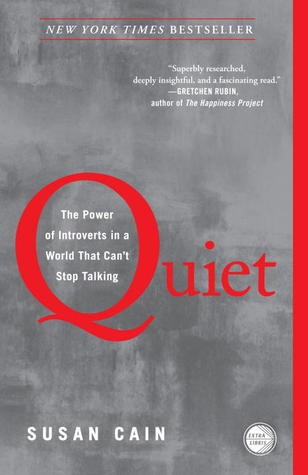
by Susan Cain
2012 · 352 pages · Summary updated 6 November 2026
Susan Cain argues that Western culture undervalues introverts, traces where the bias came from, and shows how quiet people can work, lead, and raise children without pretending to be extroverts.
Susan Cain argues that the United States lives under an Extrovert Ideal: the belief that the ideal person is bold, sociable, and comfortable in the spotlight. One third to one half of people are introverts, and the bias costs them and their organizations. Cain traces the ideal to the early twentieth century, when a Culture of Character gave way to a Culture of Personality. She shows that group brainstorming and open offices reduce output, that Jerome Kagan's infant studies link introversion to a reactive nervous system, and that quiet leaders often outperform loud ones. Her advice: act out of character for projects you care about, build restorative niches, and raise introverted children by gentle exposure, not pressure.
Cain argues that Western institutions treat the outgoing, talkative person as the ideal and treat quiet as a defect to fix. She traces this to a shift described by historian Warren Susman from a Culture of Character, which prized integrity and discipline, to a Culture of Personality, which prized charm and magnetism. Dale Carnegie's rise from Missouri farm boy to public speaking teacher is her emblem. Her Cupertino chapter shows East Asian cultures valuing quiet and restraint instead. If the ideal differs between cultures and eras, it is a preference, not a fact about human worth.
Cain defines introverts as people who function best with less outside stimulation. They prefer deep conversation to small talk, solitary work to group work, and need time alone to recharge. Shyness is different: it is fear of social judgment. A person can be a shy extrovert who craves company but fears it, or a confident introvert who simply prefers quiet. Cain uses this distinction to argue that introverts do not need to be cured. They need environments that match their nervous systems, such as a private desk instead of an open-plan floor.
Cain reports research by Adam Grant and colleagues on pizza delivery franchises. Where employees were passive, extroverted managers produced higher profits. Where employees were proactive and offered ideas, introverted managers did better. A lab study of teams folding T-shirts found the same pattern. Cain's reading is that extroverted leaders can dominate and crowd out their teams, while introverted leaders listen and let good ideas rise. Harvard Business School, which trains students to speak with confidence on incomplete information, gets the leadership model backwards for many modern workplaces.
Cain calls the belief that creativity comes from groups the New Groupthink. Decades of research since Alex Osborn invented brainstorming show that people produce more and better ideas alone and then pooling them than in a group. Reasons include waiting to speak, social loafing, and fear of looking foolish. The Coding War Games by DeMarco and Lister found that top programmers worked at companies that gave them privacy and freedom from interruption. Solomon Asch's conformity studies and Gregory Berns's brain-imaging work show that groups change what people believe they see, not only what they say.
Jerome Kagan exposed about 500 four-month-old infants to novel stimuli in 1989. About 20 percent were high-reactive, thrashing and crying, and about 40 percent were low-reactive. High-reactive infants tended to become quiet, careful children, and low-reactive infants tended to become bold ones. Kagan attributes this to an amygdala that fires more readily. Carl Schwartz later found the same reactivity in brain scans of the subjects as adults. Cain uses this to argue that introversion is partly wired, which makes pressuring a child to be bolder both unkind and ineffective.
The orchid hypothesis, from Jay Belsky and W. Thomas Boyce and popularized by David Dobbs, holds that most children are dandelions who do fine almost anywhere. High-reactive children are orchids. Under harsh or neglectful parenting they do worse than average, with more anxiety and behavior problems. Under attentive parenting they do better than average, with more empathy and fewer problems. Cain pairs this with Elaine Aron's work on highly sensitive people. Her practical advice follows: gentle exposure to new situations, arriving early at parties, and letting a child go deep on interests.
Brian Little's free trait theory says people have fixed traits but can act against them in the service of core personal projects, the work or people they care most about. Little, an introvert, performs as an energetic lecturer because teaching is his project. Afterwards he retreats, sometimes to a bathroom stall, to recover. That retreat is a restorative niche: a place or time that returns you to your true self. Cain recommends a Free Trait Agreement with partners and colleagues that sets out when you will stretch and when you will withdraw, so pretending never becomes permanent.
Cain uses the couple Greg and Emily, who fight over how many dinner parties to host, to show how temperament shapes conflict. Research she cites finds that extroverts tend to confront and raise their voices when upset, while introverts tend to withdraw and go quiet. Each misreads the other: the extrovert sees withdrawal as rejection, the introvert sees confrontation as aggression. Her fix is to name the difference out loud and negotiate concrete terms, such as hosting fewer parties and leaving events early, so neither partner has to abandon their nature.
Susan Cain, a former corporate lawyer, opens with Rosa Parks. Parks was described by people who knew her as quiet and soft-spoken, yet she started a movement by refusing to give up a bus seat. Cain uses her to show that quiet and strong are not opposites.
Cain's argument is that the United States, and much of the West, operates under an Extrovert Ideal. The ideal person is outgoing, quick to speak, comfortable in groups, and happy in the spotlight. Schools arrange desks in pods and grade class participation. Offices tear down walls. Job ads ask for "people persons." Introverts, who prefer less stimulation and need time alone to recharge, learn to feel that something is wrong with them.
Cain defines introversion by stimulation, not shyness. Introverts work best with lower levels of outside stimulation. They prefer deep conversation to small talk, solitary work to group work, and listening to talking. Shyness is different: it is the fear of social judgment. A person can be a shy extrovert or a confident introvert. Cain cites estimates that one third to one half of Americans are introverts, which means most people know several even if those people hide it.
She argues that the ideal was not always there. Historian Warren Susman described a shift around the turn of the twentieth century from a Culture of Character to a Culture of Personality. In the Culture of Character, the ideal self was serious, disciplined, and honorable. What mattered was how you behaved when nobody was watching. In the Culture of Personality, the ideal self became magnetic and fascinating. What mattered was how others saw you.
Cain uses Dale Carnegie as the emblem of this change. Carnegie grew up on a Missouri farm, was small and poor, and discovered that public speaking skill won him respect. In 1912 he began teaching public speaking at the YMCA in New York. His 1936 book How to Win Friends and Influence People became a guide to the new economy, where people sold products and themselves to strangers in cities rather than farmed among neighbors. Advertising from the period sold mouthwash and soap as cures for social failure. Psychologists began to treat quiet children as a problem.
Cain visits Harvard Business School, which she treats as the capital of the Extrovert Ideal. Students there are expected to speak confidently in every class. Participation counts for a large share of grades. Social life is mandatory. Students who are not sure of an answer are told to say it as if they are. One student tells her the school teaches people to act decisively on incomplete information.
She contrasts this with research. Cain cites a study in which groups were more likely to follow the member who spoke first and most, even when that person was wrong. Talkers are rated as smarter and more capable than quiet people, although there is no link between talking and having good ideas.
The chapter then turns to leadership research by Adam Grant and colleagues. In a study of pizza delivery franchises, extroverted leaders earned higher profits when their employees were passive and waited for direction. When employees were proactive and offered ideas, introverted leaders earned higher profits. A lab study with teams folding T-shirts found the same pattern. Cain's explanation is that introverted leaders listen and let good ideas rise, while extroverted leaders can crowd out their teams.
Cain also attends a Tony Robbins seminar and visits Rick Warren's Saddleback Church. She presents both as institutions built on extroverted energy. At Saddleback she meets pastor Adam McHugh, who has written about introverts in evangelical churches that treat sociability as a sign of faith.
Cain's third chapter attacks what she calls the New Groupthink: the belief that creativity and productivity come from working in groups. The chapter opens with Steve Wozniak, who built the first Apple computer largely alone, at a desk at Hewlett-Packard early in the morning and late at night. He drew ideas from the Homebrew Computer Club, but the building happened in solitude.
Cain draws on Anders Ericsson's research on deliberate practice. In his study of violinists in Berlin, the best players spent far more time practicing alone than the others. Solitary practice lets a person target what they are worst at. Group settings tend to hold people at the level of the group.
She then takes on open-plan offices. In the Coding War Games, a study by Tom DeMarco and Timothy Lister of more than 600 programmers at 92 companies, the best performers were not better paid or more experienced. They worked at companies that gave them more privacy, more personal space, and fewer interruptions. Open offices are linked to lower productivity, higher stress, and more sick days.
Brainstorming gets the same treatment. The method was invented by advertising executive Alex Osborn in the 1940s. Decades of research since then show that people produce more and better ideas working alone and then pooling results than they do in a brainstorming group. Three reasons: in a group only one person can talk at a time, some members coast while others work, and people fear looking foolish. Cain notes one exception: online brainstorming, where people contribute separately, works well, and she points to open-source projects such as Linux as evidence.
The deepest problem is conformity. In Solomon Asch's experiments, about three quarters of people went along with a group's obviously wrong answer at least once. A 2005 brain-imaging study by Gregory Berns found that when people resisted the group, the amygdala, a region linked to fear, became more active. Cain calls this the pain of independence. Groups do not just suppress ideas. They change what people believe they see.
Part Two asks how much of introversion is biological. The central figure is Jerome Kagan, a Harvard developmental psychologist. In 1989 Kagan and his team exposed about 500 four-month-old infants to new sights, sounds, and smells. About 20 percent thrashed, cried, and pumped their limbs. Kagan called them high-reactive. About 40 percent stayed calm. He called them low-reactive. He predicted that the high-reactive babies, with their sensitive nervous systems, would grow into quiet, careful children, and the low-reactive babies into bold, sociable ones. Follow-ups at ages two, four, seven, and eleven largely confirmed the prediction.
Kagan's explanation is the amygdala, the brain's alarm system. High-reactive people have amygdalas that fire more readily in response to novelty. Carl Schwartz later scanned some of Kagan's subjects as adults and found that their amygdalas still reacted more strongly to unfamiliar faces. Temperament does not fix personality, but it sets a starting point.
Cain pairs this with the orchid hypothesis, a term popularized by journalist David Dobbs from the work of Jay Belsky and W. Thomas Boyce. Most children are dandelions: they do about equally well in any environment. High-reactive children are orchids. They wilt under neglect or harsh parenting, but with attentive care they do better than the dandelions, with fewer behavior problems and more empathy. Sensitivity is a risk and an asset at once.
Cain also uses Elaine Aron's work on highly sensitive people, who process information deeply, notice subtleties, and are easily overwhelmed. She contrasts Eleanor Roosevelt, who was sensitive and reflective, with Franklin Roosevelt, who was charming and bold, and argues that the pairing worked because of the difference.
A further chapter looks at reward sensitivity. Extroverts respond more strongly to the prospect of reward, which makes them energetic and ambitious but also prone to overreach. Cain connects this to the 2008 financial crisis and to investors who ignored warning signs in pursuit of gains. Introverts such as Warren Buffett, who notice risk and step back, do better in periods when caution pays.
Part Three asks whether every culture has an Extrovert Ideal. Cain goes to Cupertino, California, where a large share of residents are Asian-American and the public high school prizes academic focus over sociability. Students like Mike Wei tell her that at home, quiet study is a virtue, while in mainstream American settings they are seen as passive. Research on cultural differences finds that East Asian cultures tend to value quiet, listening, and restraint, and that in those settings talkativeness is not a sign of intelligence.
Cain follows these students into the workplace, where many find that the skills their families prized are read as weakness. She profiles Preston Ni, who coaches Asian-American professionals on assertiveness. She also uses Mahatma Gandhi, who was painfully shy as a young man, to describe soft power: influence that works through persistence, conviction, and restraint rather than dominance. The point is not that one culture is right, but that the Extrovert Ideal is a cultural choice, not a universal truth.
Part Four is practical. Its central idea is free trait theory, developed by psychologist Brian Little. Little argues that people have fixed traits but can act out of character in the service of core personal projects: work, people, or causes they care deeply about. Little himself is an introvert who became a celebrated lecturer. He can perform because teaching is his core project. After lecturing he retreats, sometimes to a bathroom stall, to recover.
That recovery space is a restorative niche: a place or time where you return to your true self. It can be a walk, a quiet office, a weekend without plans, or a break between meetings. Little suggests a Free Trait Agreement: an explicit deal with the people in your life about when you will stretch and when you will withdraw. One partner agrees to attend some parties, the other agrees to leave early.
Cain warns about the cost of pretending for too long. Pseudo-extroverts who never recover suffer stress and burnout. Self-monitoring, the skill of adjusting behavior to a situation, helps, but it should serve projects you choose, not fear of judgment.
The chapter on relationships uses a couple, Greg and Emily, who fight about how often to host dinner parties. Cain draws on research showing that introverts and extroverts handle conflict differently. Extroverts tend to confront. Introverts tend to withdraw, which extroverts read as rejection. The fix is naming the difference and negotiating, as Greg and Emily do.
The final chapter is about raising introverted children. Cain's advice draws on Kagan, Aron, and the child psychologists she interviews. Do not shame a quiet child or push them into crowds. Use gentle exposure: introduce new people and places in small steps, let the child set the pace, and praise effort. Arrive early at parties so the child can watch others arrive rather than walk into a full room. Find the child's interests and let them go deep. At school, ask teachers for some solitary work and avoid classrooms built entirely around group projects. The orchid research is the hope here: with the right care, these children thrive.
Cain closes with a short conclusion. She tells introverts to stay true to their nature, find work and people that fit, and spend their social energy on what matters. She tells extroverts and institutions to make room.
Some psychologists argue that Cain stretches the term introversion to cover shyness, high sensitivity, and anxiety, which research treats as distinct. Personality researchers note that most people fall near the middle of the introversion-extroversion scale, so the two-camp framing oversimplifies. Reviewers also note that Cain selects studies that support her case and gives less space to evidence that extroverts report higher well-being on average. The core findings she relies on, Kagan's temperament work and the brainstorming research, are well established.
Read it if you are an introvert who has spent years feeling like a problem to be fixed, or if you manage, teach, or parent one. It is also useful for anyone who designs offices, classrooms, or meetings and wants to know what the research says about group work.
12 cards
Question 1 of 5
According to Cain, what is the key difference between introversion and shyness?
Laura Hillenbrand's biography of Louis Zamperini: Olympic runner, bombardier, 47 days adrift in the Pacific, two years in Japanese prison camps, and a long road home. For readers of war history and survival stories.
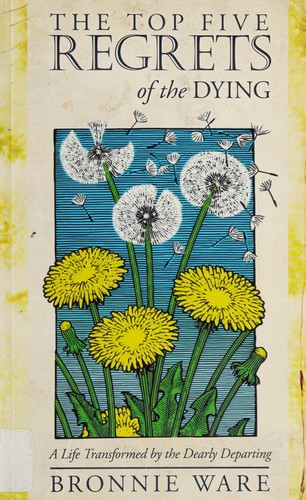
A palliative care nurse recounts the five regrets she heard most often from dying patients, the people who told her each one, and how those lessons changed her own life.
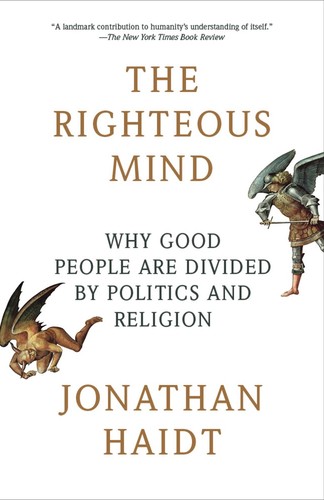
A moral psychologist explains why people reason after they judge, why liberals and conservatives draw on different moral foundations, and why morality holds groups together while blinding them to each other.

Franz Kafka's novella about Gregor Samsa, a salesman who wakes up as a giant insect and watches his family turn away. For readers who want the plot of the three parts, the first sentence and the main readings.
More in Business and startups →More in Psychology →More in Self-improvement →
New books, occasionally