Pondicherry and the story that will make you believe in God
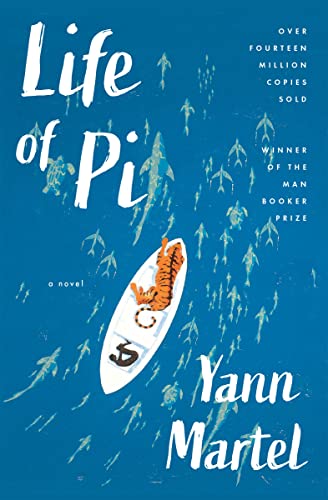
Life of Pi by Yann Martel was published in 2001 and won the Man Booker Prize in 2002. It opens with an author's note. A writer, broke and out of ideas, is in India when an old man in a Pondicherry coffee house, Francis Adirubasamy, tells him he has a story that will make him believe in God. He sends the writer to Piscine Molitor Patel in Toronto. The adult Pi tells the story, and the writer records it. Short italic chapters in the writer's voice return now and then to describe Pi in his kitchen, his family and his house full of religious objects. The frame tells you from the start that Pi survives. It does not tell you how.
Part 1 is Pi's childhood in Pondicherry, a former French colony in south India. His father, Santosh Patel, runs the Pondicherry Zoo, and Pi grows up among the animals. He is named after a swimming pool in Paris, the Piscine Molitor, because Adirubasamy, a champion swimmer and family friend, loved it. At school the name becomes "Pissing," so on his first day at secondary school Pi walks to the board in every class and writes "Pi," with the Greek letter and its first digits, until the name sticks.
The zoo chapters are a long argument about animals and freedom. Pi says that people who think animals are happier in the wild misunderstand them. A zoo enclosure, if it is right, is a territory, like a home. The most dangerous animal in the zoo, he says, is the human visitor. His father teaches the lesson another way. He makes Pi and his older brother Ravi watch a tiger kill a goat, so that they will never imagine the animals are their friends.
Three religions and one God
Pi is born Hindu. At 14 he meets Father Martin, a Catholic priest, on a holiday in the hills, and cannot understand why God would let his son suffer. He asks for days and then asks to become a Christian. A year later he meets Mr. Kumar, a Muslim baker, and begins to pray with him. Pi sees no contradiction. He loves the Hindu gods, the story of Christ and the discipline of Islam, and he practices all three.
The adults do. In a famous scene, the priest, the imam and the pandit meet Pi and his parents on the seafront at the same time and each discovers the others. They argue, each claiming Pi and attacking the other faiths. Pi says that he only wants to love God. His father, a rationalist, wants no part of any of it. His mother is amused. Pi gets a prayer rug and a baptism and goes on.
He also has a second Mr. Kumar, his biology teacher and an atheist, who finds the same wonder in science that Pi finds in prayer. Pi respects him and says atheists are his brothers in faith. It is agnostics he cannot understand, because they choose doubt as a resting place.
In the mid 1970s, during the political emergency in India, Pi's father decides to sell the zoo and move the family to Canada. The animals are sold to zoos in North America. On June 21, 1977, the family boards a Japanese cargo ship, the Tsimtsum, with some of the animals, and sails from Madras.
The sinking and the lifeboat
Part 2 is the sea. A few days out, in the Pacific, the Tsimtsum sinks at night. Pi is on deck during a storm when it goes down. Crew members throw him into a lifeboat. He never finds out why the ship sank, and he never sees his family again.
In the lifeboat with him is a Bengal tiger named Richard Parker. The name is a clerical error: the hunter who caught the cub as a kitten was named Richard Parker, and a clerk swapped his name with the one the hunter gave the animal, Thirsty. The zoo kept the mistake. For a time the boat also holds a zebra with a broken leg, a spotted hyena and an orangutan named Orange Juice, who floats in on a raft of bananas.
Pi is 16, a vegetarian and the son of a zookeeper. He has a lifeboat, a survival manual, a store of water and biscuits, a tarpaulin, oars, and a tiger of about 450 pounds that he knows will kill him. The rest of the novel is how he lives with that. Martel's answer rests on what Pi learned at the zoo: a tiger needs food, water, and a territory with clear boundaries, and an animal that fears you will leave you alone.