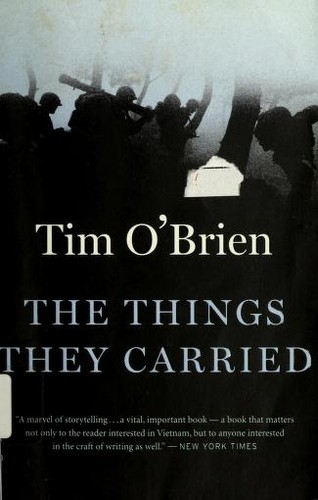
Tim O'Brien's linked stories about a platoon of American soldiers in Vietnam, told by a narrator named Tim O'Brien who keeps asking what a true war story is. For readers who want the stories in order and what the book says about memory and truth.
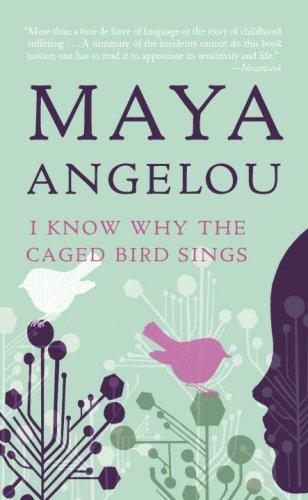
by Maya Angelou
1969 · 289 pages · Summary updated 24 October 2026
I Know Why the Caged Bird Sings by Maya Angelou is a memoir of her childhood in segregated Arkansas, St. Louis and California, from age three to the birth of her son at sixteen. For readers who want the story, the themes and why it still matters.
At three, Marguerite Johnson, later known as Maya Angelou, is sent with her brother Bailey to live with their grandmother in Stamps, Arkansas, a segregated town where white people rule every part of Black life. At eight, on a visit to her mother in St. Louis, she is raped by her mother's boyfriend. After he is killed, she believes her words caused his death and stops speaking for about five years. A local woman, Mrs. Bertha Flowers, brings her back to language through books. The memoir follows her to California, where she becomes San Francisco's first Black streetcar conductor and a mother at sixteen. Angelou's argument is that a Black girl in a racist world can survive and keep her dignity through love, literature and her own voice.
Angelou writes that growing up is painful for a Southern Black girl, and that knowing she does not belong is the rust on the razor. Sent away by her parents at three, living in a world built for white people, she never feels at home. Her reasoning is that racism and abandonment work together. The example is the Easter scene, where she dreams of waking up as a white girl and runs from the church in shame.
After Mr. Freeman's trial and death, Marguerite believes her words killed him, so she stops speaking. Five years later, Mrs. Flowers teaches her that the human voice gives words their depth. Angelou shows language as both a danger and a way back to life. The example is Mrs. Flowers reading A Tale of Two Cities aloud, which makes Marguerite want to speak again.
Momma rarely confronts white people directly, but she never surrenders her dignity. Angelou shows a quieter kind of resistance than open protest. The example is the scene with the poor white girls who mock Momma on her porch. She stands and hums a hymn until they leave. Marguerite, enraged, later understands that her grandmother won by refusing to give them a reaction.
Mrs. Cullinan decides to call Marguerite Mary because her name is too long. Angelou explains that being called out of one's name was a deep insult for Black people, who had been given names by slaveholders. The example is how Marguerite responds: she breaks her employer's favorite dish so she will be fired. Angelou shows a child claiming her identity in the only way open to her.
At the eighth-grade graduation, a white speaker tells the Black children, in effect, that their futures lie in sports and labor. The room falls silent. Then Henry Reed leads the class in Lift Ev'ry Voice and Sing, and pride returns. Angelou argues that Black poets and singers carried her people through. The example is how she describes the anthem as something she had sung for years without understanding until that moment.
Angelou describes the rape plainly, from the view of the confused eight-year-old she was. She lies on the stand from fear, and blames herself for the man's death. Angelou presents her guilt as a child's mistaken belief, not a truth. The example is the five years of silence that follow: the book shows how abuse can make a child punish herself, and how love and books helped her recover.
The San Francisco streetcar company will not hire Black workers. Marguerite goes to the office day after day, sitting in the waiting room until they give in. She becomes the city's first Black streetcar conductor. Angelou's reasoning is that institutions can be worn down by someone who will not leave. The example shows a fifteen-year-old using the same steady endurance her grandmother taught her.
“If growing up is painful for the Southern Black girl, being aware of her displacement is the rust on the razor that threatens the throat.”
I Know Why the Caged Bird Sings by Maya Angelou was published in 1969. It was the first of her seven autobiographies and became one of the most widely read memoirs in American history. It was nominated for the National Book Award. It is also one of the most frequently challenged books in American schools, because it describes rape and racism directly.
The title comes from Sympathy, a poem by Paul Laurence Dunbar, a Black poet of the late nineteenth century. In the poem, a caged bird beats its wings against the bars and sings, not from joy, but as a prayer to be free.
The book opens in a church in Stamps, Arkansas, on Easter Sunday. A small girl in a lavender dress stands up to recite a poem. She forgets the lines. She has dreamed that one day she will wake up as a white girl with long blond hair, and that the ugly dream of her real life will be over. Instead she runs out of the church, unable to hold her bladder, and wets herself. Angelou then writes one of the most quoted lines in the book: that growing up is painful for a Southern Black girl, and that being aware of her displacement is the rust on the razor that threatens the throat.
When Marguerite Johnson is three and her brother Bailey is four, their parents' marriage ends. The children travel alone by train from Long Beach, California, to Stamps, with tags on their wrists. They go to live with their father's mother, Annie Henderson, whom they call Momma.
Momma owns the Store, the center of the Black part of town. It sells food, supplies and feed. In the cotton season, workers gather there before dawn, full of hope, and return at night with bleeding fingers and little pay. Marguerite watches from behind the counter. Momma's son, Uncle Willie, has been disabled since childhood and helps in the store. Momma is strict, religious and strong. She runs her business so well that she lends money to white people during the Depression.
Stamps is segregated in every detail. White people live across the tracks. Black children rarely see them. One night the sheriff rides by to warn that the Ku Klux Klan will be out, because a Black man has been accused of a crime against a white woman. Momma hides Uncle Willie in a bin of potatoes and onions. Marguerite hears him moan all night.
In one scene, a group of poor white girls come to the Store and mock Momma on her own porch. One does a handstand without underwear. Momma stands still and hums a hymn until they leave. Marguerite, furious and humiliated, comes to see that her grandmother has won by refusing to be provoked.
Bailey is Marguerite's whole world. He is small, quick, beautiful and loved by everyone. He defends her. He gives her the name Maya, from "My" or "Mya sister." She feels plain and awkward next to him.
When Marguerite is about seven, her father, Bailey Johnson Sr., appears in Stamps and takes the children to St. Louis to live with their mother, Vivian Baxter. Vivian is beautiful and lively and works in gambling parlors. Her family, the Baxters, are tough and well connected in the city.
Vivian lives with a boyfriend, Mr. Freeman. When Marguerite is eight, he sexually abuses her, then rapes her. He threatens to kill Bailey if she tells. She becomes ill, and the family discovers what has happened. Freeman is arrested and tried. On the stand, a lawyer asks whether he had touched her before. Afraid, she says no, which is a lie. Freeman is convicted but released. Days later, he is found beaten to death. Angelou suggests her uncles killed him.
Marguerite believes that her words killed a man. She decides that if she speaks, people will die. She stops speaking to everyone except Bailey. Her mother's family cannot cope with her silence, and the children are sent back to Stamps.
Back in Stamps, Marguerite stays mute for about five years. She reads constantly: Shakespeare, Dickens, Kipling, Langston Hughes, W. E. B. Du Bois and Paul Laurence Dunbar.
Mrs. Bertha Flowers, the most refined Black woman in Stamps, invites her home. She offers her cookies and lemonade and reads aloud from Charles Dickens's A Tale of Two Cities. She tells Marguerite that words mean more than what is set down on paper, and that the human voice gives them depth. She lends her books of poetry and asks her to read them aloud. She gives her what Angelou calls lessons in living. For the first time, Marguerite feels liked for who she is, not as Bailey's sister or Momma's grandchild. Slowly, she begins to speak again.
Angelou records the daily insults of segregation:
At her eighth-grade graduation, Marguerite is proud and happy. Then a white official, Mr. Edward Donleavy, speaks. He announces improvements for the white school, such as new science equipment, and promises the Black school better sports fields. The audience understands that he expects their children to become athletes or laborers, not scientists. The joy drains out of the room. Then the valedictorian, Henry Reed, turns to his classmates and leads them in Lift Ev'ry Voice and Sing, the song known as the Black national anthem. The audience joins in. Marguerite feels pride return. She realizes how much Black poets and singers have sustained her people.
When Bailey sees a dead Black man pulled from a pond while a white man jokes about it, Momma decides the children must leave the South. When Marguerite is thirteen, they move to California to live with Vivian, first in Los Angeles and then in Oakland and San Francisco. Vivian marries Daddy Clidell, a kind businessman who teaches Marguerite card games and introduces her to con men who tell her how they trick white marks.
Marguerite wins a scholarship to the California Labor School, where she studies dance and drama. At fifteen, she spends a summer with her father in southern California. He takes her to Mexico, gets drunk, and she drives his car down a mountain road. Back home, his girlfriend, Dolores, cuts her in a fight. Marguerite runs away and lives for about a month in a junkyard with a group of homeless teenagers. She learns that people of every race can live together without harm.
Back in San Francisco, she decides she wants to be a streetcar conductor. The company does not hire Black workers. She goes to the office day after day until they give her the job. She becomes the first Black streetcar conductor in San Francisco.
After reading a novel about lesbians, Marguerite fears that her deep voice and her body mean she is a lesbian. To prove otherwise, she asks a boy in the neighborhood to have sex with her. She becomes pregnant. She hides the pregnancy for eight months and finishes high school. Then she leaves a letter for her stepfather to tell the family. Her mother and Daddy Clidell support her without reproach.
She gives birth to a son. She is afraid to hold him or sleep near him, in case she crushes him. One night her mother puts the baby in her bed. Marguerite wakes to find him safe under her arm. Her mother tells her that if you are for the right thing, you do it without thinking. The book ends there.
Critics praised the book's honesty and its mix of humor and pain, and many count it as a founding text of modern Black women's writing. Some early reviewers questioned whether a memoir that reads so much like a novel could be fully accurate, and Angelou said she shaped real events to tell a truth. The book's depiction of rape and sexuality has led to repeated school challenges and bans. Supporters argue that this honesty is why survivors find it valuable.
Read it if you want to understand Black life in the segregated South through one girl's eyes, or if you need the memoir's events in order for school. It describes child rape and racist violence plainly, and it is also funny, warm and full of love for language.
12 cards
Question 1 of 5
Where do Maya and Bailey live with their grandmother?
Tim O'Brien's linked stories about a platoon of American soldiers in Vietnam, told by a narrator named Tim O'Brien who keeps asking what a true war story is. For readers who want the stories in order and what the book says about memory and truth.
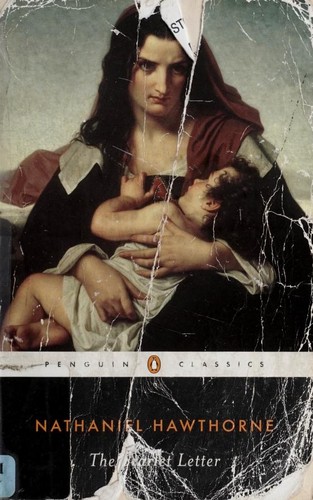
Nathaniel Hawthorne's novel about Hester Prynne, forced to wear a scarlet A for adultery in Puritan Boston, the minister who hides his guilt and the husband who seeks revenge. For readers who want the plot in order and the ideas behind it.
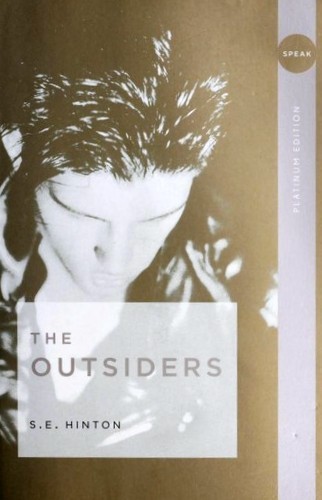
S. E. Hinton's novel about Ponyboy Curtis, a fourteen-year-old greaser in 1960s Oklahoma, and the night a fight with rich kids ends in a death. For readers who want the plot, the characters and the meaning of "stay gold."
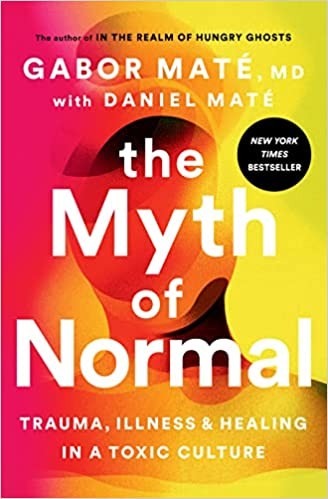
Gabor Maté's The Myth of Normal argues that much of what we call normal in modern life makes people sick, linking trauma, stress and illness. For readers who want to understand how early experience and culture shape health.
New books, occasionally