Emily Brontë's 1847 novel about Heathcliff, Catherine Earnshaw and two families on the Yorkshire moors, told across two generations. For readers who want the plot, the characters and the ideas behind a famous story of love and revenge.
by Mary Shelley
1818 · 273 pages · Summary updated 24 October 2026
Mary Shelley's 1818 novel about Victor Frankenstein, a student who builds a living creature and then abandons it. For readers who want the real story behind the monster and the questions it raises about ambition and responsibility.
Victor Frankenstein, a young student at Ingolstadt, discovers how to give life to dead matter. He builds a creature eight feet tall, brings it to life and runs away in horror. The creature teaches itself to speak and read by watching a family in a cottage, but every human who sees it attacks it. Rejected by its maker, it turns on Victor's family one by one. The novel is told through the letters of an Arctic explorer, Victor's own account and the creature's story in its own words. Shelley asks who is the real monster: the creature that kills, or the man who made it and refused to care for it.
Victor spends two years building the creature and abandons it within minutes of seeing it alive. He never feeds it, teaches it or looks for it. The creature compares itself to Adam and tells Victor that a maker owes his creation at least the chance to be happy. Shelley frames every death in the book as a result of that first desertion. The idea applies beyond fiction: anyone who releases something into the world, a product, a policy, a technology, owns the consequences of walking away from it.
The creature begins gentle. It gathers firewood for the De Lacey family, stops stealing their food and saves a drowning girl. Every human it meets reacts to its face, not its actions: villagers throw stones, Felix beats it, the girl's companion shoots it. Only after the cottagers reject it does it burn the cottage and set out for revenge. Shelley suggests that cruelty is learned from being treated cruelly. The creature says it was benevolent until misery made it a fiend.
Victor's goal is to be the first to create life. He imagines a new species that will bless him as its creator. He never asks what the creature will need or what will happen if it goes wrong. The subtitle calls him a modern Prometheus, the Titan who stole fire and was punished. Walton has the same flaw: he risks a crew to reach the Pole. Victor's story is meant to warn him, and the novel ends with Walton turning back.
The creature learns the senses by trial: fire warms at a distance and burns up close. It learns language by listening to Felix teach Safie. It learns about society from the same lessons and realizes that it has no wealth, no family and no acceptable face. Then it reads Paradise Lost, Plutarch and Werther and uses them to understand its own situation. Shelley shows a mind forming from nothing, which puts her in the tradition of philosophers who argued that people are shaped by what happens to them.
After William's murder, Victor knows the creature did it. He says nothing at Justine's trial because he fears no one will believe him. Justine is hanged. Later he hides the creature's existence from Elizabeth and from his father, and more people die. Shelley makes Victor's silence as deadly as the creature's hands. The idea is that keeping a dangerous secret to protect your reputation is itself a harm, and it usually makes the eventual damage worse.
Walton writes that he has no friend. Victor cuts himself off from his family for two years at Ingolstadt and later from everyone who could help him. The creature is the loneliest being alive, with no one of its kind. Its one demand is a companion. Shelley uses the three narrators to show the same wound from three angles: isolation drives people to extremes. Victor's refusal to give the creature a mate is the moment that turns loneliness into war.
After Elizabeth's death, Victor lives only to chase the creature. The creature leaves him food and messages so that the chase will continue, because tormenting Victor is now its only purpose. They cross Russia and the Arctic ice, each dependent on the other. Victor dies on Walton's ship; the creature says that his death ends its reason to live and promises to burn itself. Shelley shows revenge as a bond that ties the hunter and the hunted together until both are destroyed.
On his deathbed, Victor admits that he failed in his duty to the creature. But he also tells Walton that his ambition was not itself wrong, and that someone else might succeed where he failed. Minutes earlier he urged the crew to risk death for glory. Shelley refuses to give him a clean conversion. The reader is left to judge whether the lesson of the story is "do not reach too far" or "do not abandon what you make," and Victor himself has only learned the second.
“Beware; for I am fearless, and therefore powerful.”
“I ought to be thy Adam; but I am rather the fallen angel, whom thou drivest from joy for no misdeed.”
“Nothing is so painful to the human mind as a great and sudden change.”
Frankenstein; or, The Modern Prometheus was published anonymously in 1818, when Mary Shelley was twenty. She began it in the summer of 1816 at Lake Geneva, where Lord Byron challenged his guests to each write a ghost story. A revised edition with her name and a new preface appeared in 1831. Most modern paperbacks print one of the two texts.
The book has three narrators, nested like boxes. The outer layer is a set of letters from Robert Walton, an English explorer sailing toward the North Pole, to his sister Margaret Saville. Inside Walton's letters is the account of Victor Frankenstein, a Swiss scientist Walton rescues from the ice. Inside Victor's account is the story of the creature, told in its own words. The structure matters. The reader meets the creature first as a monster described by Victor, and only later hears its side.
Walton is a mirror of Victor. He has left a comfortable life to chase glory in an unexplored place. He complains that he has no friend. When his ship becomes stuck in ice, the crew sees a huge figure on a sledge pulled by dogs. The next day they pull a second, exhausted man from a drifting ice floe. It is Victor, who has been chasing the giant. Walton nurses him, and Victor agrees to tell his story as a warning.
Victor grows up in Geneva in a loving family. His father Alphonse is a respected magistrate. His mother Caroline adopts a girl named Elizabeth Lavenza, who is raised as Victor's companion and intended wife. He has two younger brothers, Ernest and William, and a close friend, Henry Clerval, who loves poetry and chivalry. Victor loves science.
As a boy he reads the old alchemists Cornelius Agrippa, Paracelsus and Albertus Magnus, who promised the elixir of life and the philosopher's stone. When a lightning strike destroys an oak tree near his house, he becomes interested in electricity. Just before he leaves for the university of Ingolstadt, his mother dies of scarlet fever caught from nursing Elizabeth. Her last wish is that Victor and Elizabeth marry.
At Ingolstadt, Professor Krempe mocks his alchemists, but Professor Waldman tells him that modern chemists have real powers: they command the lightning and look into the body's hidden workings. Victor works for two years without visiting home. He studies how bodies decay and, in Shelley's famous vagueness, discovers "the cause of generation and life." He never explains the method. He decides to build a human being from parts taken from charnel houses, dissecting rooms and slaughterhouses. To make the work easier he makes the body eight feet tall.
On a rainy night in November he brings it to life. The moment it opens its yellow eye, his ambition turns to disgust. Its skin barely covers the muscles beneath, its lips are black and its hair is lustrous. He runs to his bedroom, dreams that he kisses Elizabeth and she turns into his mother's corpse, and wakes to find the creature at his bedside, reaching toward him. He flees into the courtyard. When he returns with Clerval, who has just arrived to study, the creature is gone. Victor collapses with a fever that lasts months. He never looks for it.
Victor recovers under Clerval's care and plans to go home. Then a letter from his father arrives: his youngest brother William has been strangled in the woods near Geneva. Victor travels home through a storm. Lightning over the hills shows him a giant figure near the murder site, and he knows at once that his creature killed William.
The family's servant Justine Moritz is accused. A miniature portrait that William wore was found in her pocket. Justine is innocent, but her confessor pressures her into a false confession, and she is hanged. Victor knows the truth and says nothing. He tells himself that no one would believe a story about a creature made from corpses. Elizabeth, who had defended Justine, loses her faith in justice. Victor sinks into guilt and thinks of suicide.
To clear his mind he travels to the valley of Chamonix below Mont Blanc. On the glacier called the Mer de Glace, the creature approaches him at speed across the ice. Victor curses it and threatens to kill it. The creature answers calmly. It asks him to listen before he judges, and it leads him to a hut where it tells its story.
The creature wakes without language or memory. It stumbles into the forest near Ingolstadt and learns the senses one at a time: light hurts, cold bites, berries feed, fire warms and burns. In a village, people scream, throw stones and chase it out.
It finds shelter in a lean-to attached to a cottage. Through a crack in the wall it watches the family inside: a blind old man, De Lacey, his son Felix and daughter Agatha. They are poor and often hungry. The creature stops stealing their food and begins secretly cutting firewood for them at night. It learns their language by listening. When a young Arabian woman, Safie, arrives and Felix teaches her French, the creature learns with her. From the lessons it hears about history and society, wealth and poverty, and understands that it has no property, no family and no face it can show.
In a satchel found in the woods it discovers three books: Milton's Paradise Lost, Plutarch's Lives and Goethe's The Sorrows of Young Werther. It reads Paradise Lost as a true history. It compares itself to Adam, made by a creator, but sees that it is closer to Satan, cast out without company. In the pocket of the coat it took from Victor's laboratory it finds Victor's journal, which records the creature's own making in words of disgust. Now it knows who made it and that its maker fled from it.
It decides to approach the blind old man alone, hoping that someone who cannot see it will hear it. The conversation goes well until Felix, Agatha and Safie return. Agatha faints, Safie runs and Felix beats the creature with a stick. The creature flees. The family moves away. Enraged, the creature burns the cottage and sets off toward Geneva to find its maker.
On the way it saves a girl from drowning in a river. The man with her shoots it. Near Geneva it meets a small boy and plans to take him as a companion, thinking a child is too young to have learned prejudice. The boy screams and says his father is Monsieur Frankenstein. The creature strangles him. It takes the portrait from the body and plants it on a sleeping young woman in a barn, Justine, so that she will be blamed.
The creature ends its story with a demand. It wants Victor to build a female companion, as ugly as itself, so that it will not be alone. It promises that the two of them will leave for the wilds of South America and never be seen again. If Victor refuses, it will destroy everyone he loves. Victor is moved by the story and agrees.
Victor delays for months. Then he travels to England with Clerval, officially to see the world before his marriage, and in fact to learn new techniques. They visit London and Oxford, then Scotland. Victor leaves Clerval and rents a hut on a remote island in the Orkneys, where he begins the second body.
One night, with the work nearly done, he thinks about what he is doing. The female might refuse the creature. She might be more vicious than he is. The two of them might breed and spread across the world. He looks up and sees the creature watching through the window with a grin. He tears the half-finished body apart. The creature howls, then comes in and speaks. It calls itself Victor's slave no longer and promises revenge. Its final words are a threat: it will be with Victor on his wedding night. Victor hears this as a threat to his own life, not to Elizabeth's.
Victor drops the remains into the sea from a small boat, falls asleep and is carried by wind to the coast of Ireland. There he is arrested. A man has been found strangled on the beach the night before. The magistrate, Mr. Kirwin, takes him to see the body. It is Henry Clerval. Victor collapses for two months. His father arrives from Geneva and brings him home when the court clears him.
This section reveals the ending.
Victor marries Elizabeth. They travel to Evian on the lake for the wedding night. He is armed and waits for the creature to attack him. He sends Elizabeth to the bedroom to keep her out of danger. A scream comes from the room. The creature has strangled her on the bed. Victor sees it grinning at the window and fires a pistol, but it escapes into the lake. Alphonse Frankenstein dies of grief a few days later.
Victor tells a Geneva magistrate the whole story. The magistrate believes him but says the creature cannot be caught. Victor swears to pursue it himself. The creature leads him across Europe and Russia and onto the Arctic ice, leaving food and taunting messages so the chase does not end. Victor's sledge dogs die one by one. He reaches Walton's ship.
Back in Walton's letters, the ship is trapped and the crew wants to turn back. Victor rises from his bed to shame them into going on. He fails, and his health fails with him. Before he dies he asks Walton to kill the creature if it appears. He also reflects on his life. He admits that he was wrong to abandon his creation, but he refuses to call his ambition itself a crime, and he tells Walton that another person might succeed where he failed. Walton gives up the expedition and sails south.
That night Walton finds the creature standing over Victor's body, grieving. It says it hated the murders it committed, that it was driven to them by misery, and that its creator's death ends its purpose. It plans to travel north, build a funeral pyre and burn itself so that no trace of it remains. It jumps from the cabin window onto an ice raft and is carried away into the dark. Shelley never shows the death. The reader has only its promise.
Early reviewers were split. Some found the book powerful and original. Others found it disgusting and complained that it had no moral. Later critics have noted that Victor is passive and self-pitying, that the plot depends on coincidence (the creature finds the one journal that explains its origin), and that every woman in the novel is gentle, silent and killed or sidelined. Feminist critics read the book as a myth about birth and abandonment, written by a woman who had lost a baby the year before. Science-studies readers see it as the first novel about a researcher who takes no responsibility for what he releases. Readers also dispute the moral: Shelley lets Victor blame ambition while the creature blames neglect, and she never settles the question.
Read it if you know the monster only from films and want the original, which is a quieter and sadder book. It suits readers who like questions about science, responsibility and what makes someone human, and it is short enough to read in a weekend.
12 cards
Question 1 of 5
Where does Victor Frankenstein create the creature?
The creature strangles Elizabeth on her wedding night, and Victor's father dies of grief. Victor chases the creature across Russia into the Arctic, where Walton's ship rescues him. Victor dies on board after telling his story. The creature appears over his body, says that its maker's death ends its purpose, and leaves on an ice raft to burn itself far to the north. Walton turns the ship home.
Emily Brontë's 1847 novel about Heathcliff, Catherine Earnshaw and two families on the Yorkshire moors, told across two generations. For readers who want the plot, the characters and the ideas behind a famous story of love and revenge.
Mitch Albom's record of fourteen Tuesday visits with his dying college professor, Morrie Schwartz, and the lessons on love, work, family and death that came out of them. For readers who want a short book on how to live.
Harper Lee's novel about Scout Finch, her brother Jem, and their father Atticus, who defends a Black man falsely accused of rape in 1930s Alabama. For students and readers who want the plot, the themes and the ending in plain words.
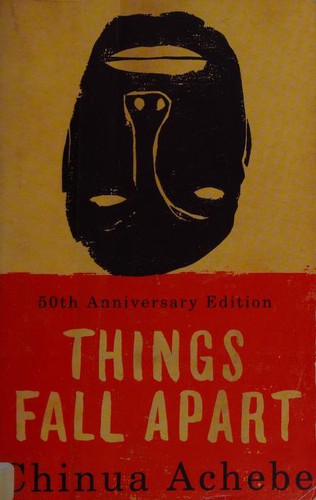
Chinua Achebe's novel about Okonkwo, an Igbo leader whose village is undone by his own rigidity and the arrival of British missionaries. For readers who want the colonial encounter told from the African side.
New books, occasionally