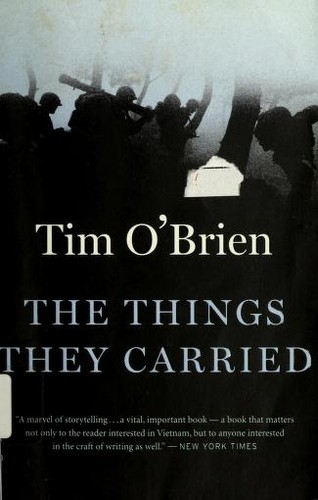
Tim O'Brien's linked stories about a platoon of American soldiers in Vietnam, told by a narrator named Tim O'Brien who keeps asking what a true war story is. For readers who want the stories in order and what the book says about memory and truth.
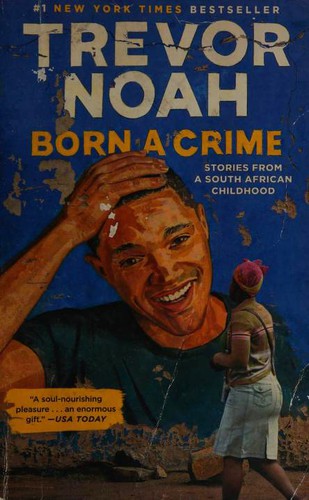
by Trevor Noah
2016 · 304 pages · Summary updated 24 October 2026
Born a Crime is Trevor Noah's memoir of growing up mixed race in apartheid and post-apartheid South Africa, raised by a fearless, devout mother. For readers who want funny, sharp stories about race, language, poverty and family.
Trevor Noah is born in Johannesburg in 1984 to a Black Xhosa mother and a white Swiss father, at a time when their relationship is illegal. His existence is proof of a crime, so he spends early childhood hidden indoors. His mother, Patricia, is stubborn, religious and fiercely independent. She raises him to ignore the limits the world sets. Through short, funny stories, Noah shows how apartheid divided people, how language helped him cross those lines, how poverty traps people, and how his stepfather's violence nearly killed his mother. The book is a love letter to her.
Noah's mother is Black and Xhosa and his father is white and Swiss. Under the Immorality Act, their relationship was illegal. As a child, Noah could not be seen in public with either parent. His mother sometimes walked apart from him and let a mixed-race neighbor hold his hand. His grandmother kept him indoors. The idea is that a racist law reached even into a child's walk to the park, and that his existence itself was defiance.
Noah explains that apartheid did more than separate white from Black. It split Black South Africans by tribe and language and set groups against each other. Noah argues that this was a strategy: groups that distrust each other cannot unite against those in power. The minibus driver who turns on his Xhosa mother is one example of how these divisions lived on after the law ended.
Noah learns English, Xhosa, Zulu, Afrikaans, Tsonga and more. He finds that speaking someone's language makes them see him as one of their own. When young Zulu men plan in Zulu to rob him, he joins in, in Zulu, and they laugh and drop the plan. He calls himself a chameleon: his skin stays the same, but people's view of it changes. The idea is that shared language builds trust faster than shared appearance.
Patricia lives in Johannesburg illegally, works as a secretary and treats apartheid's rules as obstacles to get around. She buys books when money is short and takes her son to places not meant for them. She shows him that the world is larger than the township. Noah credits her with his ability to imagine a different life. The book argues that one stubborn parent can widen a child's sense of what is possible.
In Alexandra, Noah sells pirated CDs and lends money with friends. He sees that the people around him are clever and hardworking but stuck. They lack money, networks and education. Noah adds to the old saying about teaching a man to fish: the man also needs someone to give him a rod. The idea is that effort alone cannot beat a system that withholds the tools to climb.
Noah's dance crew includes a friend named Hitler. At a performance at a Jewish school, the crew chants his name and the teachers are horrified. Noah explains that many Black South Africans knew little about the Holocaust, because apartheid limited what they learned. The story is funny and uncomfortable. It shows how education shapes what a name means, and how isolation keeps people ignorant of the wider world.
Noah's stepfather Abel beats his mother for years. When she goes to the police, officers treat it as a private matter. After she leaves him, Abel shoots her in the head and leg in 2009. She survives, and he serves no prison time. Noah shows how communities and institutions that look away make abuse possible. The story also shows his mother's faith and humor, even in a hospital bed.
“Language, even more than color, defines who you are to people.”
Born a Crime: Stories from a South African Childhood is Trevor Noah's memoir, published in 2016, a year after he became host of The Daily Show in the United States. It is not a story of his comedy career. It covers his childhood and youth in South Africa, from his birth in 1984 to his early twenties. The book is a set of stories, mostly in loose order, grouped in three parts. Before most chapters, Noah adds a short essay that explains a piece of South African history, such as how apartheid sorted people by race.
The title is literal. Noah's mother, Patricia Nombuyiselo Noah, is Black and Xhosa. His father, Robert, is a white Swiss German man. Under apartheid, the Immorality Act made sex between white and Black people a crime. Patricia chose to have a child with Robert anyway. Noah says she wanted a child of her own, not a husband, and Robert agreed to help.
So Noah's body was evidence. As a small child he could not be seen in public with either parent without risk. His mother sometimes walked across the street from him and asked a mixed-race neighbor to hold his hand, so she could pass as a maid. His father could not walk with him in a park. His grandmother in Soweto kept him indoors for long periods, because police could take a light-skinned child away. Noah jokes that he was raised in a world that told him he should not exist.
Noah's history essays explain the system with dark humor. Apartheid sorted people into categories: white, colored (the official term for people of mixed descent), Indian and Black. It then split Black South Africans by tribe and language and placed them in separate areas. Noah argues that the design was deliberate. If groups hated and feared one another, they would not unite against the government.
Noah did not fit any box. He was lighter than his Black family but not a member of the colored community either. In Soweto, his family treated him almost like a white child. His grandmother would beat his cousins but not him, because she said she did not know how to hit a white child. Noah got away with things and learned early that skin color changes how people treat you.
Apartheid ended in the early 1990s, and Nelson Mandela became president in 1994. Noah shows that the end of the law did not end its effects. Townships stayed poor. People stayed in their groups. Old fears remained.
The center of the book is his mother. Patricia grew up poor and was sent at times to live with relatives in a homeland. She trained as a typist and found work as a secretary in Johannesburg at a time when few Black women could. She lived in the city illegally, often hiding from police. She treated the rules of apartheid as obstacles to get around, not laws to obey.
She was also deeply Christian. Every Sunday she took her son to three churches: a mixed church, a white church and a Black church, each with a different style of worship. If something went wrong on the way, she saw it as the devil trying to stop them.
The book opens with one of those Sundays. When Noah is about nine, the family misses its bus and takes a minibus taxi. The driver, a Zulu man, grows hostile toward Patricia, a Xhosa woman alone with children. She senses that he means to hurt them. As the minibus slows, she pushes Trevor out of the door and jumps after him, holding his baby brother Andrew. They run through the dark until they are safe. Then she thanks God. Noah, bruised and furious, asks why she did not wake him and warn him first.
Patricia believed in reading, in English and in seeing the world. She bought books even when there was little money for food. She took her son to places that were not meant for them, to show him that the world was larger than the township. Noah says she raised him as if he were free before he was free.
She was also strict. She chased him through the streets when he misbehaved and beat him when she caught him. Noah describes this with humor and without bitterness. He says she hit him because she loved him and feared what the world would do to a Black boy who did not learn.
One of the book's main ideas is that language can cross the lines that color draws. Noah's mother made sure he spoke English, which she saw as the language of money and power. He also learned Xhosa, Zulu, Afrikaans, Tsonga and others.
He found that if he spoke to people in their own language, they saw him as one of them. In one story, a group of young Zulu men walk behind him, planning in Zulu to rob him. He turns and joins in, in Zulu, suggesting they rob someone together. They laugh and change their minds. Noah calls himself a chameleon: his color stayed the same, but he could change how people saw it.
This skill helped him move between groups at school. He did not belong to the white kids, the colored kids or the Black kids, so he became the boy who sold snacks to everyone. He was an outsider who could visit every circle.
After high school Noah spends time in Alexandra, a crowded township near Johannesburg. With his friend Bongani and others, he runs a small business selling pirated CDs and working as a DJ at parties. They also buy and resell goods and lend money at high interest. He calls this world the hustle.
In one famous chapter, Noah's crew includes a talented dancer named Hitler. In South Africa, he explains, the name was not shocking, because many Black South Africans knew Hitler only as a strong man in a war, not as the face of the Holocaust. The crew gets a gig at a Jewish school. When the boys chant "Go Hitler!" while their friend dances, the teachers are horrified. Noah uses the scene to show how history is taught differently in different places, and how apartheid kept Black South Africans from learning about the wider world.
The hustle teaches him about poverty. He sees that people in Alexandra are smart and hardworking but stuck. They lack the money, contacts and education to move up. Noah turns the old saying on its head: teaching a man to fish is not enough if no one gives him a fishing rod. He later leaves this life when he sees that it leads nowhere.
In another chapter, Noah is arrested for driving one of his stepfather's cars with the wrong license plates. He spends about a week in jail. He believes he hid the arrest from his mother and got out by himself. Later he learns that she knew and that she quietly paid for his release.
The darkest thread of the book is Patricia's marriage to Abel, a Tsonga mechanic. Abel is charming and funny when sober. When he drinks, he is violent. He beats Patricia over the years, and he turns his anger on Trevor too. Patricia and Abel have two sons, Andrew and Isaac.
The family falls into debt through Abel's failing garage business. They move to a poorer area. Noah describes living with constant tension, waiting for Abel's moods. Patricia reports the abuse to the police several times. The officers do little, treating it as a family matter.
Patricia eventually leaves Abel and remarries. Then, in 2009, Abel waits for her as she returns from church and shoots her. One bullet hits her leg. Another enters the back of her head and exits through her nose. Somehow it misses her brain, spine and major blood vessels. She survives. Noah, by then a comedian in Johannesburg, rushes to the hospital and pays the bill. His mother, waking up, jokes that he is now the best-looking person in the family.
Abel is convicted of attempted murder but receives a suspended sentence and serves no prison time. Noah uses the story to show how domestic violence was often ignored in South Africa, and how close he came to losing the person who made him.
Noah's relationship with his father is quieter. Robert ran a restaurant in Johannesburg and later moved to Cape Town. They lost touch for years. When Noah was in his twenties, he found his father again. He learned that Robert had kept a scrapbook of every newspaper story about his son's comedy. Noah shows that love can be real even when it is not loud.
Read it if you want to understand apartheid and its aftermath through stories that make you laugh and then hit hard. It also suits anyone who loves stories about mothers, or who has felt like an outsider in their own home or country.
12 cards
Question 1 of 5
Which apartheid law made Trevor Noah's birth a crime?
Tim O'Brien's linked stories about a platoon of American soldiers in Vietnam, told by a narrator named Tim O'Brien who keeps asking what a true war story is. For readers who want the stories in order and what the book says about memory and truth.
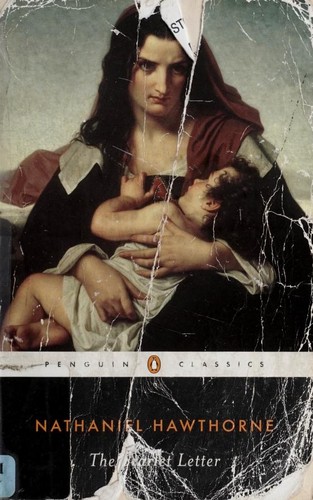
Nathaniel Hawthorne's novel about Hester Prynne, forced to wear a scarlet A for adultery in Puritan Boston, the minister who hides his guilt and the husband who seeks revenge. For readers who want the plot in order and the ideas behind it.
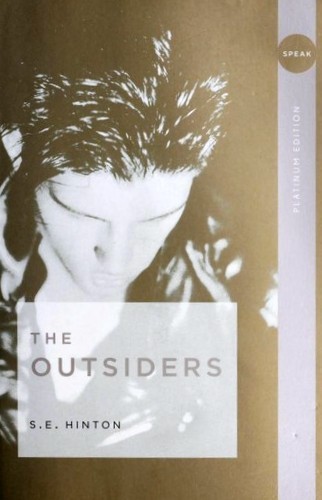
S. E. Hinton's novel about Ponyboy Curtis, a fourteen-year-old greaser in 1960s Oklahoma, and the night a fight with rich kids ends in a death. For readers who want the plot, the characters and the meaning of "stay gold."
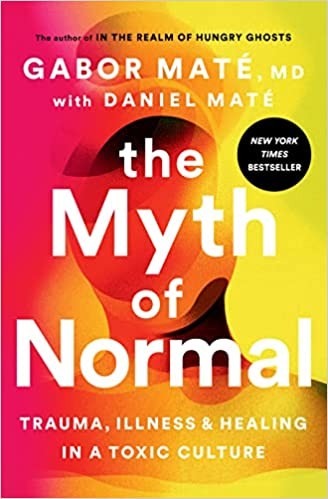
Gabor Maté's The Myth of Normal argues that much of what we call normal in modern life makes people sick, linking trauma, stress and illness. For readers who want to understand how early experience and culture shape health.
New books, occasionally