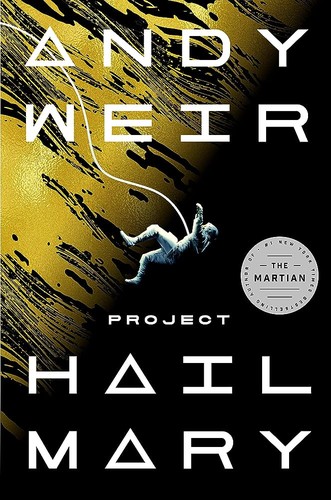
Book · 2021
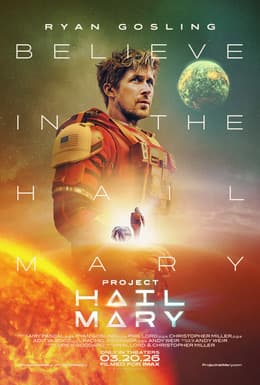
Movie · 2026
Book vs movie
Project Hail Mary: book vs movie
How the 2026 movie Project Hail Mary (directed by Phil Lord and Christopher Miller) changes the book by Andy Weir.
The verdict
A close adaptation that keeps the structure, Rocky and the main twists, and trims subplots and science to fit the running time.
Every difference
How Grace tells the story
On the pageGrace narrates in the first person and explains every experiment, thought and joke to the reader.
On screenGrace records video logs for Earth. They carry his humor and his reasoning without a narrator.
Why Grace is chosen
On the pageThe years-long coma kills most people. Grace has a rare genetic resistance to it, which puts his name on the crew list.
On screenThe genetic subplot is cut. Grace is chosen because he is the leading expert on Astrophage biology.
The return of Grace's memory
On the pageGrace recovers his name, his job and his past slowly, one flashback at a time, across much of the book.
On screenThe memory puzzle moves much faster, and the work of finding out where the ship is becomes quick visual shortcuts.
Earth characters
On the pageStratt is cold and absolute. She backs harsh choices, such as a climatologist's plan to bomb Antarctic ice to release methane.
On screenThe movie adds Carl, a security officer, as someone for Grace to talk to. Stratt gets softer moments, and the Antarctic plan is gone.
Talking with Rocky
On the pageGrace learns Rocky's musical chords over weeks and builds a translation program on his computer.
On screenA translation device turns Rocky's chords into spoken English.
Rocky's ship
On the pageGrace never enters Rocky's ship. The two meet through a tunnel with a clear wall.
On screenGrace goes inside Rocky's ship in a protective suit. The Hail Mary also gets a room that shows images of Earth, which Grace shares with Rocky.
Why Grace lost his memorySpoiler
On the pageGrace learns that he refused the mission. Stratt's drugs wiped his memory so he would not panic or refuse again when he woke.
On screenGrace was drugged and put aboard, but the movie does not explain the memory loss.
The view from EarthSpoiler
On the pageThe story never leaves Grace's point of view. Earth's fate reaches the reader only through what Grace learns on Erid.
On screenA short added scene on Earth shows an older Stratt, on an aircraft carrier in a frozen sea, watching one of Grace's video logs.
Grace's life on EridSpoiler
On the pageThe last chapter jumps sixteen years ahead. Rocky tells Grace that Eridian scientists have seen the sun return to full brightness.
On screenGrace looks younger. The movie ends on Rocky's offer to prepare the Hail Mary for a trip home and Grace's choice to stay and teach, at least for now.
The comparison
Project Hail Mary book vs movie: the short answer
Project Hail Mary (2026) is directed by Phil Lord and Christopher Miller from a screenplay by Drew Goddard. Amazon MGM Studios released it in US theaters on March 20, 2026. It runs 156 minutes. Ryan Gosling plays Ryland Grace, Sandra Hüller plays Eva Stratt and James Ortiz plays Rocky.
The movie is a close adaptation. It keeps the structure of the book: a man wakes on a ship with no memory, and flashbacks show how he got there. It keeps the science problem, the friendship with Rocky and the hard choice at the end. Most changes come from compression. The first test cut ran almost four hours. The final cut removes subplots, shortens the slow return of Grace's memory and finds new ways to show what the book tells inside Grace's head. The largest changes are in the last minutes.
How close the movie stays
The opening is the same. Grace wakes beside two dead crewmates, Commander Yáo and engineer Ilyukhina, and works out that he is near the star Tau Ceti. Flashbacks show the Petrova line, the light-eating microbe Astrophage and Stratt's taskforce. At Tau Ceti he meets Rocky, an alien engineer whose star has the same disease. The two build a way to talk and then a way to fight Astrophage together.
The book is a first-person monologue. Grace explains every experiment and every joke to the reader. The movie replaces much of that with video logs that Grace records for Earth. Some of the slow detective work, such as how Grace figures out which star he is near, becomes quick visual shortcuts.
Most reviewers say the changes serve the story. Some book readers miss the long stretches of problem-solving that fill the novel.
The biggest changes
Why Grace is chosen. In the book, the coma that the crew must survive for years kills most people. Only people with a rare genetic resistance can go, and Grace has it. The movie cuts this subplot. Grace is chosen because he is the leading expert on Astrophage biology.
A shorter memory puzzle. The book takes a long time to give Grace back his name, his job and the events that put him on the ship. Each memory returns as its own flashback. The movie moves through this much faster.
New faces on Earth. The movie adds Carl, a security officer played by Lionel Boyce, who gives Grace someone to talk to in the flashbacks. Stratt keeps her authority but gets softer moments, including a karaoke scene. The book's Stratt is colder, and the book shows more of the taskforce's harsh choices. One is a climatologist's plan, which Stratt backs, to set off nuclear bombs in the Antarctic ice to release methane and slow the cooling. The movie drops that plan.
Rocky's voice. In the book, Grace learns Rocky's musical language over weeks and builds a translation program on his computer. In the movie, a translation device turns Rocky's chords into spoken English.
Rocky's ship. The book never takes Grace inside Rocky's ship. The two meet only through a tunnel with a clear wall. The movie sends Grace inside in a protective suit. It also adds a room on the Hail Mary that shows images of Earth, which Grace shares with Rocky.
Spoilers: the ending
This section reveals the ending of the book and the movie.
Both versions keep the same main turns. Grace learns that he refused the mission and that Stratt had him drugged and put on the ship. He sends the Taumoeba, the microbe that eats Astrophage, toward Earth. Then he gives up his trip home to save Rocky, whose fuel the Taumoeba will destroy. He ends up on Erid, Rocky's planet, teaching Eridian children.
The differences:
- Why he forgot. The book explains that Stratt's drugs wiped Grace's memory so he would not panic or refuse again once he woke. The movie shows that he was drugged and put aboard, but it does not explain the memory loss.
- The view from Earth. The novel never leaves Grace, so Earth's fate reaches the reader only through what Grace learns on Erid. The movie adds a short scene on Earth. An older Stratt, on an aircraft carrier in a frozen sea, watches one of Grace's video logs.
- Years on Erid. The book's last chapter jumps sixteen years ahead. In both versions, Rocky tells Grace that Eridian scientists have seen the sun return to full brightness. The movie's Grace looks younger. It ends on Rocky's offer to prepare the Hail Mary for a trip home and Grace's choice to stay and teach, at least for now.
The core of the ending does not change: Grace chooses a friend over going home. The movie shows Earth's side of the win and leaves Grace's own future more open.
Book or movie first?
Both versions share the main twists, so whichever you take first spoils the other. Read the book first if you enjoy the science, because the movie trims most of the step-by-step problem-solving. Watch the movie first if you want the story and the friendship in one sitting. The book then adds the full detail of the mission, Stratt's choices and the slow return of Grace's memory.