A palliative care nurse recounts the five regrets she heard most often from dying patients, the people who told her each one, and how those lessons changed her own life.
by Peter Attia
2023 · 496 pages · Summary updated 6 November 2026
A physician's plan for living longer and staying strong in the last decade of life: prevent the four chronic diseases early, train for old age, and fix sleep, nutrition and emotional health.
Peter Attia argues that modern medicine (Medicine 2.0) treats chronic disease too late. His alternative, Medicine 3.0, starts prevention decades early and aims at healthspan, not just lifespan. Four diseases cause most deaths: heart disease, cancer, neurodegenerative disease and metabolic disease. He calls them the Four Horsemen. The main defense is exercise: VO2 max, zone 2 endurance, strength and stability, trained toward a Centenarian Decathlon of tasks you want to do at 90. Nutrition matters less than exercise, protein matters most, and sleep is not optional. Attia ends with his own emotional collapse and argues that a long life is pointless if you are miserable in it.
Attia argues that modern medicine (Medicine 2.0) waits for a diagnosis, then treats. That model beat infections but fails against slow diseases that take decades to build. Medicine 3.0 looks for risk early, treats it before symptoms, and tailors decisions to each person. His own case is the example: in his thirties, standard tests called him healthy, while a closer look showed insulin resistance and high heart risk. He concludes that normal lab ranges describe an unhealthy population, not a healthy target.
Attia's Four Horsemen are atherosclerotic heart disease, cancer, neurodegenerative disease, and metabolic disease. He puts metabolic dysfunction at the base, because insulin resistance raises the risk of the other three. His test examples include fasting insulin, uric acid, and liver fat, which standard checkups skip. For heart disease he tracks the particle marker apoB rather than LDL cholesterol, and he tests for Lp(a) once because it is genetic and rarely measured.
A long life spent in decline is not the goal. Attia names the last ten years of life the Marginal Decade and argues that most people enter it weak, slow, and dependent. The three dimensions of healthspan are cognitive, physical, and emotional. Centenarians show that disease can be delayed by decades; their genes do it for them, so the rest of us must do it with behavior. The example he uses is a 90-year-old who can still travel, carry bags and get off the floor unaided.
Attia cites a large study of VO2 max, a measure of aerobic capacity, in which moving from the bottom 25 percent of fitness to the next group cut mortality roughly in half. The gap between low and elite fitness beat the gap between smokers and non-smokers. His program has four parts: zone 2 endurance about three hours a week, one weekly session of four-minute VO2 max intervals, strength work with an emphasis on grip and carries, and stability training so the body can handle load without injury.
Write down ten physical tasks you want to perform in your last decade, then train for them now. Attia's examples include lifting a suitcase into an overhead bin, picking up a child, climbing four flights of stairs, and getting up off the floor. Because strength and aerobic capacity fall every decade after 40, you need a large margin today to keep the ability at 90. The method turns vague fitness goals into specific numbers, such as a dead hang time or a farmer's carry load.
Attia once practiced strict keto and long fasts. He now argues that no single diet wins and that blood markers should guide food choices. He calls this nutritional biochemistry. Three ways to cut calories exist: counting them, restricting a food group, or restricting eating time. Each helps some people. He warns that fasting can cost muscle. His one firm rule is protein: about 1.6 grams per kilogram of body weight per day, spread across meals, to protect muscle as you age.
Attia admits he ignored sleep as a surgeon. He now targets seven and a half to eight and a half hours. He links short sleep to insulin resistance, weaker memory, and higher risk of heart disease and dementia. His recommendations are a cool, dark room, no alcohol or large meals late, consistent timing, and morning daylight. He prefers cognitive behavioral therapy for insomnia over sleeping pills, and he urges anyone who snores to be tested for sleep apnea.
The last chapter describes Attia's own crisis: rage, perfectionism, and distance from his family, rooted in childhood trauma. He spent two weeks at the Bridge to Recovery in Kentucky and later returned to treatment after a relapse. The tools that helped were therapy, dialectical behavior therapy skills, journaling, and a pause between trigger and reaction. His conclusion is that extending life has no value if the extra years are lonely or angry, so emotional health belongs beside exercise and sleep.
Peter Attia is a physician who trained in surgery at Johns Hopkins and now runs a practice focused on longevity. He wrote Outlive with the journalist Bill Gifford. The book is long, but its thesis is short. Most people die of one of four slow diseases. Those diseases start decades before they are diagnosed. Medicine waits for symptoms. Attia says we should not.
He frames the problem with two labels. Medicine 2.0 is the medicine we have: antibiotics, surgery, trials, and treatment after diagnosis. It beat infections and trauma. It does badly against chronic disease, because it acts late and aims at the average patient. Medicine 3.0 is what he proposes: prevention that starts early, decisions based on each person's risk, and a goal of healthspan (years of good function), not only lifespan (years alive).
Attia tells his own story to show why this matters. In his thirties he was a fit swimmer and surgeon, yet his blood tests showed insulin resistance and high cardiovascular risk. Standard guidelines said he was fine. He concludes that "normal" ranges describe a sick population, not a healthy one.
The book has three parts. The first sets up the framework. The second describes the Four Horsemen, the diseases to avoid. The third gives the tactics: exercise, nutrition, sleep, emotional health, and drugs.
Objective, strategy, tactics. Attia borrows a military structure. The objective is to live longer and better. The strategy is to delay the onset of chronic disease and to preserve function. The tactics are the daily practices.
He adds one more tool: the Marginal Decade. This is the last ten years of life. For most people it is a period of steep decline, limited movement, and loss of independence. Attia wants readers to picture what they want to do in that decade, then train for it now, because the body you have at 90 is built in your forties and fifties.
He also looks at centenarians. People who live past 100 do not avoid disease by living cleanly. Many smoke, drink, or eat badly. Their genes (for example variants of APOE and FOXO3) delay disease by one or two decades. Attia argues that most of us cannot copy their genes but can copy their outcome: push disease later through behavior and early intervention.
Attia names four causes of most deaths after age 40. He argues they share roots, especially metabolic dysfunction, and that each can be slowed if you act early.
Metabolic disease. This is the base of the pyramid. Attia describes a chain that runs from excess calories to fat stored in the liver and muscle, to insulin resistance, to type 2 diabetes. He argues that fatty liver disease (NAFLD) and high insulin are early warning signs that standard checkups miss. He uses the oral glucose tolerance test, uric acid, and fasting insulin as earlier markers. He also discusses fructose and its link to uric acid and fat production in the liver.
Heart disease. Atherosclerosis is, in his words, the biggest killer. The particle that drives it carries a protein called apoB. Attia argues that apoB is a better risk marker than LDL cholesterol, and that it should be measured in everyone and kept very low for a very long time. He also stresses Lp(a), a genetic lipoprotein that raises risk and is rarely tested. His position is that risk builds over decades, so a 40-year-old with high apoB should treat it now, not at 60. He is open to statins and other drugs early.
Cancer. Attia says we understand cancer less than the other three. His approach has three parts. Avoid known drivers, especially smoking, obesity and insulin resistance. Screen earlier and more aggressively than guidelines suggest, for example colonoscopy before 45. Use new tools with care, including liquid biopsies that detect tumor DNA in blood. He describes the work of Steven Rosenberg on immunotherapy and the promise of treatments that use the immune system against tumors.
Neurodegenerative disease. Alzheimer's and related conditions have no cure. Attia therefore focuses on prevention. He discusses the APOE e4 gene variant, the link between metabolic health and brain health, and evidence that exercise, sleep, and vascular health reduce risk. He also covers hearing loss and the brain's demand for a healthy blood supply.
Attia calls exercise the most potent longevity intervention available. He cites data on VO2 max, a measure of aerobic capacity. In one large study, moving from the bottom 25 percent of fitness to the next group cut all-cause mortality roughly in half. The gap between low fitness and elite fitness was larger than the gap between smokers and non-smokers.
He builds exercise around four pillars.
His organizing idea is the Centenarian Decathlon. Write down ten physical tasks you want to do in your last decade: lift a suitcase into an overhead bin, get up off the floor, carry groceries, climb stairs, pick up a grandchild. Then work backward. Because strength and VO2 max fall each decade, you must be much stronger and fitter now than the task requires.
Attia used to follow a strict ketogenic diet and long fasts. In the book he steps back from both. He argues that no single diet is best and that diet debates are tribal. He prefers the term nutritional biochemistry: what each person's blood markers show, and what changes them.
Three questions matter. Are you undernourished or overnourished? Are you undermuscled or adequately muscled? Are you metabolically healthy or not? Most readers are overnourished and undermuscled. For them, the main lever is to reduce calories while eating enough protein to build muscle.
He lists three ways to reduce intake: caloric restriction (counting), dietary restriction (cutting a food group, such as carbohydrates), and time restriction (fasting windows). Each works for some people and fails for others. He warns that fasting can cost muscle, which is why he no longer recommends it as a default.
On protein, he recommends far more than standard guidelines, about 1.6 grams per kilogram of body weight per day and up to 2.2 grams for active people, spread across meals. He uses a continuous glucose monitor on patients to see how foods affect them. He treats alcohol as a net negative with no safe lower limit for health, though he does not demand abstinence.
Attia admits he once dismissed sleep as a surgeon. The chapter corrects that. He argues that short sleep raises insulin resistance, harms memory, and increases risk of heart disease and dementia. He targets seven and a half to eight and a half hours a night.
His advice follows the usual sleep hygiene rules: a dark, cool room, no alcohol or heavy food late, limited screens, consistent timing, and daylight in the morning. He warns against sleeping pills and recommends cognitive behavioral therapy for insomnia. He also tells readers to take sleep apnea seriously and to get tested if they snore.
The last chapter is the most personal. Attia describes a pattern of rage, perfectionism and detachment that damaged his marriage and his relationship with his children. In 2017 he spent two weeks at a treatment center in Kentucky called the Bridge to Recovery, then later returned to therapy at a center in Arizona after a relapse into the same behavior.
He traces his patterns to childhood abuse and to a belief that his worth depended on achievement. He describes tools from therapy: dialectical behavior therapy skills, journaling, writing to himself in a kind voice, and taking time between a trigger and a response.
His point for the book is direct. Longevity has no value if you are isolated, angry, or ashamed. Emotional health is not a bonus item. He puts it alongside exercise as a condition for a life worth extending.
Some clinicians argue that Attia's testing and treatment plans go beyond the evidence. Examples include continuous glucose monitors for people without diabetes, early and aggressive lipid-lowering drugs, and discussion of rapamycin as a longevity drug based on animal studies. They also note that his approach costs far more than most patients can spend. The book's core advice on exercise, sleep and protein is widely accepted.
Read it if you are in your thirties to fifties, you are healthy now, and you want a plan for staying functional into old age. The exercise chapters are the most useful part. Skip the more technical lipid and cancer chapters if you only want the practical plan.
12 cards
Question 1 of 5
What does Attia call the medical approach that starts prevention decades before symptoms appear?
A palliative care nurse recounts the five regrets she heard most often from dying patients, the people who told her each one, and how those lessons changed her own life.
Tim Ferriss's playbook for escaping the 9-to-5: define what you want, eliminate low-value work with the 80/20 rule, automate income through outsourcing and a muse business, and liberate yourself to work from anywhere.
A six-week personal finance program for people in their 20s and 30s: fix your credit cards, open the right bank and investing accounts, build a Conscious Spending Plan, automate your money, and invest in index funds.
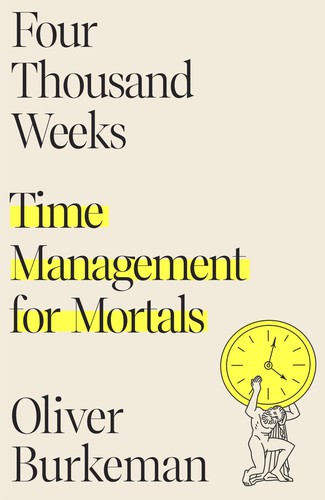
A former productivity columnist argues that an 80-year life holds about four thousand weeks, that no system will let you do everything, and that accepting limits is the way to use time well.
New books, occasionally