Gary Keller and Jay Papasan argue that extraordinary results come from narrowing your focus to one thing at a time. For anyone whose to-do list keeps growing while the important work stalls.
by David Allen
2001 · 352 pages · Summary updated 24 October 2026
David Allen's system for stress-free productivity: capture everything, decide the next action, organize by context and review weekly. For anyone whose to-do list lives in their head.
Stress comes from open loops: commitments you have made and not yet closed. Allen's system, GTD, moves every one of them out of your head into a trusted external system so your mind can reach a state he calls mind like water. The five steps are capture, clarify, organize, reflect and engage. For each item you ask: is it actionable? If not, trash it, file it or park it in Someday/Maybe. If yes, decide the next action. Do it if it takes under two minutes, delegate it or defer it to a calendar or a context list. Outcomes that need more than one step are projects. The weekly review keeps the whole system current.
Allen argues that stress comes less from having too much to do than from commitments you have made and not tracked. Each one is an open loop that your mind replays because it does not trust you to remember. The fix is a trusted external system that holds everything, so the mind can reach a calm, responsive state he calls mind like water. Writing "buy cat food" on a list you will see stops the 3 a.m. reminder.
The method is a workflow. Capture everything into a few inboxes. Clarify each item by asking what it is and whether it is actionable. Organize the result into the right list. Reflect by reviewing the lists, with a weekly review as the anchor. Engage by choosing what to do with confidence. Allen argues that most people fail because they mix the steps, such as trying to organize while capturing. Each step works only when done on its own.
A next action is the next visible, physical step: "email Sarah for three dates," not "plan the offsite." Allen argues that most procrastination comes from undefined work, because the mind avoids tasks it cannot picture. Any outcome that needs more than one step is a project, and every project needs at least one next action on a list. The question "what is the next action?" is the single most useful habit in the book.
Once the next action is clear, three paths remain. Do it now if it takes under two minutes, since tracking it costs more than finishing it. Delegate it and record it on a Waiting For list with a date. Defer it to the calendar if it must happen on a set day or time, or to a Next Actions list if it just needs doing. Allen's strict rule keeps the calendar as the hard landscape and bans daily to-do lists from it.
Next Actions are grouped by the tool, place or person required: @Calls, @Computer, @Errands, @Home, @Office, @Agendas. Allen's reasoning is that when you have 15 minutes before a meeting, you need to see only what you can do there, not a list of 200 items. At the hardware store you look at @Errands. Waiting for your manager, you check their @Agenda. The 2015 edition admits that smartphones blur contexts but keeps the principle: see only the options available now.
Allen calls the weekly review the critical success factor. Once a week, for one to two hours, you empty all inboxes, review the past and coming calendar, check that every project has a next action, chase overdue Waiting For items and prune Someday/Maybe. Without the review, lists go stale, you stop trusting them and your mind starts holding things again. Most people who abandon GTD do so because they skipped this step.
Allen's four-criteria model says priority comes last. First ask what you can do where you are, then how much time you have until the next commitment, then how much energy you have. Only then ask what matters most among the remaining options. He also names three kinds of work: predefined work from lists, work as it shows up and defining your work. Most people never do the third, which is why their lists are never current.
Allen's six levels run from Ground (current actions) through projects, areas of responsibility, one- to two-year goals and three- to five-year vision up to purpose and principles. The 2001 edition used altitudes from the runway to 50,000 feet. Unlike most productivity books, Allen starts at the bottom. His reasoning is that a mind cluttered with undone errands cannot think clearly about life purpose, so you clear the ground before you climb.
“Your mind is for having ideas, not holding them.”
David Allen, a management consultant and coach, opens with a claim about stress. Most of the pressure people feel does not come from having too much to do. It comes from the gap between what they have agreed to do and what they have actually tracked. He calls each untracked commitment an open loop: a promise to yourself that your mind keeps repeating because it does not trust that you will remember it. Open loops range from "buy cat food" to "decide whether to change careers." Your mind does not distinguish by importance. It nags about all of them, often at 3 a.m.
Allen's goal is a state he borrows from karate: mind like water. Water responds to a thrown pebble with a reaction exactly proportional to the force, then returns to calm. A person with mind like water handles what comes in and does not overreact or underreact. The book argues that you reach that state by getting everything out of your head and into a system you trust, so that your mind can stop holding it.
The book has three parts. The first explains the method. The second walks through setting it up over a full weekend. The third explains why it works and what changes when you use it. The 2015 revised edition updates the tools, adds a chapter on the cognitive science behind the method and addresses digital workflows, but the method itself is the same as in 2001.
Allen's method is a workflow with five steps. The 2001 edition called them collect, process, organize, review and do. The revised edition calls them capture, clarify, organize, reflect and engage.
Allen stresses that most people fail because they mix the steps. They try to organize while capturing, or decide what to do while processing. Keeping the steps separate is what makes the system work.
The core of the method is a decision tree for each inbox item.
If the item is not actionable, there are three options. Trash it. File it as reference material you may want later. Or put it on a Someday/Maybe list of things you might do but have not committed to, such as learning Italian or building a deck.
If the item is actionable, ask two questions. First, what outcome am I committed to? If that outcome takes more than one action step, it is a project, and it goes on the Projects list. Allen's definition of a project is deliberately broad: "get new tires" is a project because it needs a call, a visit and a payment. Second, what is the next action? The next action is the next visible, physical thing you would do to move the outcome forward. Not "plan the offsite" but "email Sarah to ask for three possible dates."
Once you have the next action, there are three ways to handle it:
Allen is strict about the calendar. It holds only three things: time-specific actions (appointments), day-specific actions (something that must happen on Tuesday) and day-specific information (a reminder that a colleague is out). A daily to-do list on the calendar is forbidden, because items that do not get done have to be rewritten, and the calendar loses its authority as the hard landscape of the day.
Allen's system uses a small number of lists. Projects. Next Actions. Waiting For. Someday/Maybe. Calendar. Reference. Project support material (notes and plans tied to a project). That is the whole system.
Next Actions are sorted by context, the tool, place or person needed to do them. Typical contexts are @Calls, @Computer, @Errands, @Office, @Home, @Agendas (things to raise with a specific person at the next meeting) and @Read/Review. Context sorting means that when you are at the hardware store with 20 minutes, you look at @Errands and nothing else. The 2015 edition notes that smartphones have blurred some contexts, but Allen argues that the principle of seeing only what you can do right now still holds.
For reference material he recommends a simple A to Z filing system that you can file into in under a minute, with a labeler so that folders look neat enough that you use them. He also describes the tickler file: 43 folders, 31 for the days of the month and 12 for the months, that let you drop a paper or a note into the future so it shows up on the day you need it.
Allen calls the weekly review the critical success factor of the method. Once a week, you block one to two hours to get clear, get current and get creative. You empty every inbox. You process loose papers and notes. You review the calendar for the past week (anything to capture?) and the coming weeks (anything to prepare?). You walk through every project and make sure each one has a next action. You review Waiting For and chase what is overdue. You look at Someday/Maybe and move items into Projects or delete them. Without this review, lists go stale, trust collapses and the mind starts holding things again.
Allen offers three models for choosing in the moment.
The four-criteria model says you choose an action by context (what can I do here?), time available (how long until the next commitment?), energy available (am I sharp or drained?) and priority (given the first three, what matters most?). Priority comes last because it only applies to the options the first three leave open.
The threefold model describes the three kinds of work: doing predefined work from your lists, doing work as it shows up and defining your work (processing inboxes and planning). Most people spend their days on the second and never get to the third, which is why their lists are never current.
The six-level model connects actions to purpose through what Allen calls horizons of focus. The 2001 edition used an airplane metaphor: runway for current actions, 10,000 feet for projects, 20,000 for areas of responsibility, 30,000 for one- to two-year goals, 40,000 for a three- to five-year vision and 50,000 feet for purpose and principles. The revised edition numbers them Ground and Horizons 1 to 5. Allen argues that most productivity books start at the top, with purpose. He starts at the bottom, because a person who cannot find their cat food list cannot think clearly about their life purpose.
For projects, Allen describes how the brain plans when it works well, such as deciding where to go for dinner. The natural planning model has five phases: define purpose and principles (why do this, and what standards apply?), outcome visioning (what does done look like?), brainstorming (how might we get there, with no judgment yet), organizing (sort the ideas into components, sequences and priorities) and identifying next actions. He contrasts this with the unnatural planning model used in most organizations, which starts with a good idea, then jumps to organizing in a meeting before anyone has agreed on purpose or outcome. His advice for a stuck project is to move down the list: if you lack action, do more organizing; if organizing is chaotic, brainstorm more; if brainstorming is dry, revisit the outcome.
Part two is a step-by-step guide to a two-day setup: block the time, set up a workspace with an in-tray and filing, gather every physical item into the in-tray, do the mind sweep, process everything to zero and build the lists. Allen insists on physical tools even for digital workers, because paper still arrives.
Part three explains the effects. The capturing habit reduces anxiety because you no longer have to trust your memory. The next-action decision turns vague worries into concrete steps and ends the procrastination that comes from undefined work. Outcome focusing links daily actions to results. The 2015 edition adds research support, including work on distributed cognition and a study showing that writing a plan for an unfinished task reduces the intrusive thoughts the task produces. Allen also argues that the system is for anyone, from executives to students to parents, because the problem it solves is universal.
The most common complaint is that GTD takes a lot of effort to set up and maintain, and that many readers abandon it after a few weeks when the weekly review slips. Writers such as Cal Newport argue that the method handles small tasks well but says little about deep, focused work or about choosing which commitments to make in the first place. Others note that the book is dense and repetitive, and that its emphasis on contexts and paper tools dates it even after the 2015 revision. Fans answer that any part of the system, such as the two-minute rule or the next-action question, works on its own.
Read it if you carry a long list of undone things in your head and feel vague stress about work you cannot name. It suits managers, freelancers and anyone whose job arrives by email and meetings. Readers who want a philosophy of what to work on should pair it with Deep Work or Essentialism.
12 cards
Question 1 of 5
According to Allen, where does most work stress come from?
Gary Keller and Jay Papasan argue that extraordinary results come from narrowing your focus to one thing at a time. For anyone whose to-do list keeps growing while the important work stalls.
Charles Duhigg explains how habits work in people, companies and societies, and how to change them with the cue, routine and reward loop. For anyone who wants to break a bad habit or build a good one.
Richard Koch shows how a small share of causes produces most results, and how to use that imbalance in business and life. For people who want to do less but achieve more.
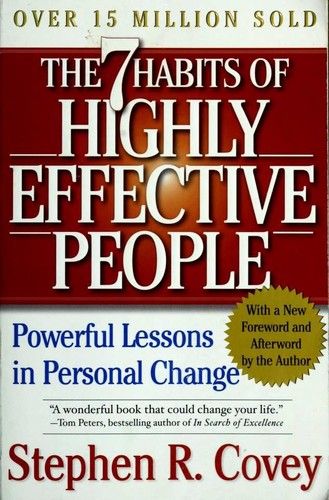
Stephen Covey's principle-based framework for personal and professional effectiveness. For anyone who wants clearer priorities, stronger relationships and habits built on character, not tricks.
New books, occasionally