
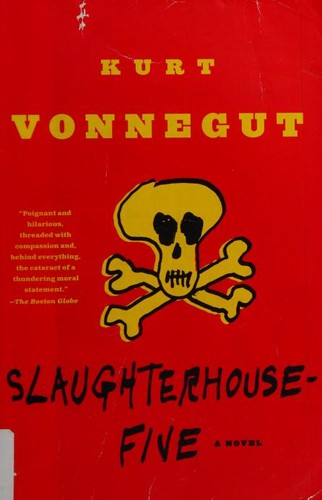
Kurt Vonnegut's antiwar novel about Billy Pilgrim, an American soldier who survives the firebombing of Dresden and comes unstuck in time. For readers who want the plot untangled, the Tralfamadorians explained, and the meaning of "so it goes."
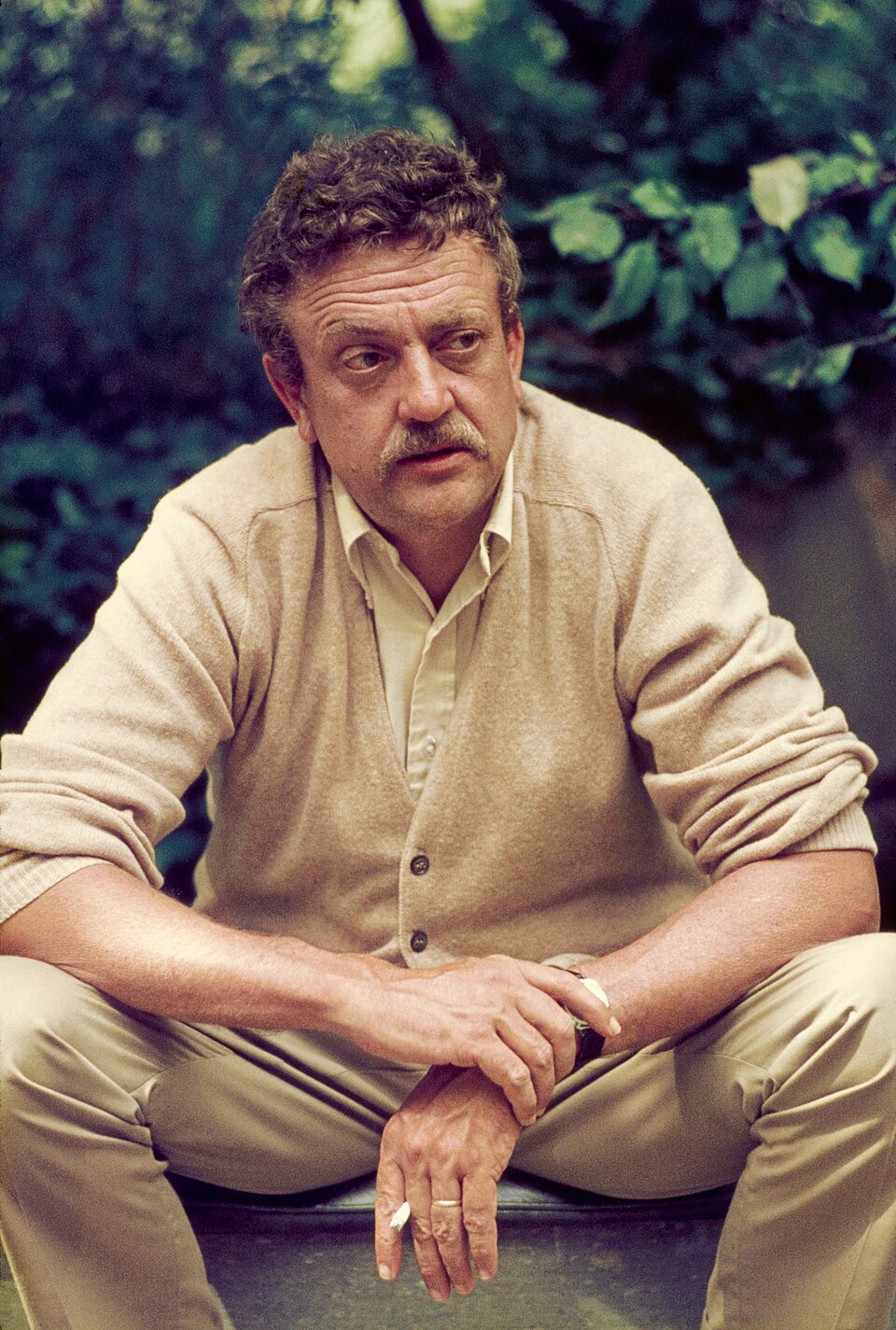
Author · 1 summary
American novelist and short story writer
Kurt Vonnegut grew up in Indianapolis in a German-American family that lost much of its money in the Great Depression. He studied chemistry at Cornell University and left to join the US Army in World War II.
In December 1944 the Germans captured him at the Battle of the Bulge. As a prisoner of war in Dresden, he survived the Allied firebombing of the city in February 1945 in a meat locker under a slaughterhouse, then helped dig out the dead. After the war he worked in public relations for General Electric and wrote short stories for magazines.
Slaughterhouse-Five (1969) took him more than twenty years to write. Its hero, Billy Pilgrim, comes "unstuck in time" and lives the moments of his life out of order, from Dresden to an alien zoo. The novel uses dark comedy and science fiction to argue that war is senseless and that its survivors cannot make sense of it. It made him famous and has often been banned from American schools. His other novels include Cat's Cradle (1963). He died in New York in 2007, aged 84.
Kurt Vonnegut's antiwar novel about Billy Pilgrim, an American soldier who survives the firebombing of Dresden and comes unstuck in time. For readers who want the plot untangled, the Tralfamadorians explained, and the meaning of "so it goes."
New books, occasionally