
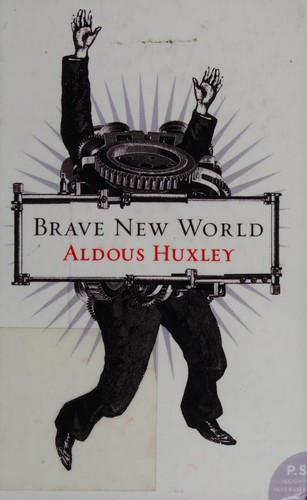
Aldous Huxley's 1932 novel about a World State that keeps its citizens happy with engineered castes, conditioning, consumer goods and a drug called soma. For readers who want the plot, the ideas and why it still gets compared to the present.
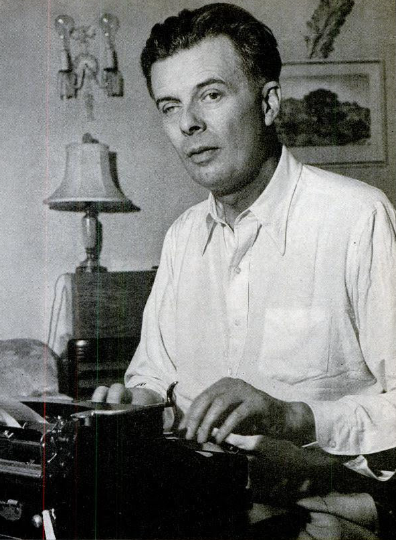
Author · 1 summary
British novelist and essayist
Aldous Huxley was born in Godalming, Surrey, into a family of scientists and writers. His grandfather was the biologist Thomas Henry Huxley. An eye disease left him nearly blind at sixteen and ended his plan to study medicine. He studied English literature at Balliol College, Oxford, instead.
In the 1920s he wrote satirical novels about London intellectuals, such as Crome Yellow and Point Counter Point. Brave New World (1932) imagines a World State that keeps people stable through genetic engineering, conditioning, constant entertainment and a drug called soma. Its argument is that a society can take away freedom by giving people pleasure, with no need for force. In Brave New World Revisited (1958) he said the world was moving toward his future faster than he had expected.
In 1937 he moved to California. There he wrote about mysticism in The Perennial Philosophy and about his mescaline experiments in The Doors of Perception (1954). He died in Los Angeles in 1963, on the same day that John F. Kennedy was killed.
Aldous Huxley's 1932 novel about a World State that keeps its citizens happy with engineered castes, conditioning, consumer goods and a drug called soma. For readers who want the plot, the ideas and why it still gets compared to the present.
New books, occasionally